
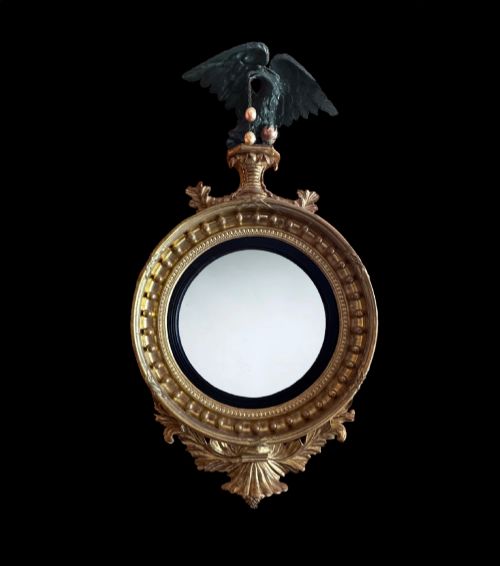

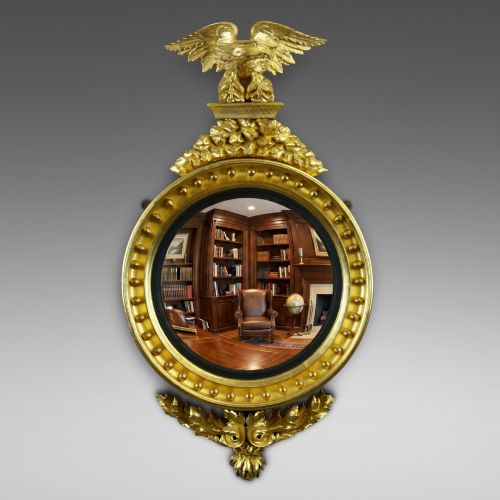
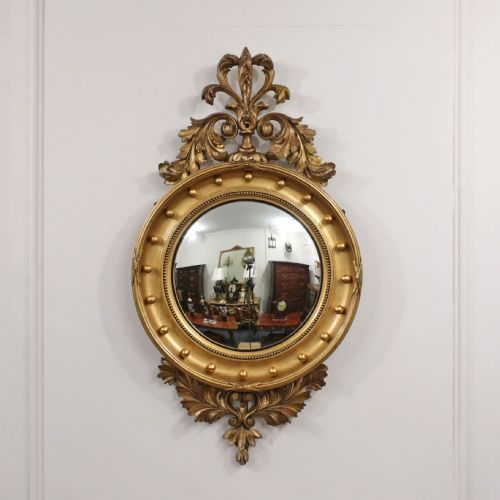
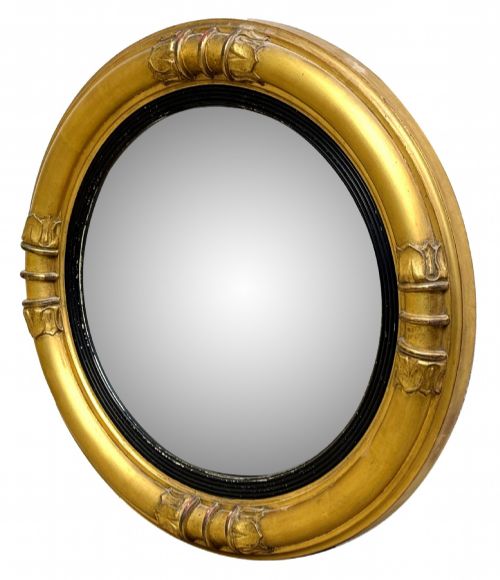
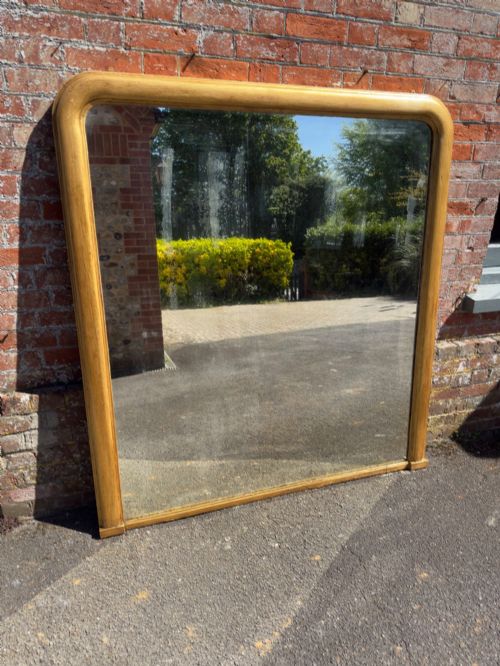


Carved Giltwood Round Frame
A carved giltwood round frame offers a focal point of reflected light, capturing the elegance of Regency and Victorian interiors.
Carved Giltwood Round Frame
A carved giltwood round frame typically houses a convex glass plate designed to bounce light across a hallway or drawing room. When searching for a carved giltwood round frame, buyers encounter pieces originating from the Regency, Victorian, and Georgian eras.
Most examples date through the nineteenth century, showcasing deep circular profiles intended to dominate a wall space. Their presence reflects historical tastes for wide-angle reflection and gilded splendour in domestic architecture.
Materials and construction methods
Makers constructed the primary structure from wood or carved wood and gesso before applying layers of gold leaf or gilt. This combination of carved substrate and plaster allowed artisans to achieve sharp relief work across circular mouldings.
Mirrored glass plates, including convex and flat configurations, sit within the rebated wooden carcass. Ebonised wood details sometimes provide contrast against the bright metallic leaf surfaces.
Convex mirrors were once nicknamed banker's mirrors because their wide field of view let shopkeepers watch customers from behind counters.
Assessing craftsmanship and execution
Quality rests in the crispness of the carved ornament and the integrity of the original gilt surface. Finer examples retain their deep gilding and well-defined wooden mouldings without excessive smoothing from past restoration.
The weight and clarity of the glass plate, particularly on convex examples, indicate the standard of production. Superior pieces maintain robust structural frames that securely hold heavy glass without sagging or joint separation.
The Carved Giltwood Round Frame Glossary
- Giltwood
- Wood covered with a thin layer of gold leaf or gold paint. This finish creates a bright, reflective surface characteristic of formal antique mirrors.
- Gesso
- A plaster mix applied to wood bases to create a smooth surface for carving and gilding. It allows artisans to shape intricate relief details before applying gold leaf.
- Convex mirror
- A round mirror with a bulging curved glass surface that reflects a wide field of view. These pieces are often called bullseye mirrors.
- Ebonised wood
- Timber treated to resemble ebony, typically through staining or painting black. It appears alongside gilding to create sharp visual contrast.
- Regency
- An English design period spanning the early nineteenth century. Pieces from this era often feature classical revival motifs and bold circular frames.
Carved Giltwood Round Frame: Frequently Asked Questions
How do I hang a heavy round mirror safely?
These pieces require secure fixings anchored directly into wall studs or masonry using appropriate brackets. Because the timber and glass carry substantial weight, professional installation ensures the frame remains stable.
Verify that the hanging wire or integrated mirror rings on the reverse are structurally sound before mounting. Distributing the weight evenly prevents stress on the antique frame joints.
Where should I place a convex mirror in a room?
Placing a convex mirror opposite a window or light source maximises the panoramic reflection across the space. Hallways and drawing rooms benefit from the wide-angle view these circular glasses provide.
Position the frame at eye level to draw the eye naturally and create a sense of expanded depth in smaller interiors.
How do I clean a giltwood frame without damage?
Dust the carved surfaces gently with a soft, dry brush to remove particulate matter without disturbing the fragile gold leaf. Avoid liquid cleaners and damp cloths, as moisture degrades aged gesso and gilding.
Glass panels can be wiped with a minimal amount of glass cleaner applied to a cloth rather than sprayed directly onto the surface.
How do I distinguish a Regency frame from a Victorian one?
Regency frames often lean towards Grecian revival motifs and crisp architectural moulding lines associated with early nineteenth-century design. Victorian examples frequently incorporate heavier proportions or varied ornamentation styles.
Examining the construction methods on the reverse and the specific character of the gesso helps clarify the period of manufacture.