

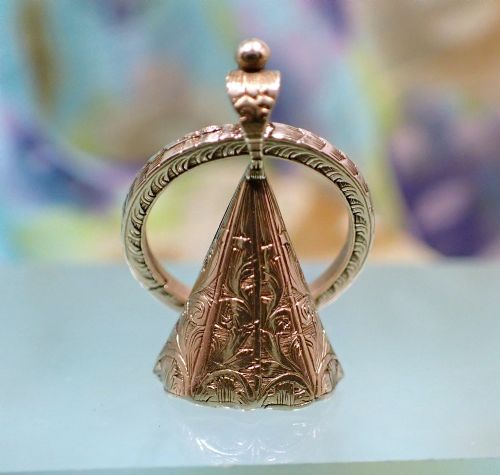
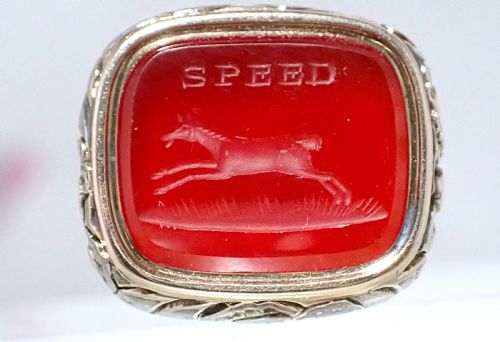


Gold Intaglio Pendant
A gold intaglio pendant combines carved hardstone and precious metal, offering portable miniature sculpture with centuries of history.
Gold Intaglio Pendant
A gold intaglio pendant is primarily found as a fob seal or swivel charm originating from the Georgian, Victorian, and Edwardian eras. These pieces bridge the gap between functional stationary tools and decorative jewellery, designed to be worn on chains or watch guards.
The selection on this page centres on items fashioned from gold, 9ct gold, 15ct gold, and gold cased metal. Formats range from simple signets to ornate pendants featuring carved stones depicting crests, figures, and classical motifs.
Materials and construction
Makers utilised precious metals including 9ct and 15ct yellow gold, alongside gold cased metal and gilt brass, to house the carved stones securely. Metalwork often displays cast or chased ornamentation, particularly on Victorian and Edwardian examples.
Stones such as carnelian, bloodstone, chalcedony, sardonyx, agate, and rock crystal were hand-carved in intaglio, creating a sunken design intended to leave a raised impression in sealing wax.
Assessing quality and execution
The fineness of the hand-carved intaglio work dictates the visual impact of the piece, with detailed figures, portraits, and inscriptions representing superior craftsmanship. Sharp execution in hardstones like carnelian and bloodstone requires exceptional lapidary skill.
The weight and purity of the gold mount, from solid 15ct settings to lighter 9ct or cased alternatives, determine the structural integrity and prestige of the pendant.
The Gold Intaglio Pendant Glossary
- Intaglio
- A design carved into the surface of a gemstone so that the impression produced is in relief. This technique was traditionally used for signet seals.
- Fob seal
- A small pendant attached to a pocket watch ribbon or chain featuring a matrix for stamping wax. Many were later converted into necklaces.
- Carnelian
- A brownish-red variety of quartz chalcedony widely used for signet rings and seals. Its translucency suited detailed intaglio carving.
- Sardonyx
- A form of onyx featuring alternating layers of sard and white chalcedony. It provides striking contrast for carved imagery.
- Spinner fob
- A mounting that allows the central seal or stone to rotate on a central axis. This often displays two distinct carved faces or a stone on one side and a hardstone panel on the other.
Gold Intaglio Pendant: Frequently Asked Questions
Can I still use my gold intaglio pendant to stamp wax?
Yes, many of these pieces retain their original carved intaglio matrices and can be pressed into warm sealing wax to leave a crisp impression. The stone matrix is durable enough for occasional stamping.
However, due to the age of the antique settings and mounts, many buyers choose to wear them purely as decorative pendants rather than functional seals.
How do I care for antique gold and stone jewellery?
Clean your pendant gently using a soft, dry cloth to remove natural oils from wear. Avoid harsh chemical dips or ultrasonic cleaners, particularly on softer stones like carnelian and chalcedony.
Store the piece separately from harder jewellery to prevent scratching the gold mounts or the carved stone face.
What is the difference between solid gold and gold cased seals?
Solid gold pieces are manufactured entirely from precious gold alloys, such as 9ct or 15ct gold, offering enduring material value throughout the piece. Hallmarks or specific tests often confirm this composition.
Gold cased metal items feature a layer of gold applied over a base metal core, a technique common in historical manufacturing to achieve a substantial appearance.
How can I tell the period of a pendant?
Dating relies on stylistic clues, metal types, and the nature of the stone carving. Georgian pieces often show distinct handcrafting and distinct Neoclassical motifs, while Victorian and Edwardian examples incorporate specific yellow gold hues and ornate floral or scroll mounts.
Examining the swivel mechanism and suspension loop also provides helpful context regarding the manufacturing era.