



Antique Seal Charm
An antique seal charm carries a carved stone matrix ready to press into hot wax, worn today as a pendant or bracelet charm.
Antique Seal Charm
An antique seal charm combines miniature sculpture with functional utility, taking the form of fob seals, swivel pendants, and charms designed to hang from chains or bracelets. These items originate from periods spanning the Georgian and Victorian eras through to the Edwardian period and the early twentieth century.
Makers cut initials, crests, and classical motifs into the stones, creating personal signets that served to stamp wax seals on correspondence. Collectors encounter these pieces functioning both as standalone pendants and as multiples gathered together on charm bracelets.
Materials and construction
Goldsmiths shaped mounts from yellow gold, rose gold, and gilt metal, casting and chasing ornate details like lions, elephants, and classical figures to form the frames. These precious metals provide the durable housing necessary to secure the stone matrices under daily wear.
Lapidaries shaped natural stones including carnelian, bloodstone, chalcedony, sardonyx, amethyst, and foiled citrine to fit the bezels of each piece. They ground the faces flat and used abrasive wheels and hand tools to cut intaglio designs into the stone surfaces.
An elephant-shaped gold cased mount stands ready to stamp your post.
Factors that separate quality tiers
The sophistication of the intaglio carving dictates the distinction between standard production and exceptional work, with finely detailed Greek figures or heraldic crests showing superior hand craftsmanship. Simple monograms and blank stones represent a more utilitarian approach to manufacture.
The weight and purity of the metal housing, alongside the complexity of cast decorative motifs such as figural animals, elevate the sculptural merit of the piece. Swivel mechanisms that operate smoothly and securely also reflect higher standards of original benchwork.
The Antique Seal Charm Glossary
- Intaglio
- A design carved into the surface of a stone so that the impression appears in relief when pressed into wax. This technique reverses the image to ensure the resulting seal reads correctly.
- Fob seal
- A small pendant designed originally to hang from a pocket watch ribbon or chain, featuring a hardstone base engraved with initials or a crest. They frequently double as charms in modern wear.
- Carnelian
- A brownish-red variety of quartz chalcedony that serves as the most frequent stone matrix found in these pieces. Its warm tone made it a favourite for signet rings and seals.
- Bloodstone
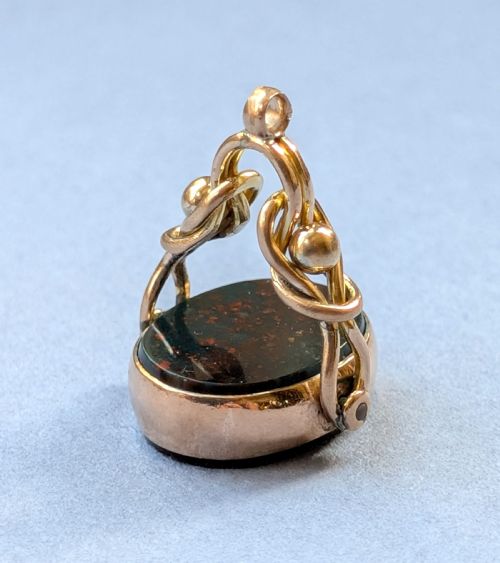
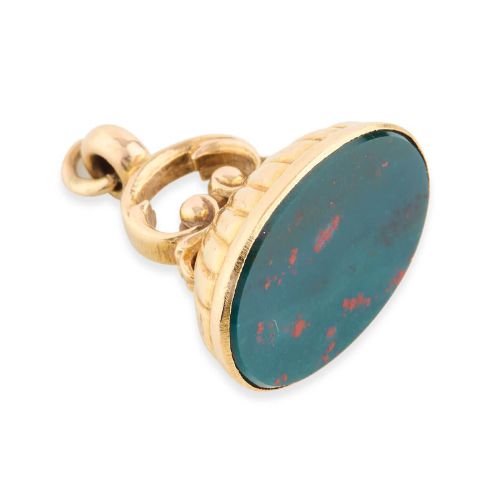
- A dark green jasper flecked with red spots of iron oxide, utilised in Georgian and Victorian seals. It provides a striking contrast against yellow and rose gold mounts.
- Swivel pendant
- A mounting style that allows the seal to rotate on a central axis within its frame. This lets the wearer display either side of the stone or pivot the matrix out of view.
Antique Seal Charm: Frequently Asked Questions
How do I wear an antique seal charm?
These pieces suspend easily from neck chains, split rings, or charm bracelets using their original jump rings or swivel B-bails. Their compact scale suits daily wear either alone as a pendant or grouped alongside other small jewels.
Because many retain their original swivel mechanisms, the pendant moves freely as you wear it. Ensure any suspension loop or split ring is secure before attaching the piece to a high-wear bracelet.
What is the difference between a fob and a charm?
A fob historically hung from a watch chain and served as a portable stamp for letters and documents. A charm is generally smaller and intended primarily for suspension from a bracelet.
Over time, the distinction has blurred as people repurpose fob seals to wear on chains. Many examples listed here combine both functions, appearing as substantial fob pendants adapted for charm bracelets.
Can I still use these seals to stamp wax?
Most antique seal charms retain their original stone matrices with the intaglio carving intact and crisp. You can press them into melted sealing wax to leave a raised impression of the crest or initials.
Take care to clean any old wax residue gently from the stone using soft tools to preserve the carved details. Avoid harsh chemical solvents that might damage softer mounted stones like chalcedony or carnelian.
How do I date an antique seal charm?
Dating relies on stylistic clues, metal types, and hallmarks stamped onto the gold mounts. Georgian pieces often display heavy Neoclassical influence and unmarked high-carat gold, while Victorian examples frequently incorporate 9ct gold and bloodstone or carnelian combinations.
Edwardian and later twentieth-century pieces tend to feature lighter constructions or specific hallmarks indicating assay offices and exact years. Comparing the mount style and the subject of the intaglio helps narrow the period of manufacture.