




Victorian Carnelian Charm
These Victorian carnelian charm items are miniature architectural seals and pendants that bring rich engraved detail and deep red stone to a bracelet or chain.
Victorian Carnelian Charm
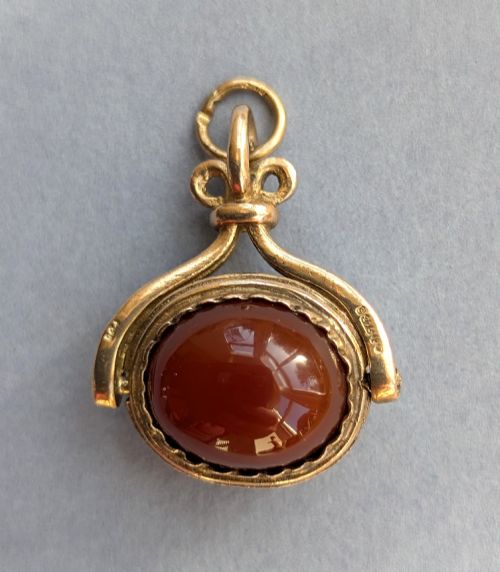
When you search for a victorian carnelian charm, you are looking at small fob seals, swivel pendants and charms that hung from pocket watch chains or charm bracelets in the nineteenth century. These pieces combine rich red carnelian or cornelian stones with precious metals, often designed to be worn on the wrist or neck.
You are most likely to meet 9ct gold or gilt metal mounts framing polished carnelian, frequently cut as intaglios with Greek figures, Roman emperors or personal names like Ann. The range spans Georgian precursors through to Edwardian interpretations, though the Victorian period dominates the selection.
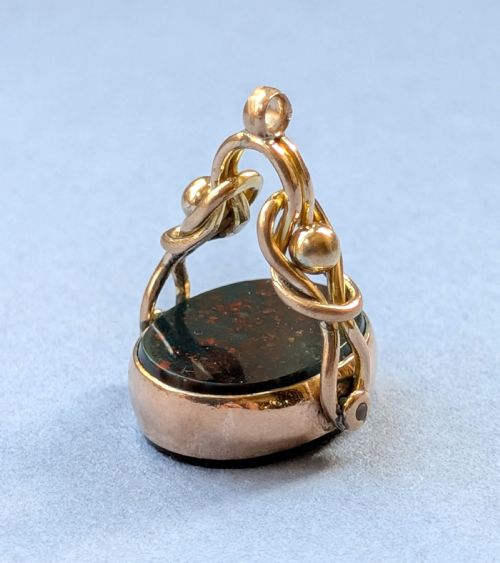
The forms function primarily as seals or decorative pendants, featuring swivel mechanisms that allow the stone to rotate. They appear both singly and clustered on larger charm bracelets alongside bloodstone and agate.
How they were made
The makers shaped these objects using 9ct rose gold, 9ct yellow gold, sterling silver and gilt metal to house the natural stones. Precious metal was cast, chased and engraved to create elaborate bezels and suspension loops.
Goldsmiths carved the red carnelian and cornelian stones by hand, sinking intaglios into the flat faces to leave reversed impressions for sealing wax. Agate and bloodstone also appear, occasionally paired in the same swivel mount as the carnelian.
Victorian Carnelian Charm Retail Price Guide 2026
Typical asking prices for victorian carnelian charm among the pieces listed under this phrase on Sellingantiques today, from the lower quarter to the upper quarter. They describe what is for sale here now, not the wider market.
An anonymous Victorian named Ann left her signature immortalised in red carnelian, ready to stamp wax across the centuries.
What varies in quality
Quality rests in the crispness of the hand-carved intaglio and the weight of the gold mount. Finer pieces show deep, deliberate engraving of classical figures rather than shallow, hasty lines.
The sophistication of the swivel mechanism and the polish of the carnelian stone set finer examples apart from simpler, lighter metal mounts. The clarity and rich orange-red tone of the stone itself also define the better tier.
The Victorian Carnelian Charm Glossary
- Carnelian
- A brownish-red variety of chalcedony quartz that takes a high polish and was favoured for signet seals. It is also historically spelled cornelian in many British records.
- Intaglio
- A gem or stone carved with a design depressed below the surface so that an impression in wax can be made. This technique was standard for personal signets.
- Fob seal
- A small pendant designed to hang from a watch chain, incorporating a hardstone matrix for stamping wax documents. Many now serve as charms on bracelets.
- Swivel fob
- A mounting that allows the central stone to spin on a central axis, often showing a hardstone on one side and an engraved crest or initials on the reverse.
- T Bar
- A transverse bar of metal attached to the centre of a pocket watch chain, used to anchor the chain through a waistcoat buttonhole. It frequently survives alongside swivel fobs.
Victorian Carnelian Charm: Frequently Asked Questions
What is a carnelian fob?
A carnelian fob is a small ornamental seal featuring a red quartz stone, historically used to stamp wax seals on correspondence. They were designed to dangle from watch chains.
Over time, many of these seals transitioned to charm bracelets or necklaces as decorative pendants while retaining their swivel mounts and carved intaglios.
How do I date a gold charm?
Dating relies on hallmarks, metal standards like 9ct rose gold, and the prevailing styles of the Georgian, Victorian and Edwardian eras. Fob seals and swivel mounts evolved from chunky Georgian designs to lighter Edwardian interpretations.
Engraving subjects, such as Roman emperors or Greek figures, also offer clues to the period of manufacture when hallmarks are absent or rubbed.
Can I wear these on a bracelet?
Yes, many collectors wear these pieces on heavy charm bracelets alongside other seals and lockets. Their sturdy suspension loops are built to handle daily movement.
Ensure the jump rings are secure and the swivel mechanisms function properly before adding them to a high-wear bracelet.
What is the difference between carnelian and cornelian?
Carnelian and cornelian refer to the exact same translucent red-orange chalcedony stone. The spelling often depends on the age of the document or the preference of the jeweller.
Both terms describe the durable hardstone utilised in nineteenth-century signet seals and intaglios.