


Gold Giltwood Candlestick
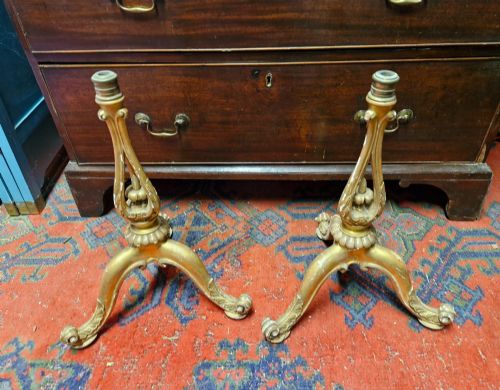
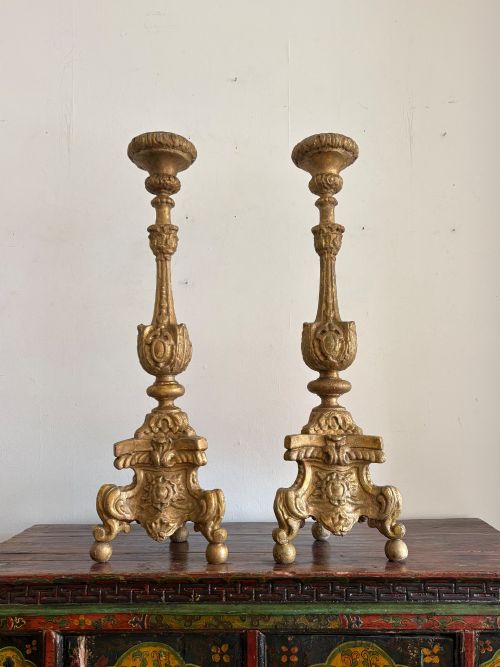
A gold giltwood candlestick brings rich texture and centuries of craftsmanship to a room, offering warm illumination through carved and gilded surfaces.
Gold Giltwood Candlestick
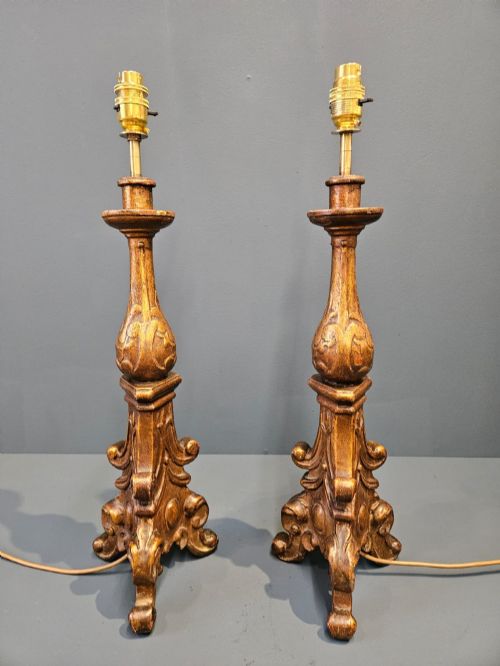
A gold giltwood candlestick is a decorative lighting support shaped by historical design, frequently originating from continental European workshops in periods such as the eighteenth and nineteenth centuries. These items encompass altar candlesticks, pricket sticks, and standard lamps, many of which have been adapted over time to hold electrical fittings.
Buyers encountering this selection will frequently find Italian, Spanish, and French examples spanning the baroque and rococo styles. The forms range from tall altar-type candle-holders of impressive proportions to modest pairs of carved wooden bases.
Materials and construction methods
Carvers shaped the underlying timber foundation by hand before applying layers of gesso to create a smooth surface for ornamentation. This traditional preparation allowed artisans to achieve sharp relief work and deep sculptural detail before gilding.
Workers then applied thin sheets of gold leaf or utilised mecca silvering techniques to impart a lustrous metallic finish. Polychrome highlights and painted accents occasionally appear alongside the gilding to add depth to the carved contours.
Several listings reimagine historic church candlesticks and even carved Blackamoor figures as functional household lamps, proving that old altarware loves a second act.
Factors determining quality and craftsmanship
The refinement of the initial wood carving dictates much of the visual success, with skilled hands producing fluid acanthus leaves and balanced architectural proportions. Crisp execution in the gesso layer preserves the sharpness of the underlying design beneath the metallic leaf.
The preservation of the original gold leaf surface significantly influences character, as natural ageing reveals subtle patination over the timber base. Pieces retaining their early decorative finishes and structural integrity represent the more accomplished examples.
The Gold Giltwood Candlestick Glossary
- Giltwood
- Timber that has been coated with gold leaf or a metallic substitute. This finish provides the characteristic luminous appearance found on period lighting supports.
- Gesso
- A mixture of plaster of Paris and glue binder applied to wood. Artisans use this ground layer to build up smooth surfaces for intricate carving and gilding.
- Pricket
- A sharp metal spike set on a candlestick to secure a candle. This traditional fitting appears frequently on ecclesiastical altar pieces.
- Mecca
- A transparent yellow-gold varnish applied over silver leaf to imitate the appearance of true gold. Artisans used this technique to achieve rich metallic tones economically.
- Baroque
- An ornate design style characterised by dramatic movement and exuberant carved detail. Pieces from this aesthetic display bold scrolls and weighty proportions.
Gold Giltwood Candlestick: Frequently Asked Questions
How do I wire a giltwood candlestick lamp?
Wiring typically involves routing a cord discreetly through the centre of the turned timber or down the back to preserve the exterior carving. Professional electricians ensure the installation respects the fragile nature of the antique wood.
Many pieces arrive with previous electrical adaptations, allowing buyers to integrate them safely into modern interiors without altering the historic structure.
Were these originally made as lamps?
The majority of these objects began life as church altar sticks or domestic candle holders before conversion to electricity in later decades. Craftsmen often adapted tall altar-type candlesticks to serve as table lamps or standard lamps.
This evolutionary history means that physical evidence of prickets or original candle cups frequently remains visible beneath modern lamp fittings.
How should I clean a gilded surface?
Dusting requires only a very soft, dry brush or feather duster to remove loose particles without disturbing the delicate gold leaf. Moisture and chemical cleaners must be avoided entirely to prevent lifting the historic gesso and gilding.
Maintaining a stable indoor environment protects the underlying timber from warping and keeps the metallic finish secure.
What indicates an Italian baroque piece?
Italian baroque examples are defined by dynamic sculptural forms, including swirling acanthus motifs, heavy base supports, and grand proportions. These items often reflect ecclesiastical origins, such as altar candlesticks from Venetian or Florentine workshops.
The combination of deep wood carving and rich gilding creates the dramatic visual weight characteristic of southern European craftsmanship from the period.