



Gold Gilt Oriental Vases
These gold gilt oriental vases bring together intricate earthenware and porcelain forms with rich metallic decoration from nineteenth and early twentieth century workshops.
Gold Gilt Oriental Vases
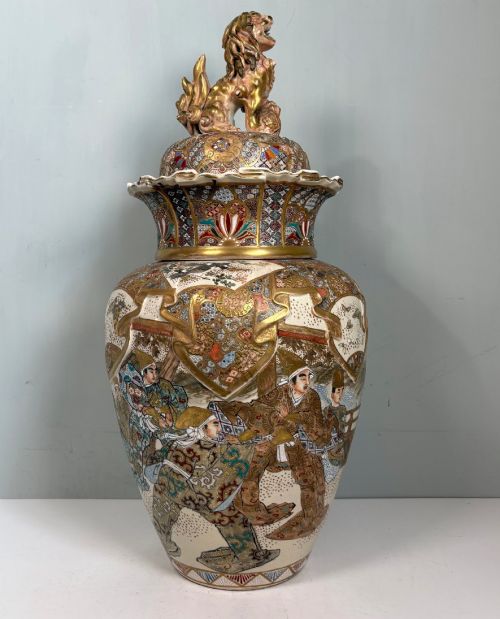
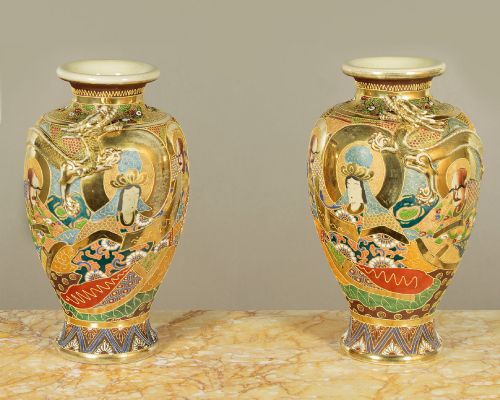
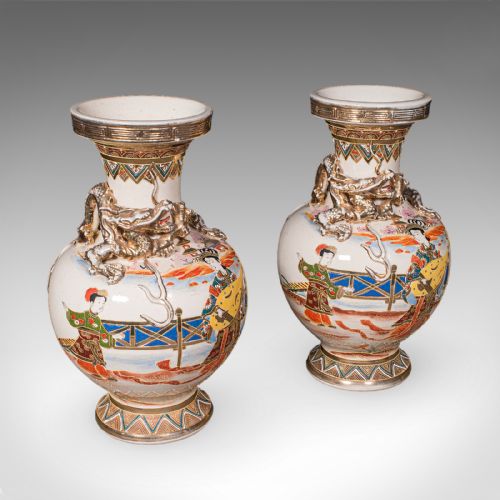
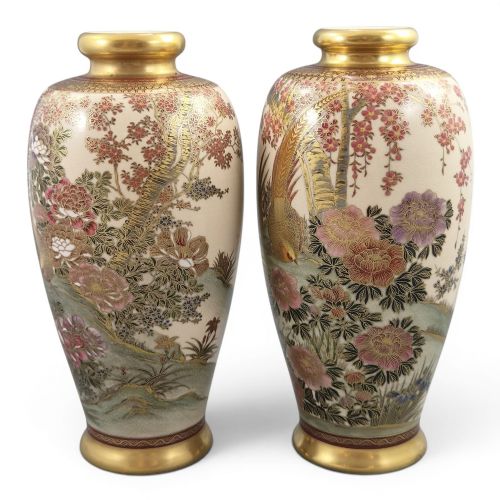
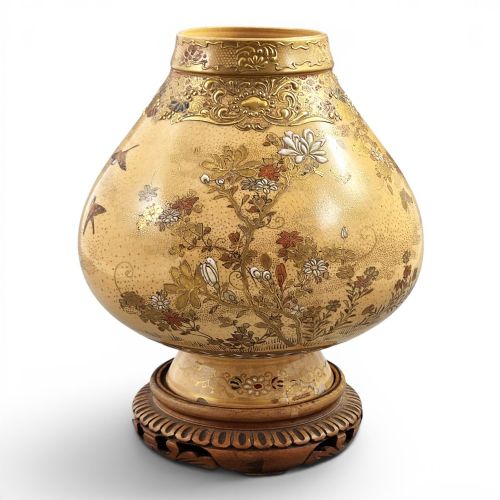
Gold gilt oriental vases encompass decorative vessels originating from Japanese and Chinese traditions, most frequently seen here as Satsuma earthenware and Imari or export porcelain pieces from the nineteenth century. Buyers searching this phrase look for vessels displaying elaborate figural panels, floral scenes, and dense metallic embellishments across baluster, bottle, and hexagonal forms.
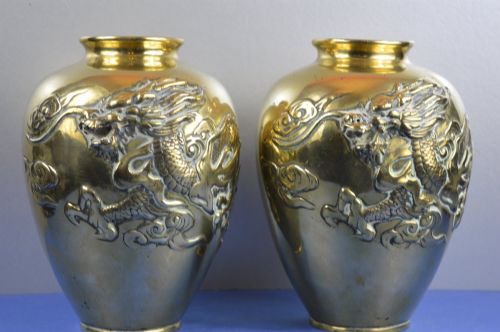
Japanese Satsuma ceramics dominate the selection, featuring characteristic crackle-glaze earthenware decorated with heavy gold leaf and enamel. Alongside these, Chinese gilt bronze, cloisonne, and powder blue porcelain vases provide alternative examples of Asian craftsmanship adapted for both display and conversion into table lamps.
Materials and production methods
Production centres on ceramic bodies shaped from earthenware or hard-paste porcelain, which are then finished with hand-painted enamel pigments and applied gold leaf. Many Japanese works utilise moriage technique, building up raised clay dots and lines beneath the gilding to create tactile relief across the surface.
Metal components such as ormolu mounts, gilt bronze bases, and cloisonne wirework frequently accompany the ceramic bodies. These mounts require precision casting and fire-gilding techniques, particularly in nineteenth century export pieces designed to appeal to European interiors.
Keep an eye out for hidden elephants acting as handles and microscopic golden samurai sharing space on a single miniature vessel.
Factors influencing quality
Quality rests upon the precision of the hand-painted detail and the density of the gold leaf application. Finer pieces demonstrate disciplined brushwork in complex figural processions or botanical gardens, whereas simpler examples rely on repetitive patterns and heavier, less refined enamel work.
The prominence of the maker or workshop mark plays a substantial role, with signed pieces from known Kyoto studios or distinguished exhibition makers commanding greater attention. The preservation of the delicate moriage relief and the integrity of the original gilding without excessive rubbing further distinguish superior examples.
Manpei Kobe·Kinkozan Kyoto·Chosei Kyoto·Nanzan mark·Seiko en Chokei·Hakusan
The Gold Gilt Oriental Vases Glossary
- Satsuma
- A type of Japanese earthenware originating in Satsuma Province, traditionally characterised by an ivory-coloured crackle glaze and dense polychrome and gold decoration.
- Moriage
- A ceramic technique where slip is piped onto the surface in raised dots or lines before firing and gilding, creating a textured, three-dimensional effect.
- Imari
- A style of Japanese porcelain featuring a distinct palette of underglaze blue, iron red, and added gold, produced primarily for export.
- Ormolu
- Finely ground high-carat gold applied to a bronze base using a mercury amalgamation process, frequently used for decorative mounts on nineteenth century vases.
- Shimazu Mon
- The heraldic crest of the Shimazu clan, commonly found marked on Satsuma ceramics associated with the domain.
Gold Gilt Oriental Vases: Frequently Asked Questions
What is Satsuma ware?
Satsuma ware is a specific type of Japanese earthenware featuring a signature cream-coloured crackled glaze. It serves as the primary canvas for elaborate hand-painted scenes enriched with gold leaf.
These pieces were heavily produced for the export market during the Meiji period, combining traditional Japanese imagery with opulent decorative styles that appealed to Western collectors.
How can I date these vases?
Dating relies heavily on stylistic markers, reign marks, and period designations such as the Meiji or late Victorian eras. Nineteenth-century examples often exhibit finer hand-painting and distinct workshop signatures on the base.
Changes in export regulations and the shift from traditional handcrafting toward mass production in the early twentieth century also help establish the chronological window of a vessel.
Were these vases made for export?
The vast majority of nineteenth-century Japanese and Chinese gilt vases found in Western collections were specifically created for the international export market. Artisans adapted traditional forms and decorative motifs to satisfy European and American tastes for ornate oriental objects.
Many of these vessels were subsequently fitted with ormolu mounts or converted into table lamps after arriving in Western homes during the Victorian period.
What is moriage decoration?
Moriage is a decorative ceramic technique where liquid clay is applied in raised dots, trails, or motifs before the piece is fired and glazed. This creates a distinct tactile relief across the surface of the vase.
Painters then layer enamels and gold leaf directly over these raised sections, resulting in a rich, shimmering texture that catches the light.