
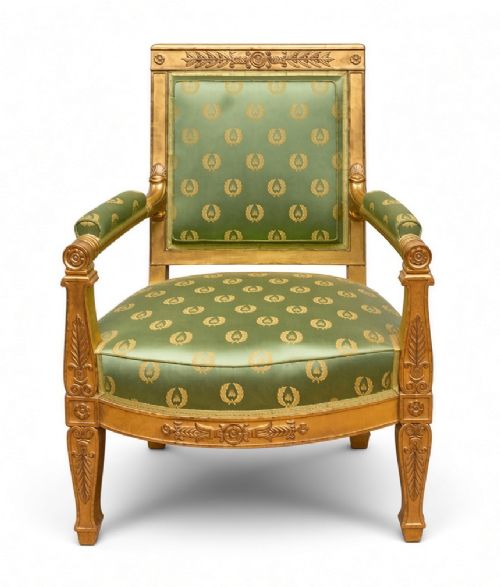
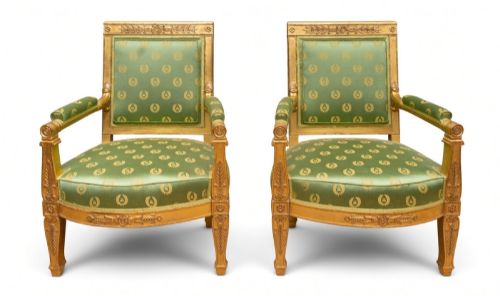
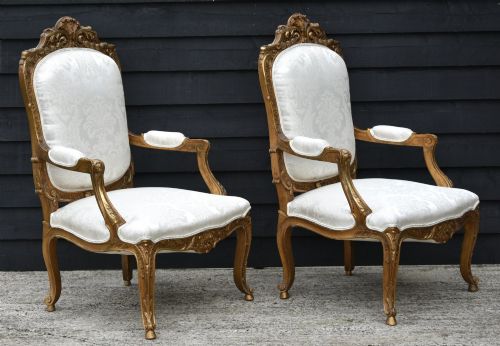
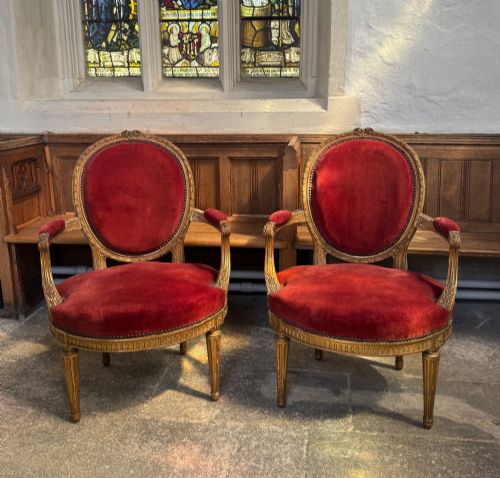
Gold Gilt Fauteuil Chair
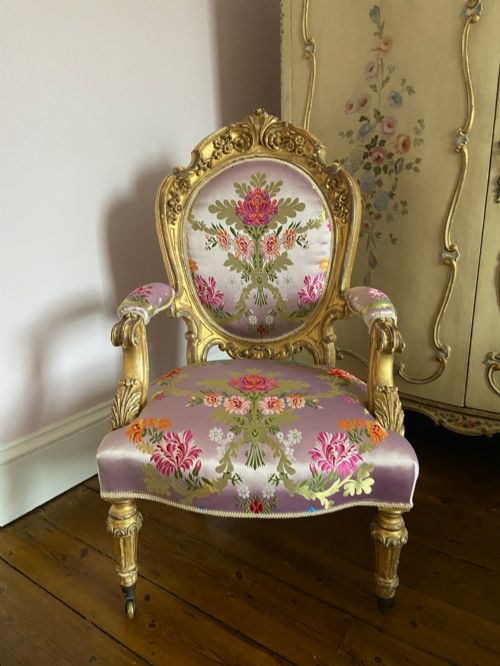
A gold gilt fauteuil chair brings structured French elegance and carved wooden ornament directly into a room.
Gold Gilt Fauteuil Chair
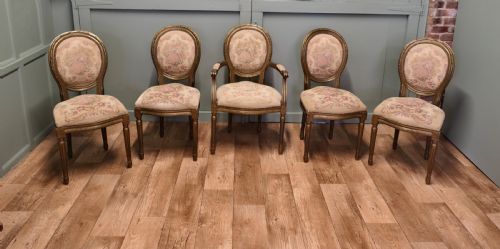
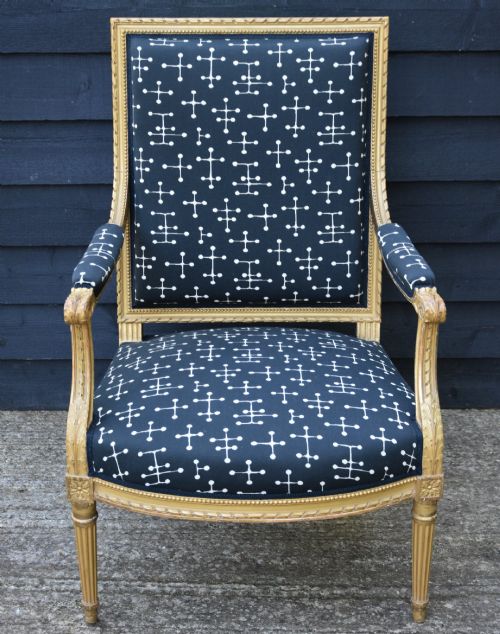
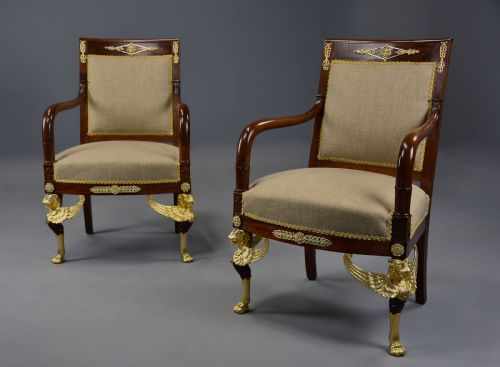
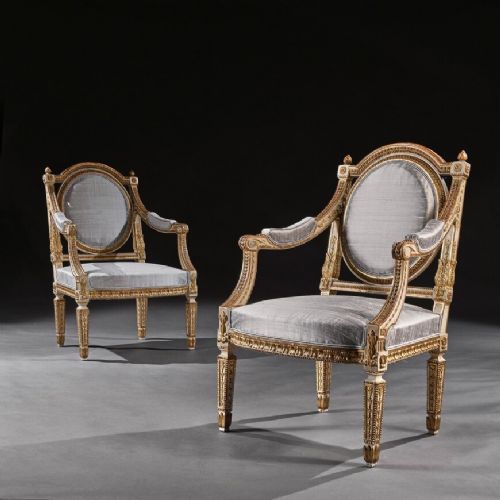
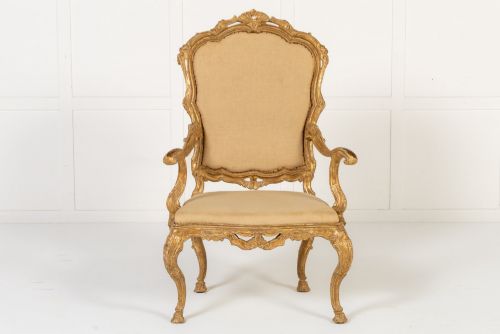
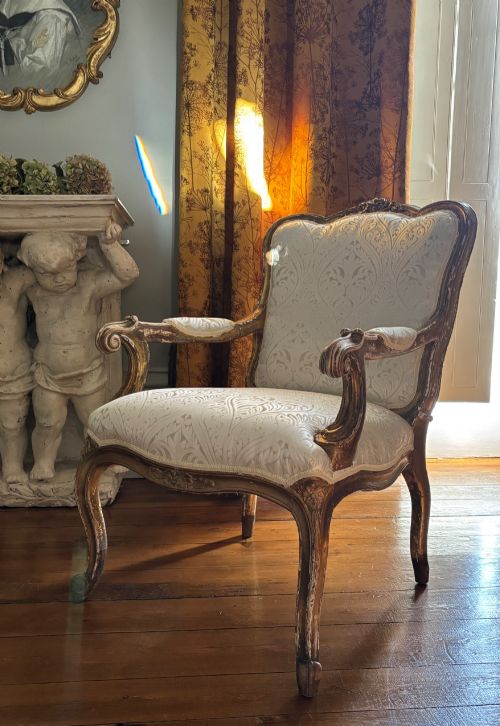
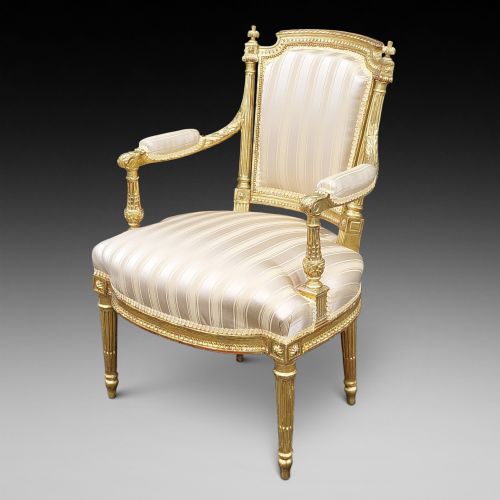
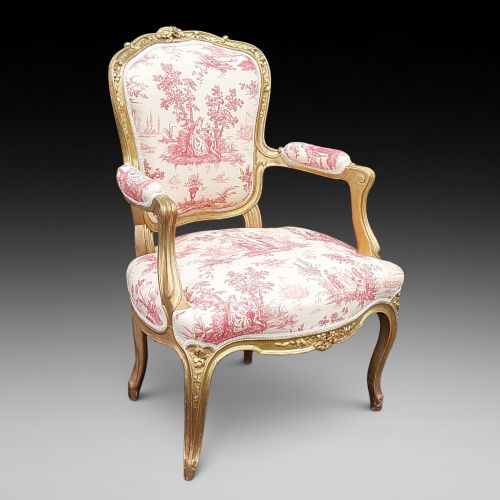
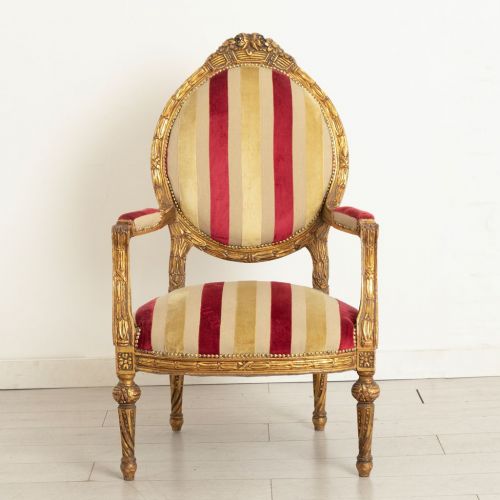
A gold gilt fauteuil chair is an open-armed upholstered seat originating from French design traditions, built to combine formal reception rooms with comfortable seating. You will encounter these mostly as nineteenth-century interpretations of Louis XVI or Rococo styles, alongside pieces carrying Empire or Régence influences.
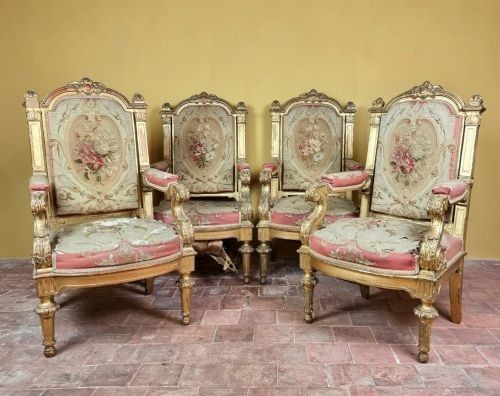
The selection ranges from single salon chairs and pairs to larger suites, constructed in timber frameworks covered in gold leaf or gilt paint. Makers drew upon historical French aesthetics, producing open armchairs with upholstered backs and seats intended for drawing rooms and formal chambers.
How They Were Made
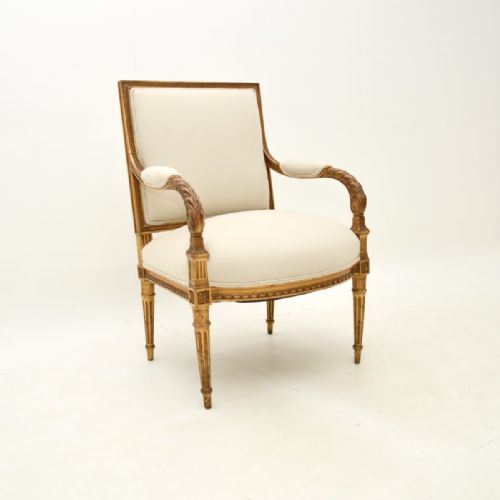
Carpenters shaped frames primarily from beech, walnut, mahogany, or general timber, carving intricate floral motifs, fluted legs, and crest rails directly into the wood before gilding. The gilding process applied thin layers of gold leaf or metallic paint over a prepared ground to achieve a bright reflective surface.
Traditional upholsterers finished the seats and backs using textile coverings such as silk, velvet, tapestry, and fabric secured over internal padding. These materials were chosen to complement the gilded woodwork and provide structured support for the sitter.
Listings feature beech, walnut, and mahogany timber frameworks finished in giltwood.
What Varies in Quality
The distinction between tiers rests upon the crispness of the wood carving and the depth of the gilding applied to the frame. Skilled hands produced deep, undercut floral and scroll work, whereas simpler examples rely on shallow surface moulding.
Proportion and structural integrity separate standard workshop output from exceptional commissions. Refined pieces maintain balanced proportions in the arm supports and legs, using dense timbers that support the carved details without splitting.
Jacob Desmalter·Holland and Sons·Blaise Maucuy
The Gold Gilt Fauteuil Chair Glossary
- Fauteuil
- An open-armed upholstered armchair with exposed wooden sides originating in France. These seats developed during the seventeenth century to accommodate wide court fashions.
- Giltwood
- Timber coated with gold leaf or powder over a gesso base. This finish provides a bright metallic sheen designed to catch candle or natural light.
- Louis XVI Style
- A neoclassical design movement characterised by straight lines, symmetry, and classical motifs such as fluted columns and ribbon twists. It stands in contrast to the earlier curved Rococo aesthetic.
- Restauration
- A French decorative period spanning the early nineteenth century that bridged the Empire style and later revivals. Furniture from this era often retains neoclassical restraint while introducing simpler wood grains and restrained gilt mounts.
- Tapestry
- A heavy hand-woven textile featuring pictorial designs used historically for durable upholstery. These fabrics add texture and traditional pattern to chair backs and seats.
Gold Gilt Fauteuil Chair: Frequently Asked Questions
Where should I place a gilt armchair?
These open armchairs suit formal sitting rooms, studies, or bedrooms where their carved woodwork and metallic finish can serve as a focal point.
Position them away from direct sunlight to protect delicate silk or velvet upholstery fabrics from fading over time.
How do I identify a Louis XVI style chair?
Look for straight tapered legs, often fluted, and geometric frames that depart from the curved lines of earlier Rococo designs.
Carved details on these chairs typically include classical motifs like laurel leaves, ribbons, and beaded borders.
Can I use these chairs for daily seating?
Most antique gilt armchairs function well for occasional sitting when placed in low-traffic areas of the home.
Their structural strength depends on the original timber frame and the condition of the traditional joints beneath the gilding.