
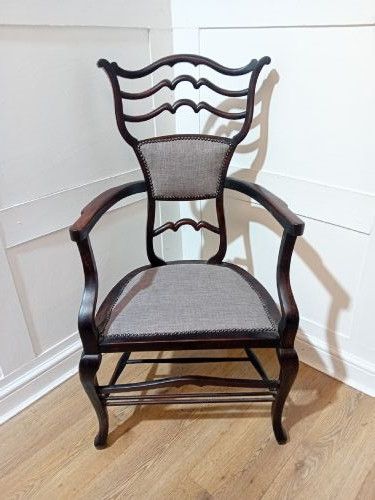
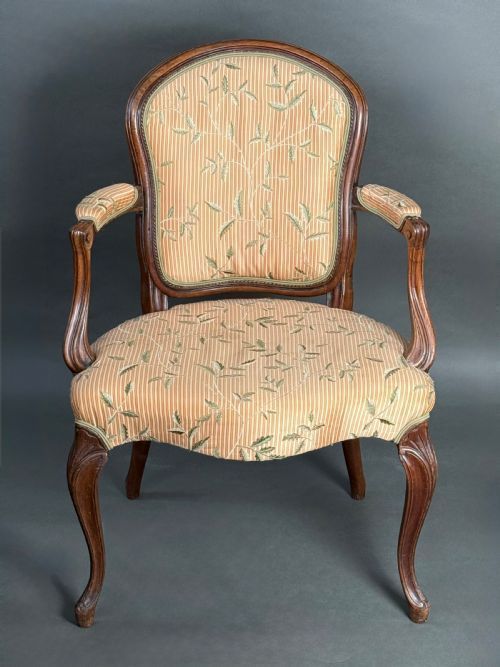
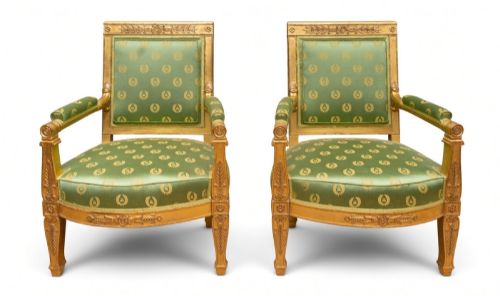
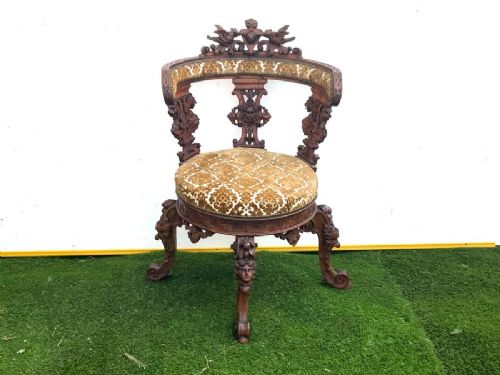
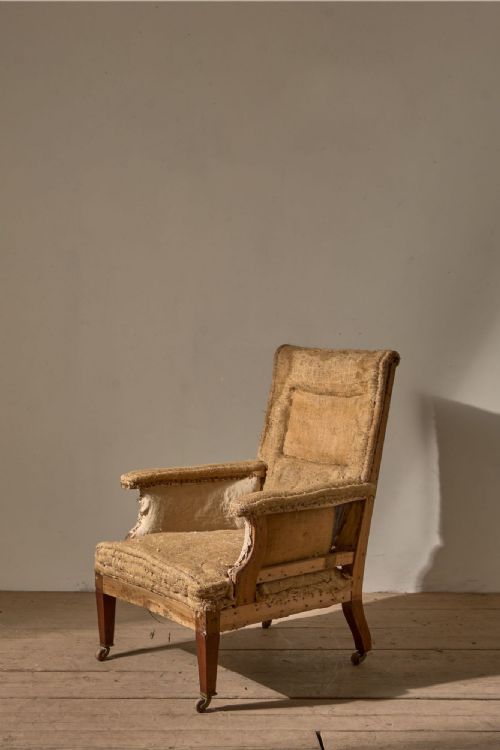
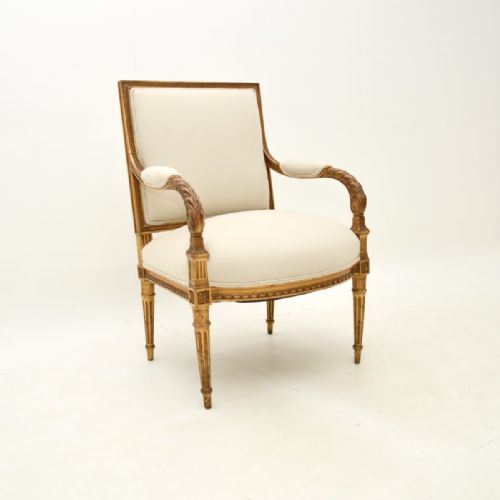


Carved Wood Padded Armchair
A carved wood padded armchair brings comfort and period character to a room, offering robust support through centuries of seating tradition.
Materials and construction
Craftsmen built the structural frames using solid hardwoods like mahogany, walnut, beech, rosewood and yew wood. Carving adorned the visible woodwork, sometimes enhanced with painted finishes, silver gilt or gilded surfaces.
Upholstery relied on traditional padded techniques using fabric, silk, velvet and needlework covers. Brass details and tacks often secured the textile elements to the wooden carcasses.
Indicators of quality
Quality rests heavily upon the crispness and depth of the timber carving. Sharp hand-chiselled details on walnut or mahogany frames elevate a piece above simpler production.
The integrity of the frame construction and the survival of original upholstery materials dictate the standing of the chair. Cohesion between the carved woodwork and the textile covering defines superior examples.
Listings feature pieces spanning the eighteenth, nineteenth and early twentieth centuries, constructed from walnut, mahogany, beech, rosewood and yew wood.
Jacob Desmalter
The Carved Wood Padded Armchair Glossary
- Fauteuil
- An open-arm armchair with a wooden frame, originating in France. These chairs typically feature padded armrests and exposed carved woodwork.
- Giltwood
- Timber coated with a thin layer of gold leaf. This finish appears frequently on decorative French and revival frames.
- Gainsborough chair
- A type of eighteenth-century upholstered open armchair with short arms. These pieces were designed specifically for writing desks.
- Tub armchair
- A seat with a continuous curved back and arms forming a rounded enclosure. Upholstery covers the interior shell completely.
Carved Wood Padded Armchair: Frequently Asked Questions
How do I identify a Victorian armchair?
Victorian armchairs often utilise dense timbers like mahogany and rosewood with heavy turnings or elaborate carving. Look for distinct nineteenth-century upholstery styles and robust frames.
Check for maker stamps or retail labels beneath the seat rails where possible. Construction methods also help date the timber framing.
Where should I place a French style armchair?
French style armchairs suit drawing rooms, reading corners or bedrooms where decorative woodwork can be appreciated. Their carved frames add elegance to both traditional and eclectic interiors.
Ensure the scale of the armchair matches surrounding furniture pieces. Pair open armchairs with complementary side tables or reading lamps.
What is the difference between a desk chair and a gentleman's chair?
Desk chairs are built for writing tasks, often featuring lower arms and mobility or swivel adaptations. Gentleman's chairs provide wider, deeply padded seating suited for relaxation.
Both types utilise carved wooden frames but serve distinct functional roles in period rooms.
How do I care for antique padded armchairs?
Protect antique upholstery from direct sunlight to prevent fading in silk, velvet or needlework covers. Dust wooden carved frames regularly with a soft, dry cloth.
Avoid using harsh chemical cleaners on painted or giltwood surfaces. Consult a specialist restorer for deep cleaning of antique textiles.