

Gold Gilt Accent Chair
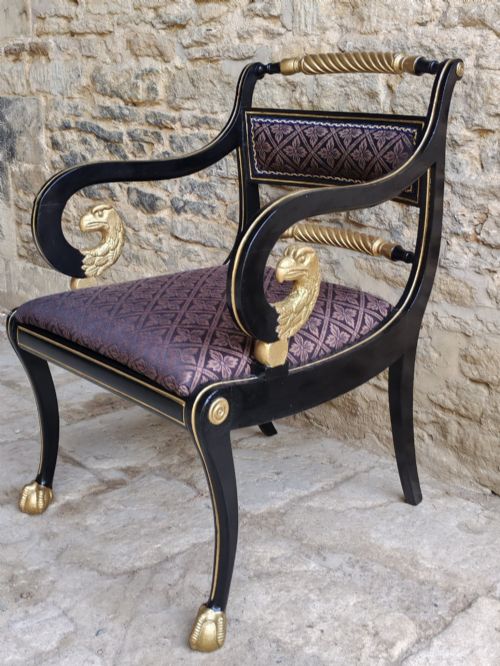
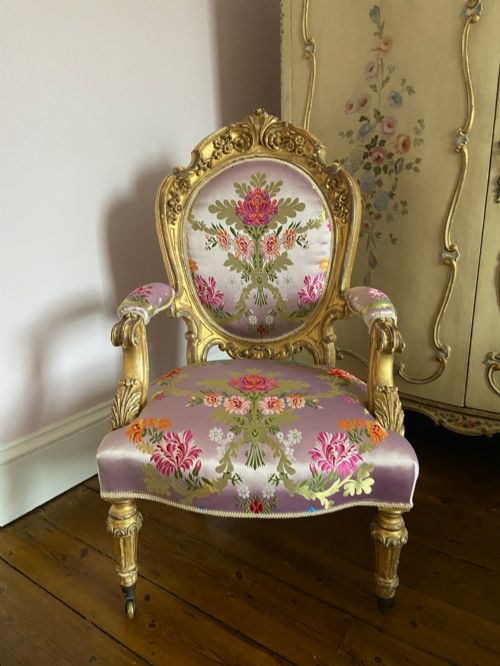
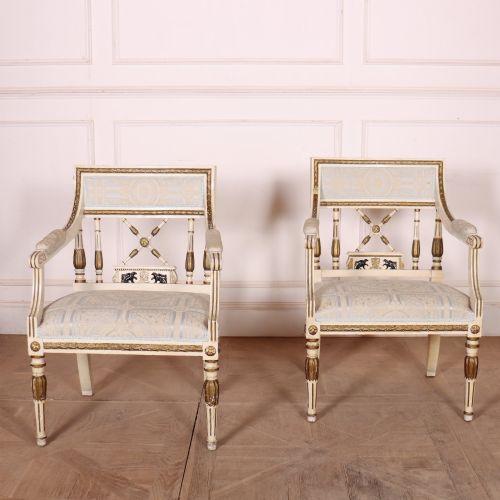
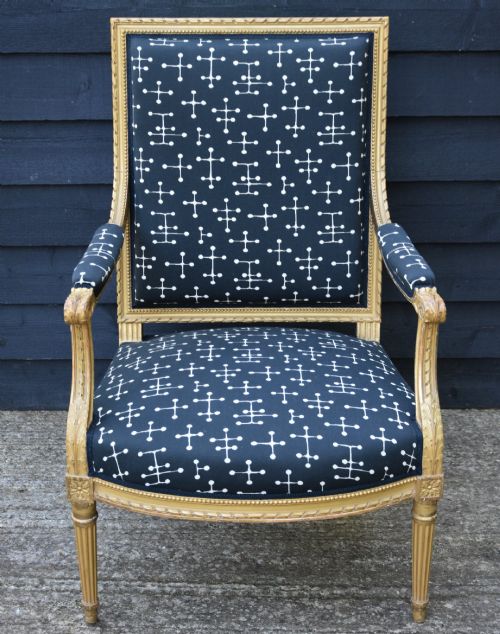
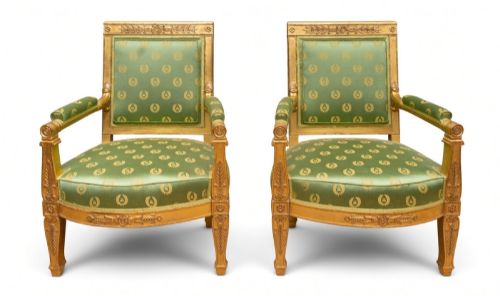
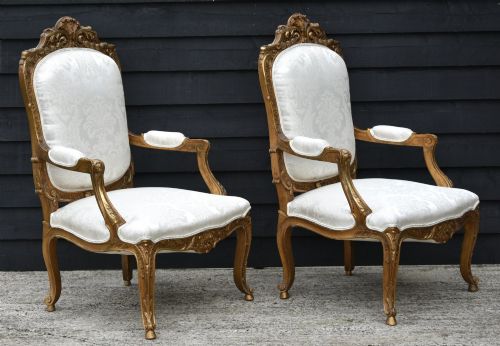
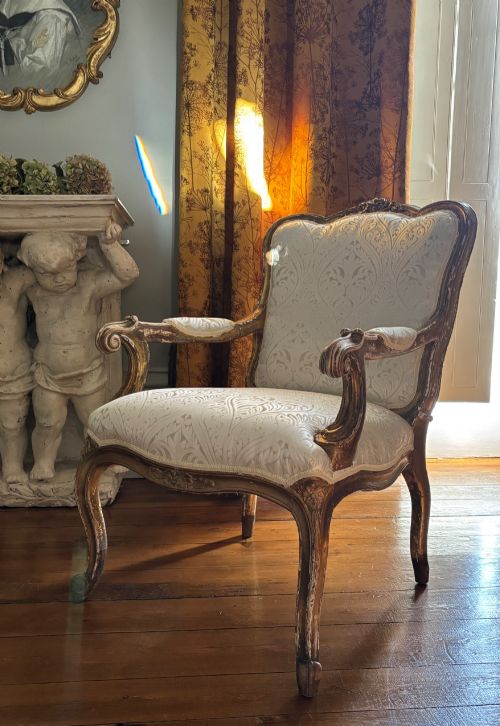
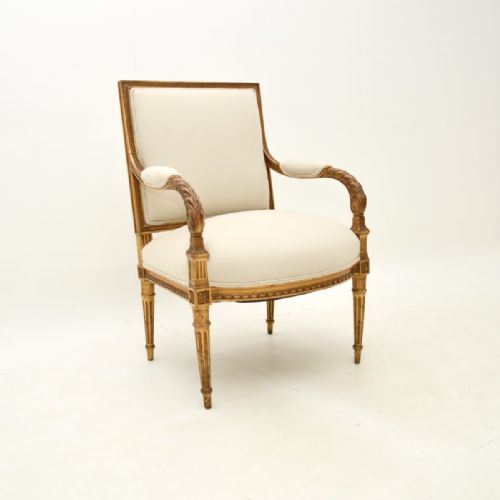
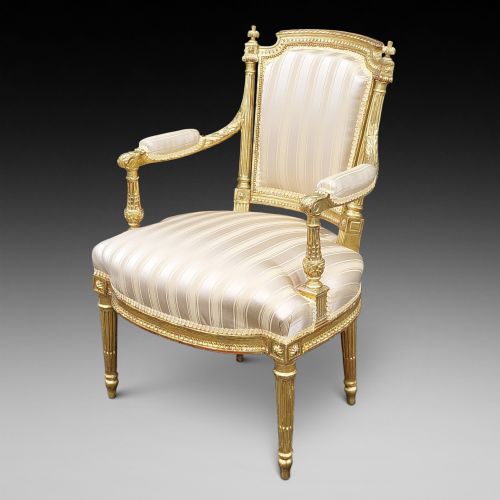
A gold gilt accent chair brings sculptural presence and historical style into a room, spanning French revival designs and Regency forms.
Gold Gilt Accent Chair
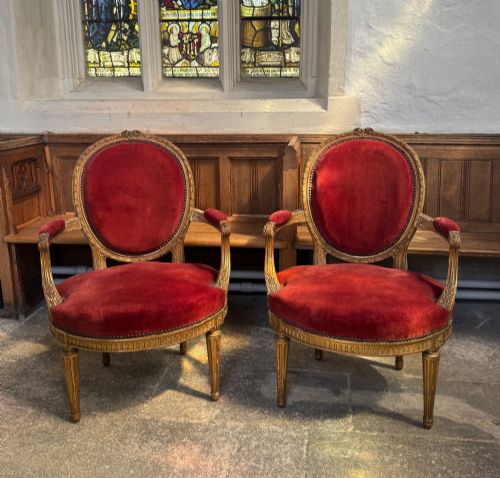
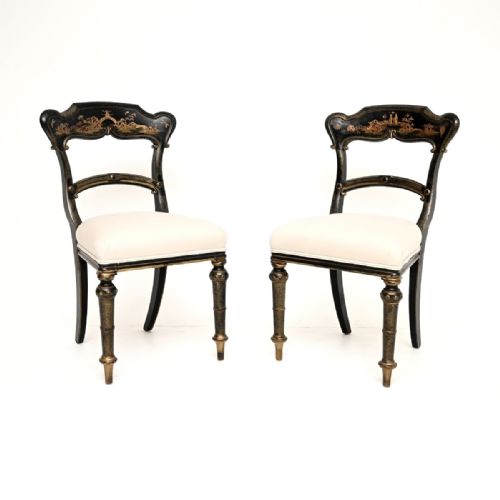
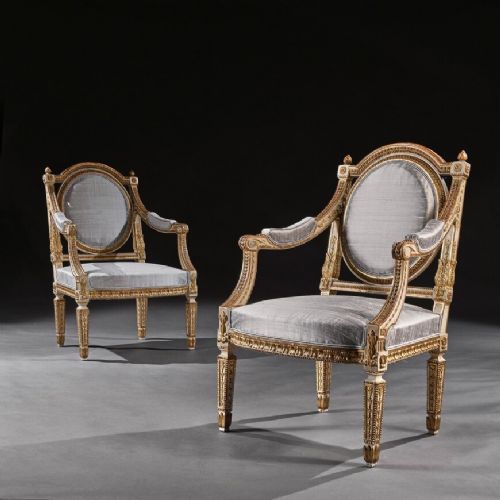
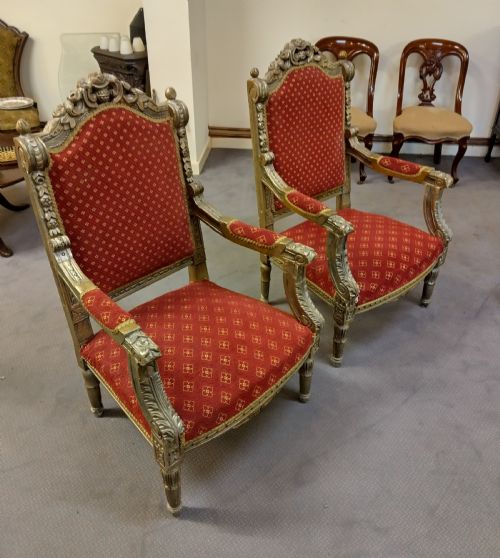
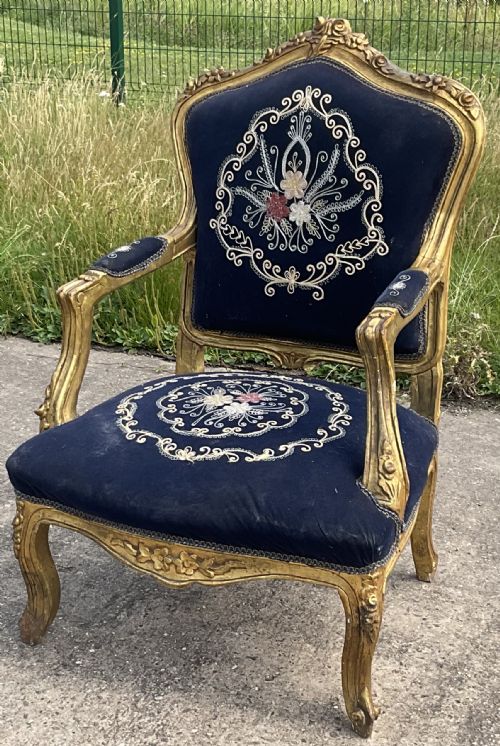
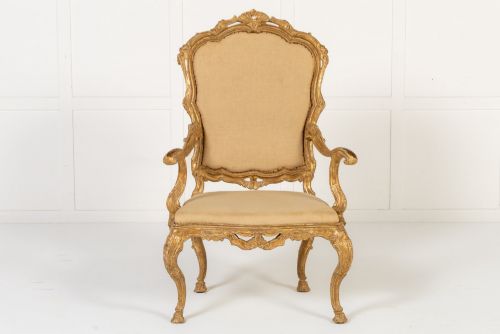
A gold gilt accent chair encompasses seating forms such as armchairs, bergères, salon chairs, and occasional chairs designed to stand out in a room. The selections span French salon pieces, English library seating, and Italian seating shaped by classical and revival movements.
Most examples belong to the nineteenth century, drawing heavily on Louis XVI style, French Rococo revival, and neoclassical design aesthetics. Buyers encounter everything from large giltwood throne chairs to compact bedroom and side chairs.
Makers and workshops across Britain, France, Italy, and Sweden produced these frames for formal interiors, utilising gilt finishes to catch the light. The offerings range from single occasional pieces to matched pairs and larger sets.
How they were made
The structural frames rely on timbers such as beech, walnut, and general wood, carved by hand with detailed floral, scroll, and classical motifs. Giltwood surfaces involve the application of gold leaf or gilt finishes over prepared grounds to create a metallic sheen.
Upholstery methods combine traditional webbing and stuffing with contemporary or period fabrics like silk, velvet, and patterned textiles. Brass and cane components appear on specific Regency and Victorian variants for structural and decorative effect.
Listings feature frames from the Regency period through to the 1920s, dominated by nineteenth-century French designs.
What varies in quality
The crispness and depth of the wood carving dictate the visual standard of the frame, separating mass-produced nineteenth-century items from deeply articulated hand-carved pieces. Crisp acanthus leaves, fluted legs, and balanced proportions reflect skilled workshop production.
The preservation of the original gilt surface determines historical integrity, with burnished gold leaf ageing differently from later painted gold finishes. Frame stability depends on the tightness of the joinery in the beech or walnut structure.
Jacob Desmalter·Blaise Maucuy·Lamb of Manchester·Holland and Sons
The Gold Gilt Accent Chair Glossary
- Giltwood
- Wood that has been coated with thin sheets of gold leaf or gold powder. This surface treatment provides the characteristic reflective brilliance seen on formal antique seating.
- Bergère
- An enclosed upholstered armchair with wooden framing and a solid upholstered back and sides. It typically includes a loose cushion for seating comfort.
- Fauteuil
- An open-arm armchair originating in France, featuring exposed wooden arms and upholstered back and seat. The armrests often include padded elbow rests.
- Louis XVI Style
- A neoclassical design aesthetic characterised by straight lines, symmetrical geometry, and classical motifs such as fluting and ribbons. It contrasts with the flowing curves of earlier Rococo forms.
Gold Gilt Accent Chair: Frequently Asked Questions
How do I identify a Louis XVI style chair?
Louis XVI style chairs typically display straight, fluted legs and geometric frames, drawing on classical Greek and Roman architecture. These pieces often feature oval or rectangular backs with carved ribbon or floral details.
In contrast, earlier Rococo designs favour asymmetrical curves and organic scrollwork. Examining the leg shape and the symmetry of the carving helps separate these revival periods.
What is the difference between an armchair and a salon chair?
Armchairs feature structural armrests designed for relaxed sitting, often taking a prominent place in a library or drawing room. They provide substantial support and heavier wood frames.
Salon chairs are lighter occasional seating designed for entertaining in reception rooms. They include smaller open armchairs and side chairs that can be moved easily around a space.
Can I use these chairs in a modern room?
Giltwood seating works effectively as a focal point in contemporary interiors, contrasting clean modern lines with ornate historical craftsmanship. Pairing an antique salon or accent chair with neutral surroundings highlights its sculptural form.
Consider the scale of the room and the height of the backrest when placing the chair. Smaller bedroom or slipper chairs suit compact spaces, while larger throne or bergère chairs require more breathing room.
How do I care for giltwood and silk upholstery?
Giltwood surfaces require gentle dusting with a dry, soft cloth to protect the delicate gold leaf finish from abrasion. Avoid liquid cleaners and direct sunlight, which can dull the metallic sheen over time.
Silk and velvet fabrics need professional textile cleaning and protection from harsh light to prevent fading. Regular light vacuuming with a soft brush attachment removes surface dust without stressing the textile.