


Gold French Porcelain Urns
Gold french porcelain urns bring together fine ceramic bodies and gleaming metal mounts to anchor a room.
Gold French Porcelain Urns
When you search for gold french porcelain urns, you encounter decorative vessels and mantel garnitures that bridge ceramic bodies with metallic trim. These pieces emerge chiefly from nineteenth century workshops in Paris and provincial kilns.
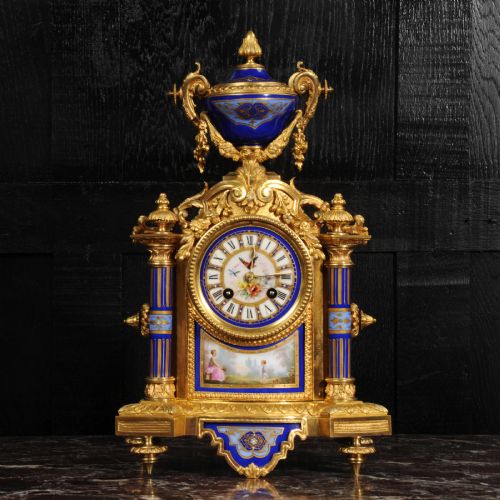
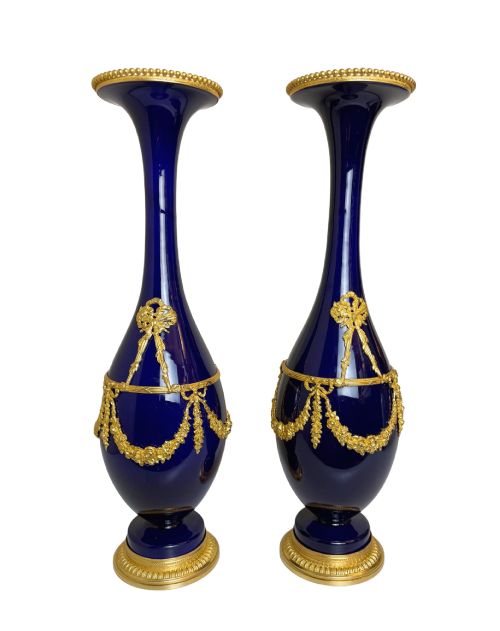
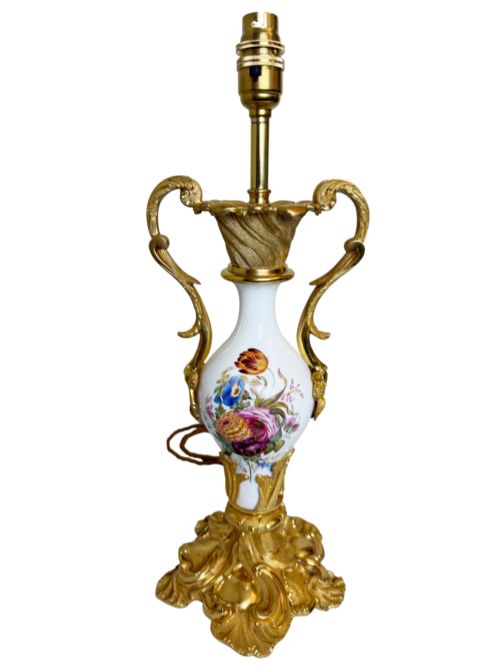
Makers paired hand painted floral or figurative panels with rich cobalt and powder blue grounds. The resulting objects served as prominent mantel ornaments in period salons.
Materials and Construction
Artisans formed the ceramic bodies from hard paste porcelain before applying intricate hand painted scenes and enamel details. Firing fixed these pigments beneath glossy glazes.
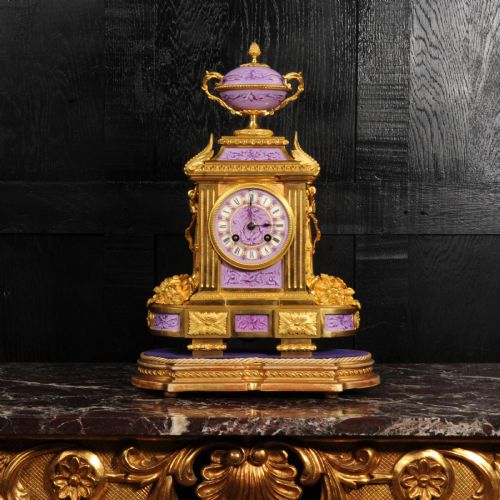
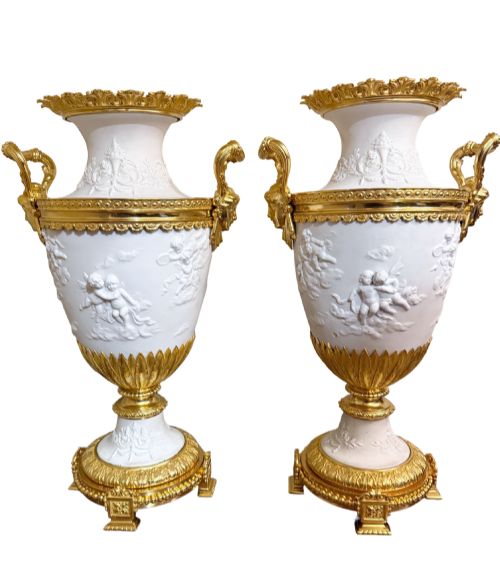
Foundries cast mounts in bronze or brass, subsequently applying mercury gilding or ormolu to create bright metallic surfaces. These mounts frame the porcelain rims, handles, and bases.
Pin joints, screws, and secure adhesives anchor the heavy metal fixtures directly to the ceramic vessels. The combination demanded precise metalwork to fit irregular fired porcelain contours.
Listings span the nineteenth century, incorporating porcelain, gilt bronze, and ormolu across French Rococo and Neoclassical styles.
Assessing Craftsmanship
Quality rests upon the crispness of the bronze casting and the depth of the ormolu finish. Finer mounts display sharp chasing and warm, varied reflection across the gilded surface.
The painted decoration tells a parallel story through brushwork control and the subtlety of enamel colours. Superior pieces show delicate hand execution rather than mechanical transfer printing.
Integration between the metal mounts and the ceramic body determines overall stability and balance. Master makers ensured a seamless alignment where metal met porcelain without awkward gaps.
Japy Freres·Achille Brocot·JP Delettrez
The Gold French Porcelain Urns Glossary
- Ormolu
- A gilded bronze technique utilising mercury amalgamation to impart a rich golden sheen to cast metal mounts. This finish defines the luxury hardware on nineteenth century French pieces.
- Paris Porcelain
- A term covering the output of numerous independent workshops operating in and around Paris from the eighteenth century onward. These houses produced unlabelled hard paste porcelain items of high artistic merit.
- Garniture
- A set of three or more matching decorative vases or urns designed to sit together on a mantelpiece. Central clock garnitures typically include flanking side vases.
- Medici Vase
- A bell shaped vessel form originating in antiquity and revived during nineteenth century neoclassical movements. These urns feature flared rims and fluted lower bodies on pedestal feet.
Gold French Porcelain Urns: Frequently Asked Questions
How do I identify Paris porcelain?
Paris porcelain is identified through its bright white hard paste body and lack of standardised factory marks, as many small independent studios operated in the region.
Decoration often relies on rich hand painted floral scenes combined with generous gilding rather than strict adherence to a single corporate style.
What is an ormolu mount?
An ormolu mount is a cast bronze or brass fixture that has been coated in gold leaf or mercury gilt to accent ceramic urns and clocks.
These metal additions provide structural support for handles and bases while adding an opulent decorative framework to the piece.
How were these urns used?
These decorative urns and vases served primarily as formal mantelpiece ornaments in nineteenth century salons and drawing rooms.
They were frequently displayed as matching pairs flanking a central clock or arranged in three piece garniture sets.
Are these pieces functional vases?
While technically hollow vessels, most nineteenth century examples were created strictly for display rather than holding water or flowers.
Their delicate hand painted surfaces and gilt bronze mounts meant they functioned as sculptural art objects within domestic interiors.