
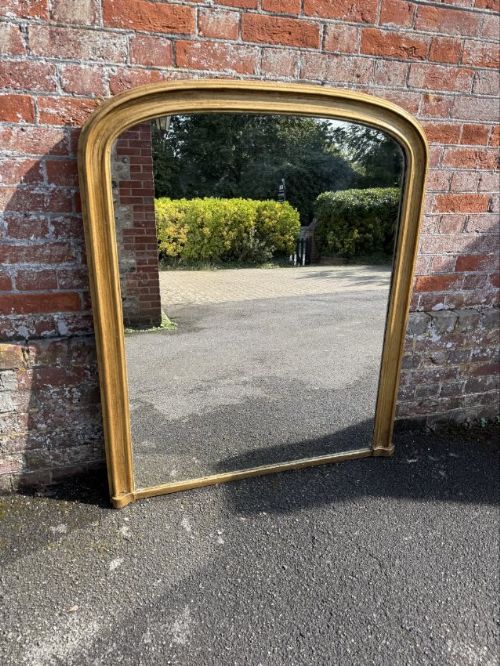


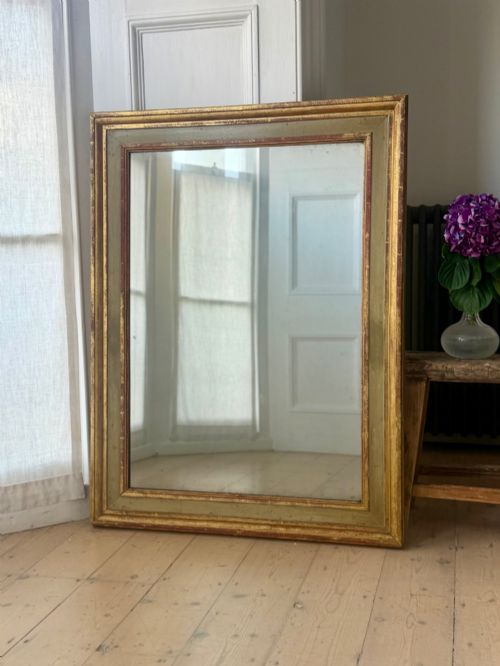
Gold French Mantel Mirror
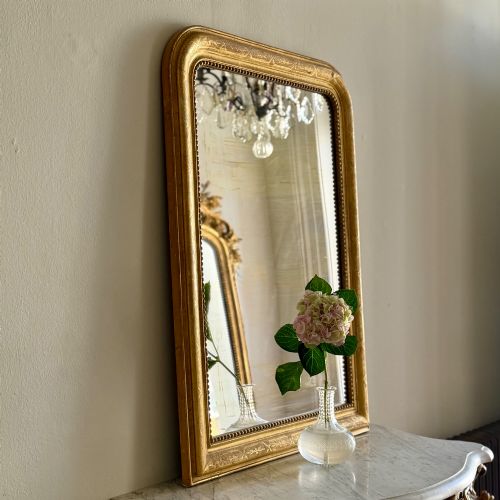
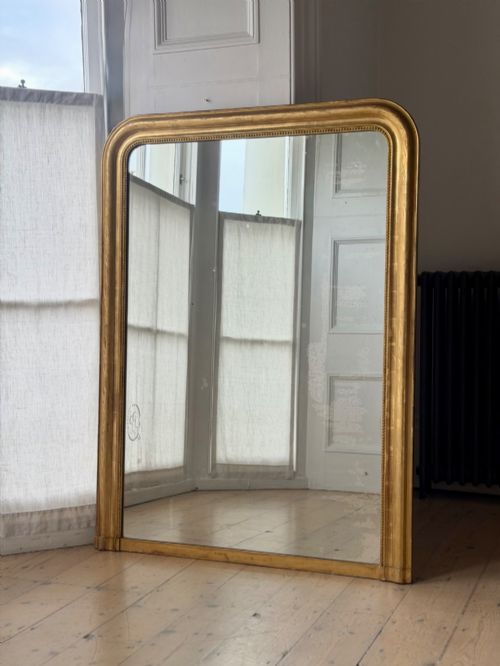
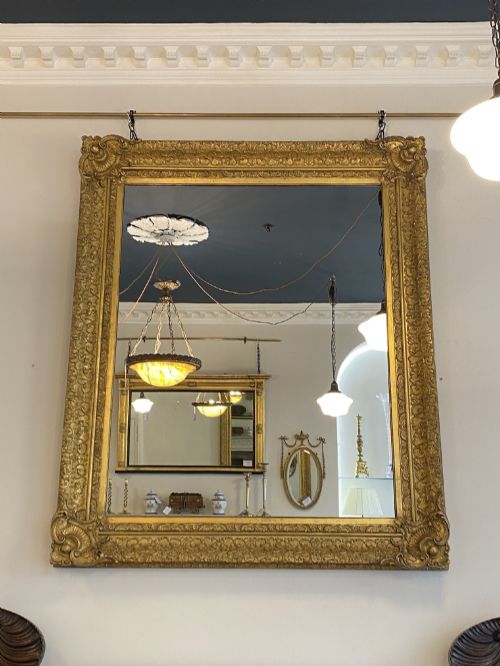
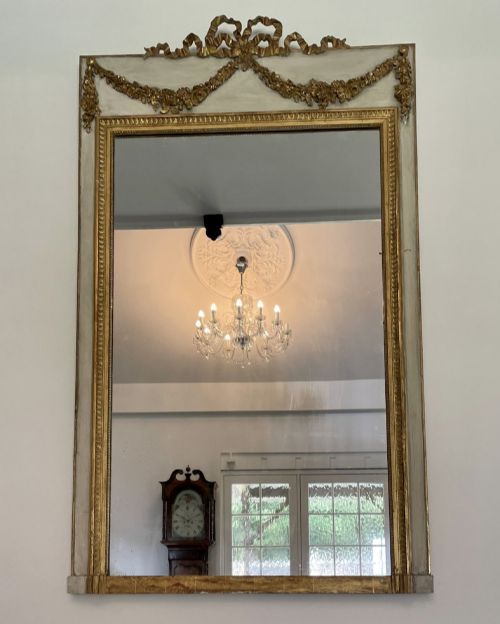
A gold french mantel mirror brings scale, light and architectural weight to a room, functioning as a commanding focal point above a fireplace.
Gold French Mantel Mirror
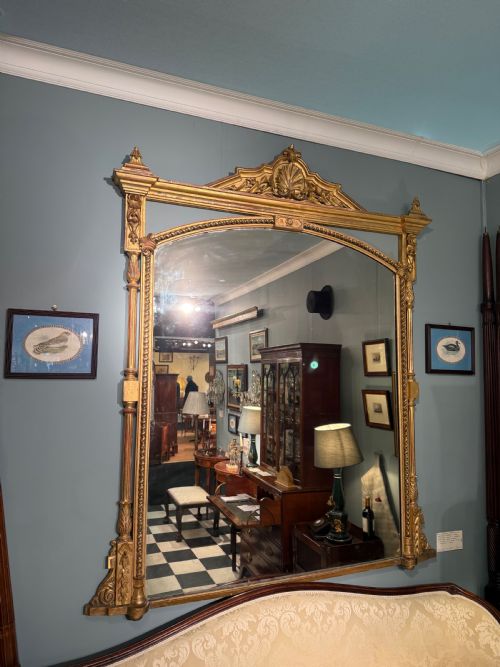
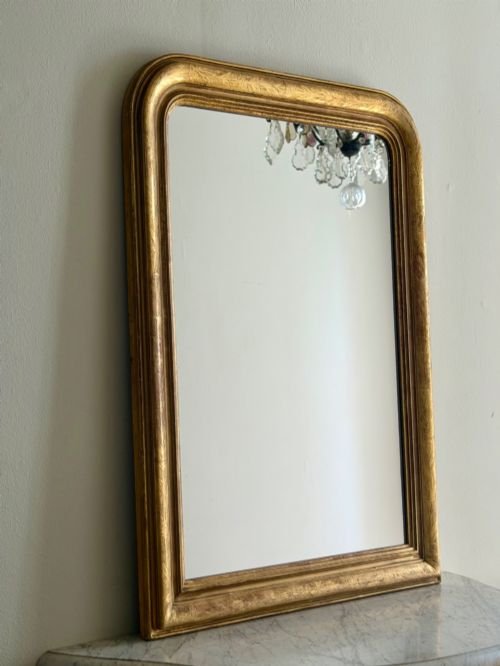
When you search for a gold french mantel mirror, you encounter large, vertical and horizontal looking-glasses designed to sit directly above a chimney breast or serve as a grand wall hanging. These pieces originate predominantly from the nineteenth century, including the Victorian era, the Napoleon III period and the reign of Louis Philippe.
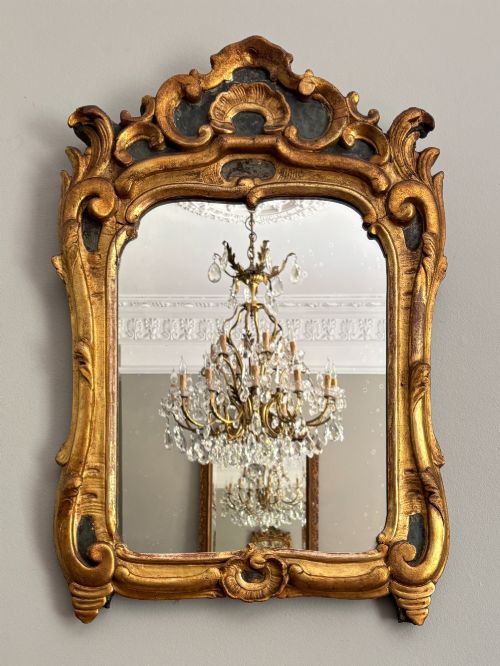
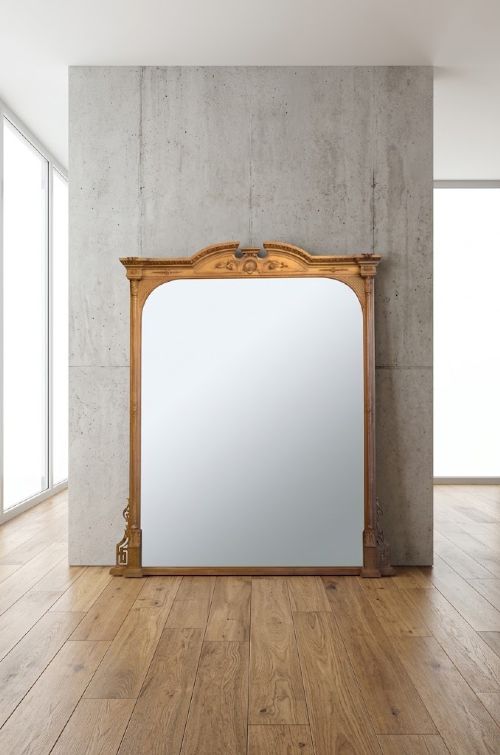
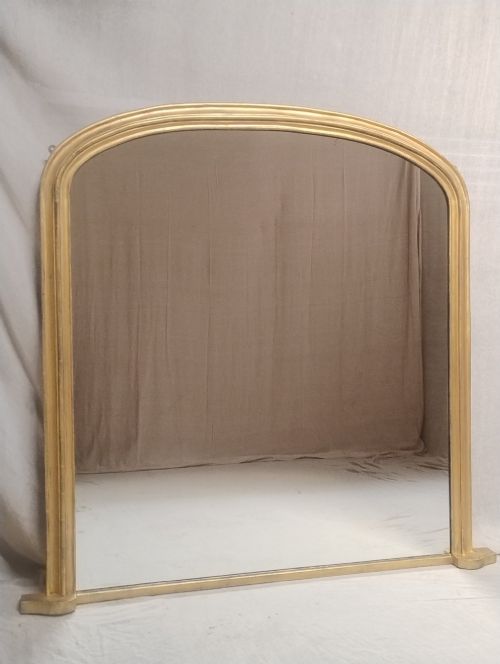
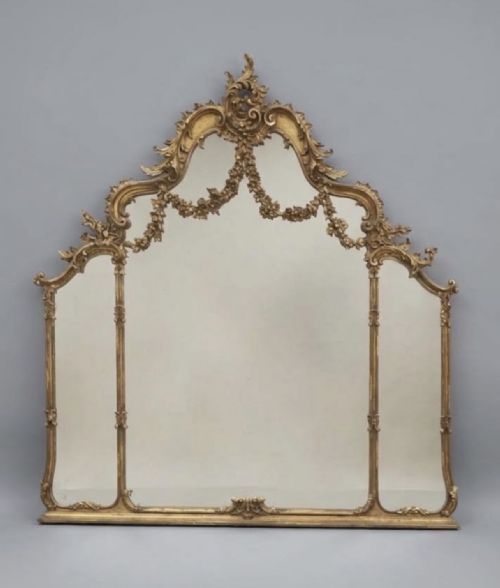
The format typically spans substantial proportions, frequently incorporating arched tops, shaped crests, or rectangular frames. The selection on this page centres on items defined by French Chateau, Rococo Revival and neoclassical aesthetics alongside British interpretations of the same styles.
Overmantel mirrors dominate the evidence, constructed to reflect the hearth and amplify the natural daylight within a reception room or drawing room. They balance practical reflection with ornate decorative presence.
How they were made
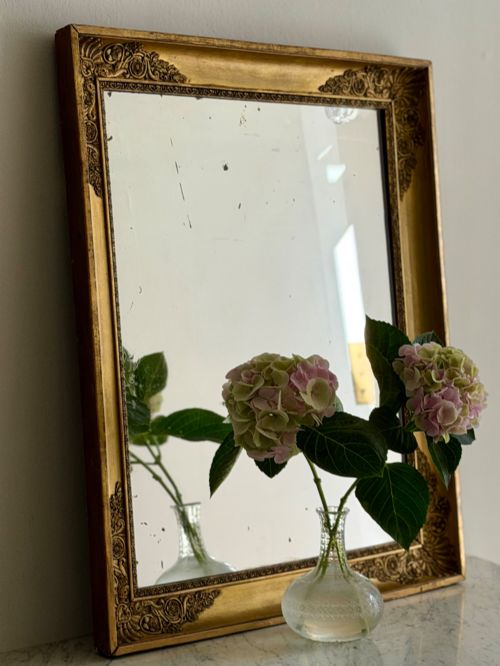
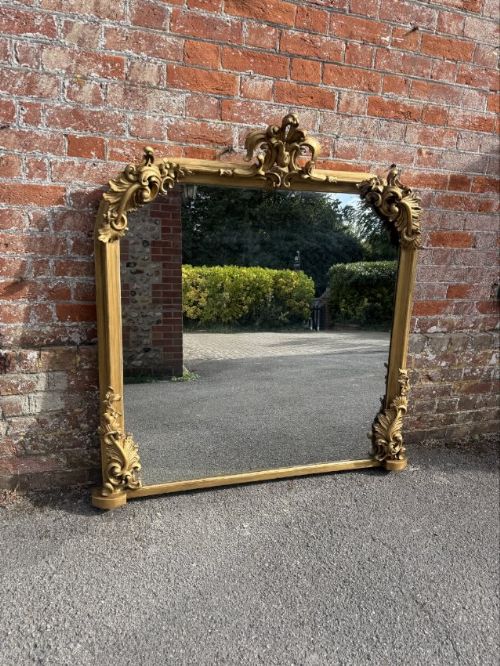
The primary structural framework relies on carved wood, reinforced with gesso and composition mouldings to build up high-relief scrollwork, cartouches and floral motifs. Artisans then applied gold leaf or gilding directly onto the prepared surface to achieve a brilliant metallic sheen.
Early examples frequently house original mirror glass, such as mercury glass, which exhibits characteristic foxing and subtle surface speckling derived from historical silvering techniques. Frames range from simple gilded mouldings to deeply carved wooden structures featuring rope twist details or swept profiles.
Materials recorded across the inventory include glass, gesso, giltwood, wood, gold leaf, mirror glass and composition.
What varies in quality
The distinction between standard examples and superior works lies in the depth and crispness of the hand-carved wood elements versus repetitive moulded composition ornament. High-end pieces display spirited, undercut foliage and harmonious proportions that integrate seamlessly with the architectural requirements of a formal interior.
The integrity of the original gilding and the preservation of the antique mirror plate dictate the character of the piece. Retaining original mercury glass and untouched gold leaf significantly elevates the authenticity and visual depth of the looking-glass.
The Gold French Mantel Mirror Glossary
- Gesso
- A plaster-like mixture applied to wood frames to create a smooth surface for gilding or to build up low-relief decorative mouldings.
- Giltwood
- Timber that has been coated with thin sheets of gold leaf or gold paint to give the appearance of solid gold.
- Overmantel
- A large mirror or painting specifically designed to be hung on the wall directly above a mantelpiece or fireplace.
- Cartouche
- An ornamental frame or tablet resembling a rolled-up piece of parchment, often featuring central crests or heraldic details.
- Mercury glass
- Early mirror glass produced by applying a tin and mercury amalgam to the rear of the glass plate, known for characteristic dark spots and soft reflectivity.
Gold French Mantel Mirror: Frequently Asked Questions
Where should a mantel mirror be hung?
These mirrors traditionally anchor the space directly above a fireplace mantel, where their proportions reflect the opening of the hearth and draw the eye upward.
They also function effectively as standalone wall or pier mirrors between windows, provided the wall structure safely supports their substantial weight.
How do I clean antique mirror glass?
Use a soft, dry microfiber cloth to gently remove dust from the glass surface without applying excessive pressure to the historic plate.
Avoid standard chemical window cleaners, as liquid can seep behind the edges of the frame and damage the aged silvering or mercury backing.
What is the difference between a pier mirror and an overmantel mirror?
An overmantel mirror is specifically constructed in a horizontal or large arched format to span the width of a fireplace breast.
A pier mirror is typically taller and narrower, designed to fit the narrow stretch of wall space situated between two windows.
How do I date a nineteenth-century gilded mirror?
Dating relies on examining the construction of the wooden backboards, the style of the gesso ornaments, and the characteristics of the glass plate.
Nineteenth-century pieces often display specific revival motifs, such as Rococo curves or Napoleon III neoclassical details, alongside hand-beveled or mercury-backed glass.