
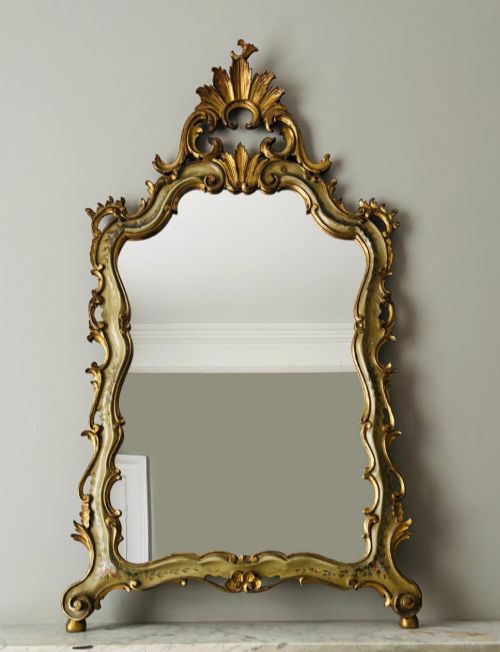
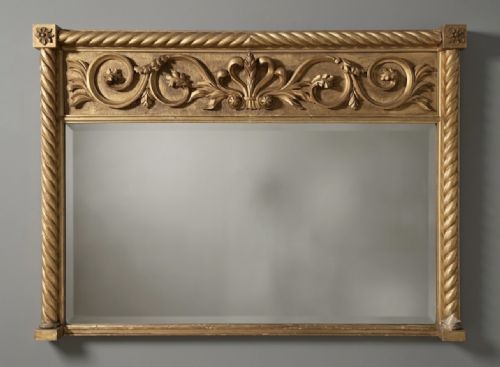
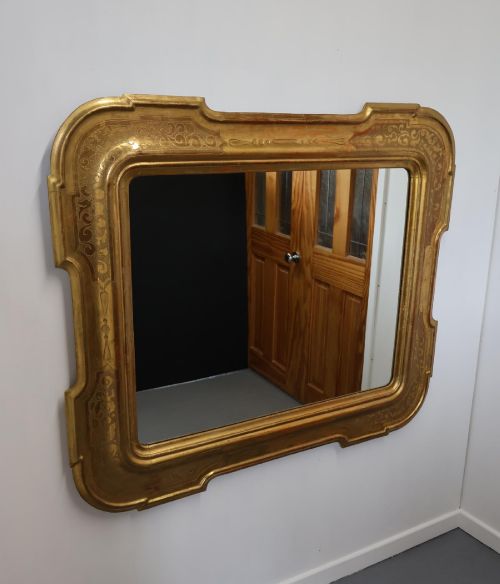
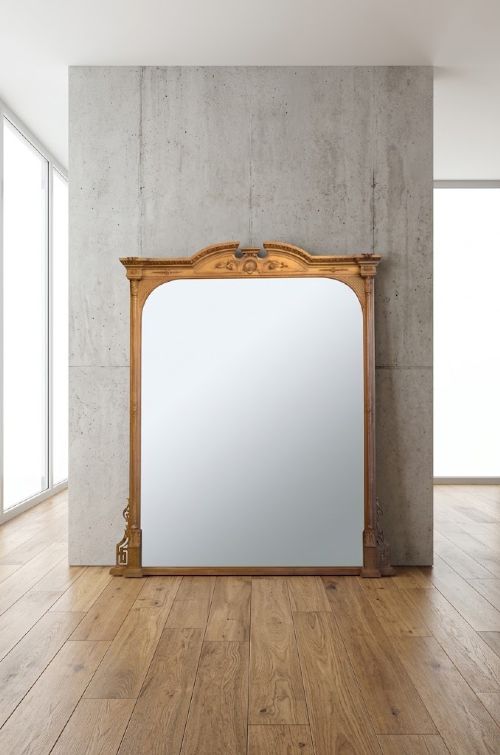
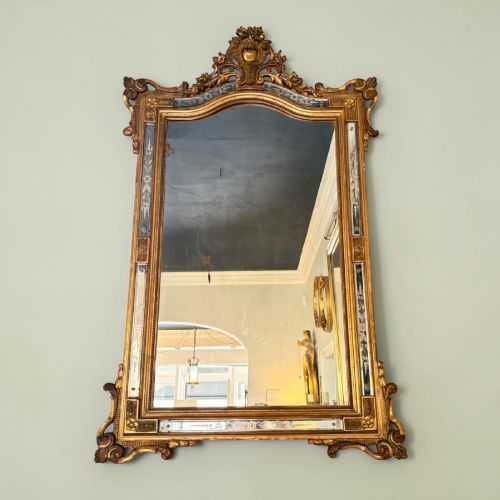
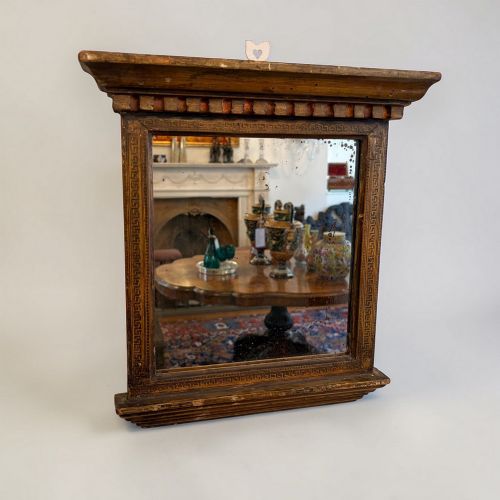
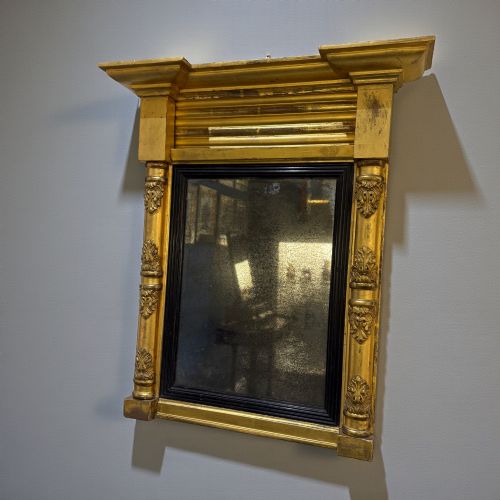
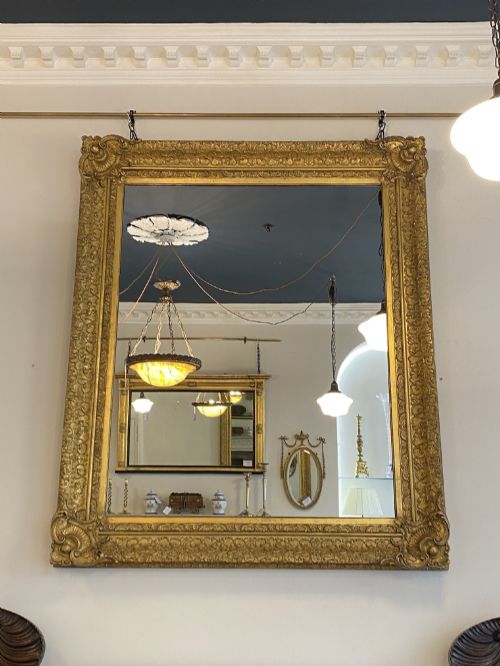
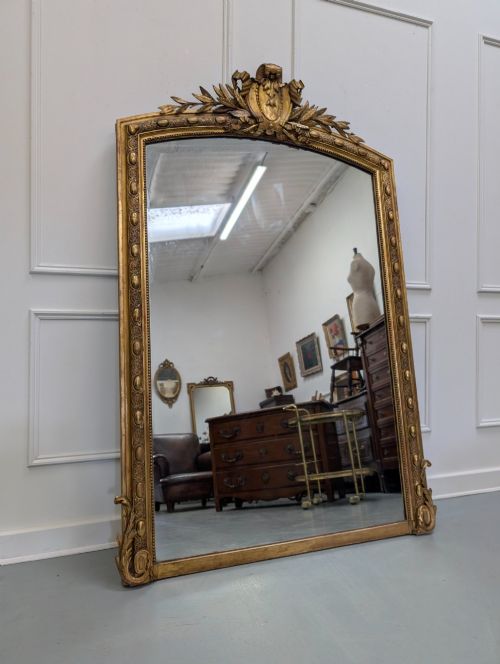
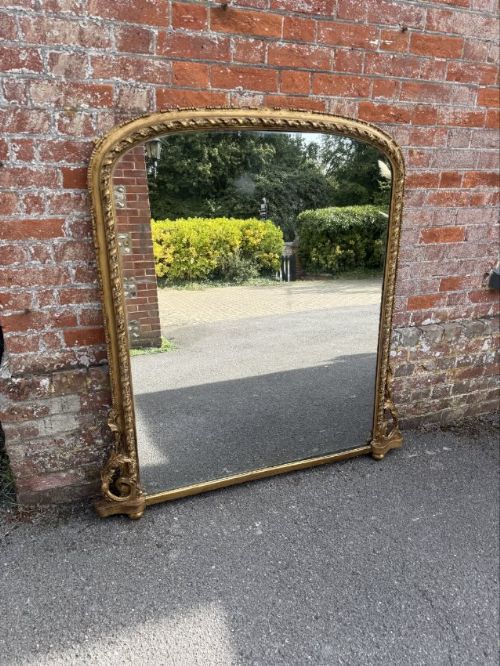
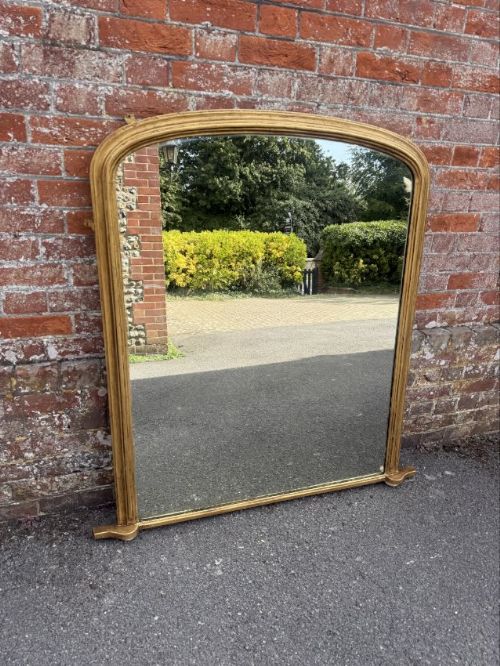
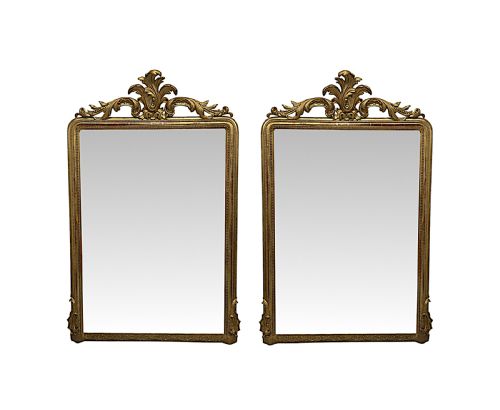
Gold Framed Overmantel Mirror
When you search for a gold framed overmantel mirror, you seek a grand architectural centrepiece designed to sit above a fireplace.
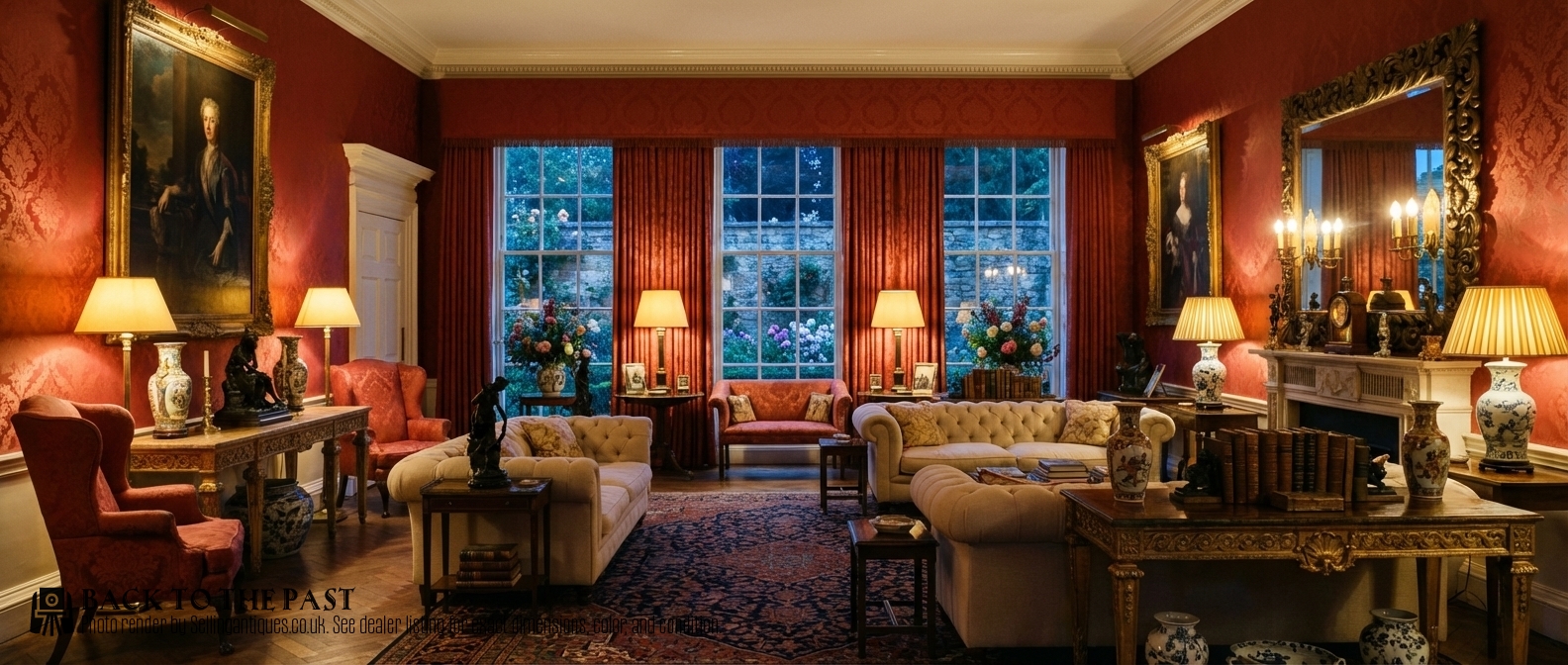
Gold Framed Overmantel Mirror
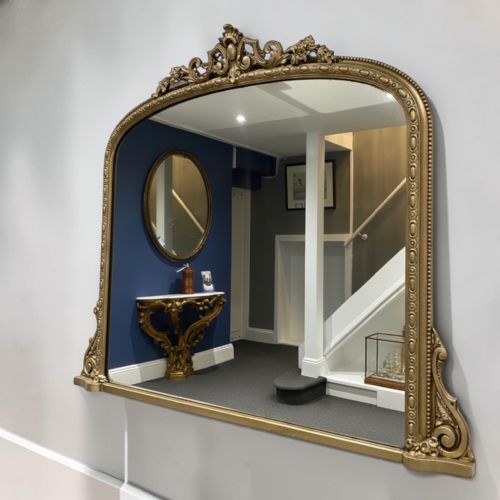
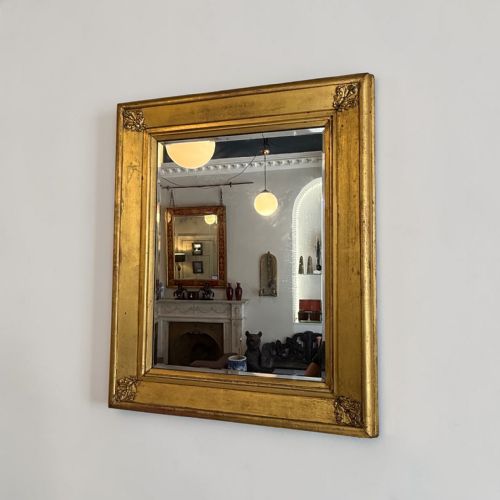
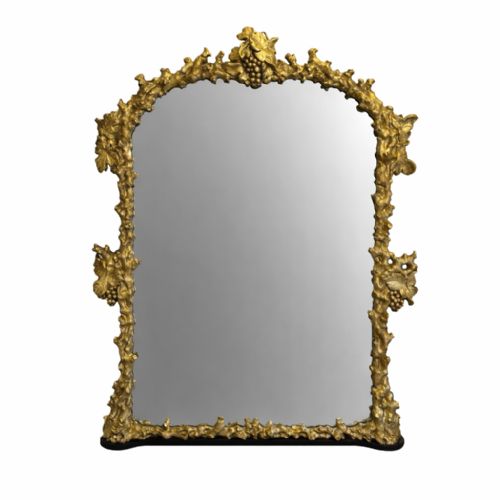
A gold framed overmantel mirror is a large decorative glass panel traditionally hung above a fireplace mantelpiece to reflect light and fill the expanse of a chimney breast. These pieces span several centuries and styles, though the examples met most frequently on this page originate from the nineteenth century, including Victorian and French variants.
The collection includes English carved wood and gesso arched top designs alongside French Louis Philippe, Rococo Revival, and Regency forms. Many pieces share generous proportions, built to command attention in a principal reception room or drawing room.
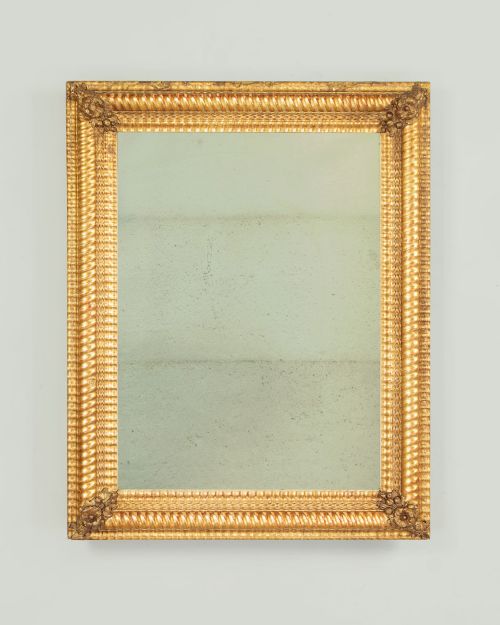
Origins vary between English workshops and continental European centres, encompassing Italian pieces and French chateau styles. Makers utilised diverse formats, from arched plates and rope twist frames to rectangular trumeau mirrors incorporating oil paintings.
How they were made
Carved wood and gesso form the structural foundation for many frames, providing a firm base for intricate ornamentation. Artisans applied layers of gesso to carved timber before applying gold leaf or liquid gilding to achieve a luminous metallic finish.
Composition material appears frequently on decorative mouldings, pressed into intricate floral or scroll patterns to save labour while maintaining elaborate detail. Mirror glass plates, including antique mercury glass with foxing, sit within these gilded housings to reflect ambient interior light.
Listings feature periods spanning from the 18th century through the Victorian era to the early 20th century, constructed from giltwood, gesso, and wood.
What varies in quality
The depth and crispness of the carved ornamentation separate standard mouldings from superior work, as hand-carved wood displays sharper relief than pressed composition ornament. The integrity of the original gilding alters the visual weight of the piece, with worn gold leaf revealing the red bole underneath in differing degrees.
The condition and age of the mirror plate itself influence desirability, where original mercury glass bearing natural foxing provides greater historic character than later replacement glass. Frame construction, particularly heavy timber joinery at the corners, dictates the structural stability of these massive wall fixtures.
The Gold Framed Overmantel Mirror Glossary
- Overmantel
- A mirror or painting specifically designed to be hung on the wall directly above a fireplace mantelpiece. These pieces often feature landscape orientations or tall arched tops to match the proportions of chimney breasts.
- Gesso
- A plaster-like mixture applied to wood frames to create a smooth surface for gilding. It allows craftsmen to carve intricate relief details before applying gold leaf.
- Giltwood
- Timber that has been coated with gold leaf or gilt paint. It forms the primary visual medium for the frames in this collection.
- Trumeau
- A decorative wall mirror combined with an oil painting or panel above the glass. French examples often incorporate pastoral or maritime scenes.
- Foxing
- Age-related spots and discolouration within the silvering of antique mirror glass. This chemical reaction creates a mottled appearance valued by collectors.
- Pier glass
- A tall, narrow mirror designed to hang on the wall space between windows. These pieces often match the height of nearby furniture.
Gold Framed Overmantel Mirror: Frequently Asked Questions
How do I hang a heavy overmantel mirror?
These pieces require secure fixing directly into masonry or substantial wall studs due to their considerable weight and solid timber construction. Professional installation utilising heavy-duty brackets ensures the frame remains safely supported against the chimney breast.
Position the lower edge of the frame just above the mantelpiece or leave a small intentional gap depending on the scale of the fireplace surround and the ceiling height.
How should I clean a antique gilt frame?
Dust the gilded surfaces gently using a very soft dry brush or feather duster to remove surface particles without disturbing delicate gesso or gold leaf. Avoid liquid cleaners, chemical solvents, or damp cloths, as moisture damages historic gilding and composition ornaments.
For the mirror glass, apply a small amount of non-ammonia cleaner to a cloth rather than spraying directly onto the glass, preventing liquid from seeping behind the antique plate.
How can I tell a Victorian mirror from a Regency one?
Regency mirrors frequently exhibit classical architectural motifs, convex circular forms, or giltwood frames with reeded columns and ball details. Victorian examples often display heavier, more exuberant carvings, arched crests, and elaborate gesso scrollwork.
Examining the construction methods on the reverse of the frame and the characteristics of the glass plate helps confirm the manufacturing era.