
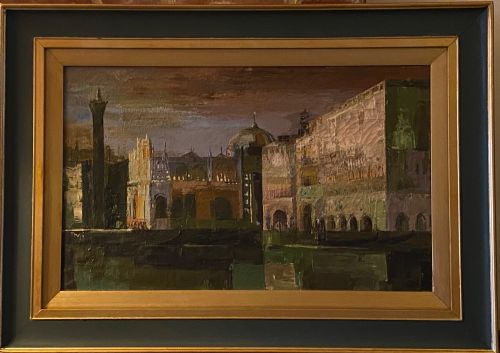
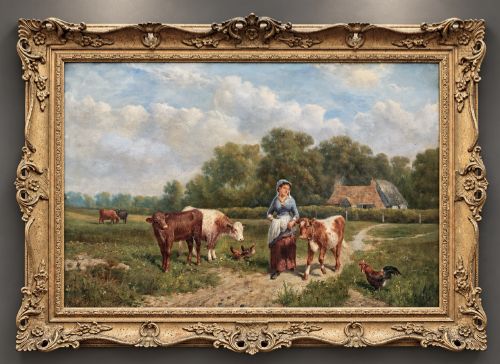
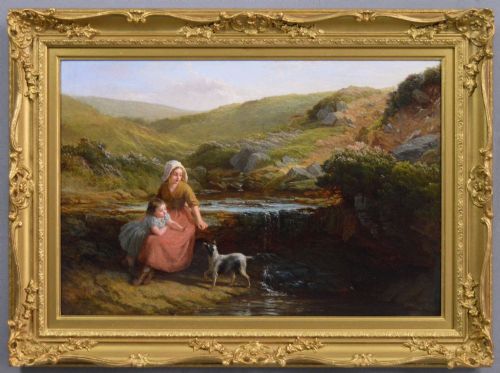
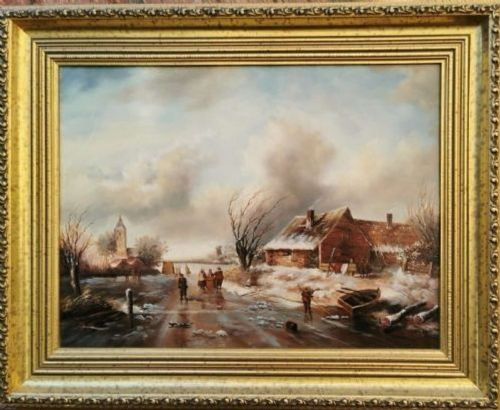
Gold Frame Oil Landscape
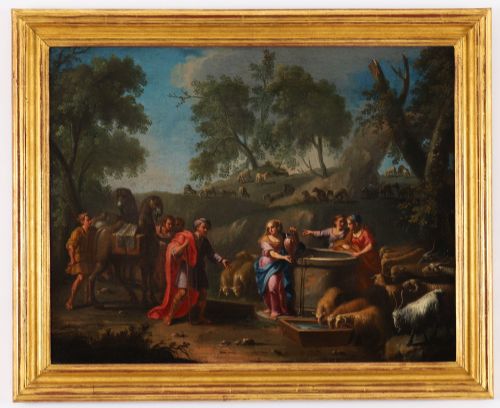
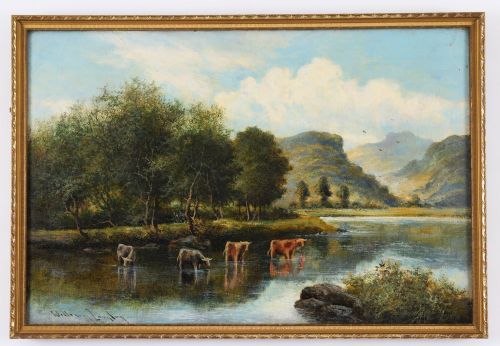
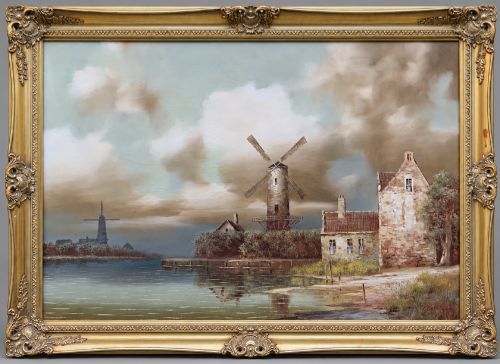
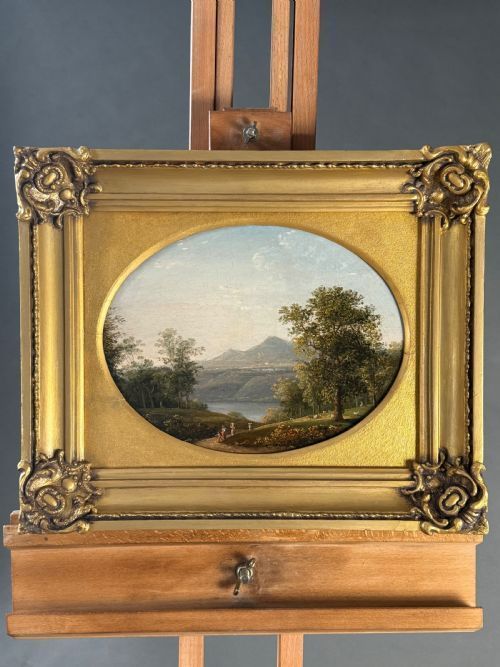
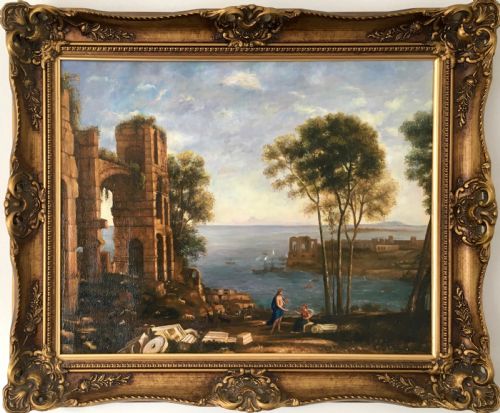
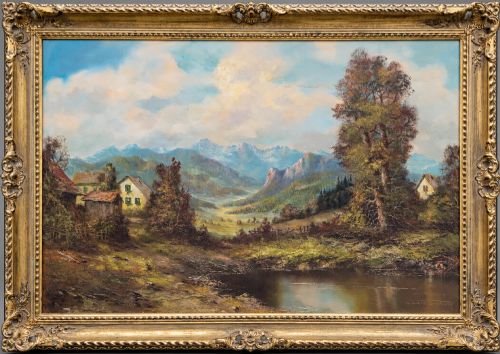
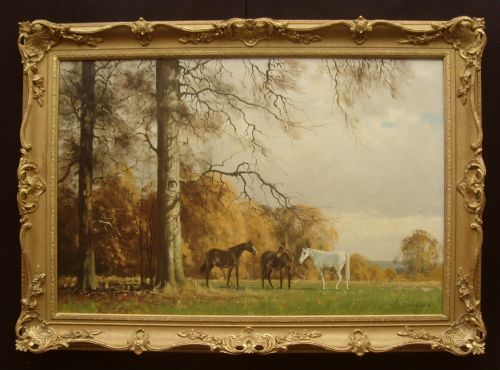
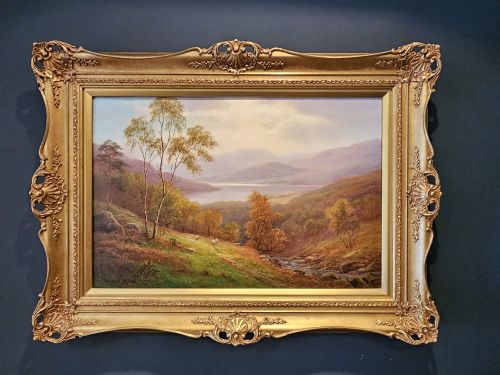
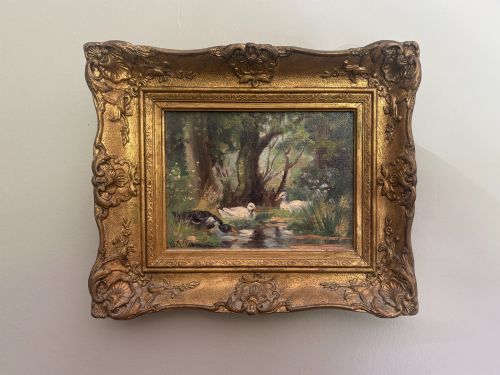
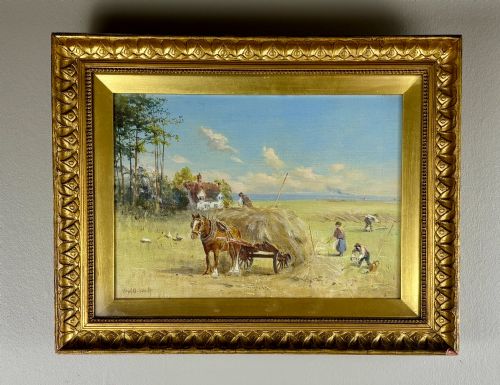
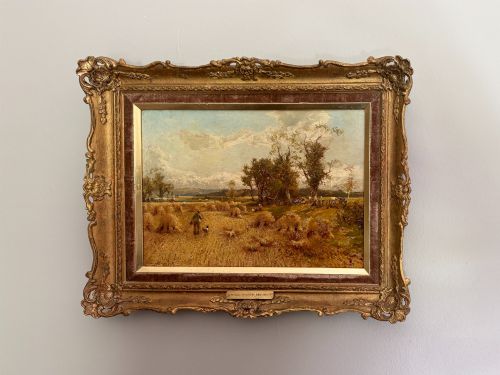
A gold frame oil landscape brings warmth and texture to a room, framing pastoral scenes, marine views, and woodland vistas in period surrounds.
Gold Frame Oil Landscape
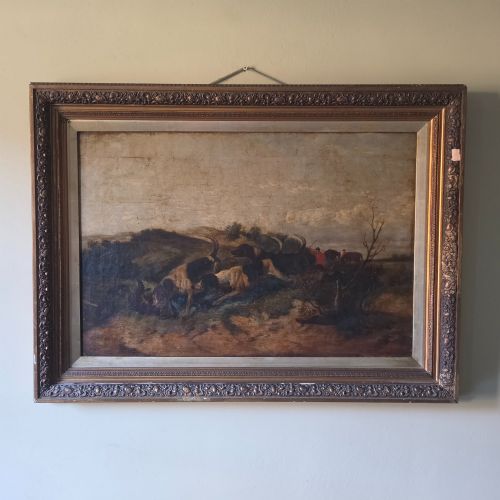
When searching for a gold frame oil landscape, you encounter a wide selection of works spanning the nineteenth century, the Victorian era, and mid-century periods. These paintings depict rural country paths, domestic animals, coastal harbours, and mountainous horizons executed with traditional painterly skill.
The dominant forms on this page include framed oil paintings on canvas, panel, and board. Subjects range from British landscapes and Scottish scenery to French farmyards and Venetian waterways.
Makers and regional schools represented include the Norwich School, the Barbizon School, and various named British and continental artists. Works appear in both modest domestic formats and larger gallery presentations.
Materials and Construction
The primary supports consist of woven canvas, wooden panels, and boards prepared to receive pigment. Artists applied oil paint in layered brushstrokes, building depth in skies, foliage, and water.
The surrounding frames are built from wood, shaped with gesso, and finished with gilding to create reflective borders that complement the painted scenes.
Several canvases capture cows, sheep, horses, and even a prized shorthorn bull patiently posing amidst the landscape.
Distinctions in Quality
Quality rests in the handling of light, the precision of brushwork, and the anatomical accuracy of figures and animals within the composition. Masterful perspective and confident colour mixing elevate certain panels above standard decorative works.
The craftsmanship of the frame also defines the piece, with deep relief moulding and original gilding offering greater visual harmony with the canvas than later replacements.
Eugène Verboeckhoven·William Beattie-Brown·William Howard Hardy·Arthur Wardle·John Horace Hooper·Reginald Arthur Borstel·William Joseph Shayer Senior·Alfred Fontville de Breanski Jr·Kershaw Schofield·George Houston·Robert Morson Hughes·Thomas W Lascelles·James Kay·Augusto Alberici·Gabriel Mathieu·David Bates·Benjamin Barker of Bath·Thomas Smythe·Alfred Pollentine·Walter Heath Williams·Bonaventura Peeters
The Gold Frame Oil Landscape Glossary
- Giltwood
- Wood carved and coated with gold leaf or metallic powder. This material provides the bright, ornate border common to antique paintings.
- Gesso
- A plaster mixture applied to wooden frames as a smooth base for gilding. It allows craftsmen to carve intricate relief patterns before applying gold leaf.
- Oil on Canvas
- Pigment mixed with drying oil applied to a stretched woven fabric support. This combination permits subtle blending and long-term durability.
- Panel
- A flat piece of wood used as a rigid painting surface. Artists frequently utilised wooden panels for smaller, detailed works.
Gold Frame Oil Landscape: Frequently Asked Questions
What periods do these landscapes cover?
The collection spans multiple centuries, featuring eighteenth-century examples, nineteenth-century Victorian works, and twentieth-century pieces up to the 1960s. Different eras reflect shifting approaches to natural scenery and framing styles.
Buyers find traditional country views alongside impressionistic treatments and Dutch-manner winter scenes.
Are these paintings signed by artists?
Many works bear signatures or attributions to specific painters and regional schools. Signed canvases often connect directly to known nineteenth and twentieth-century artists.
Unsigned pieces frequently represent the broader output of contemporary British and European schools.
What surfaces are the oils painted on?
Artists used traditional supports including stretched canvas, wooden panels, and sturdy boards. Each surface influences the texture and preservation of the oil pigment.
Canvas allows for larger compositions, while panels often support smaller, highly detailed landscape studies.