



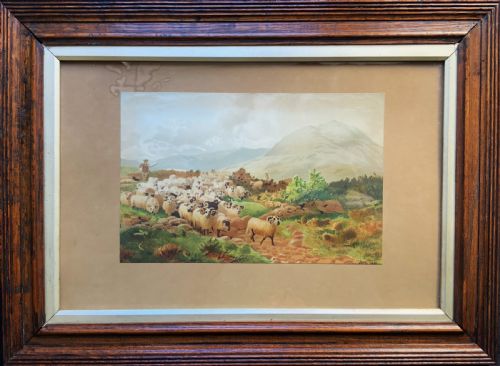

Highland Sheep Oil Painting
A highland sheep oil painting brings the atmosphere of northern moors and glens directly into a room through pastoral realism.
Highland Sheep Oil Painting
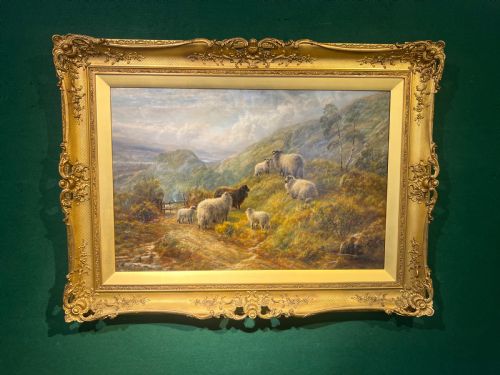
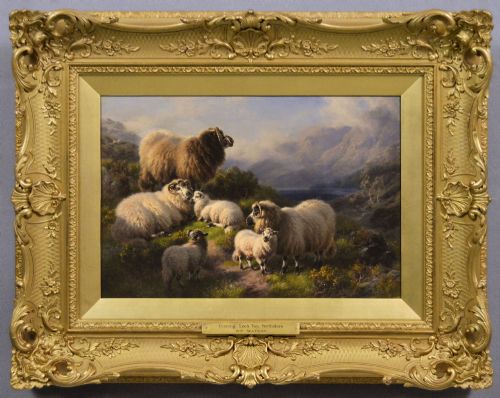
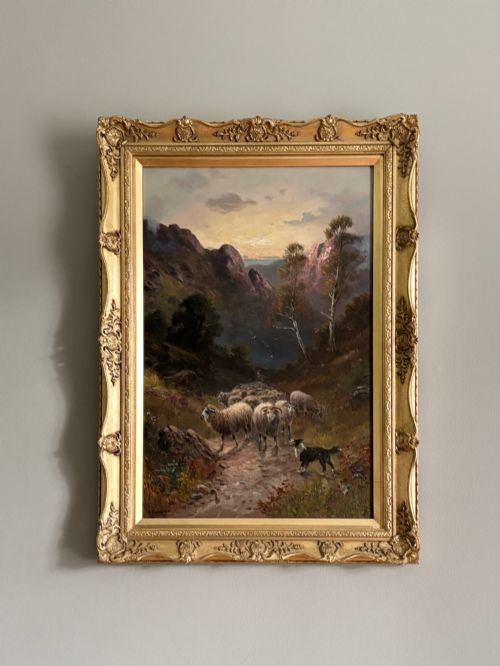
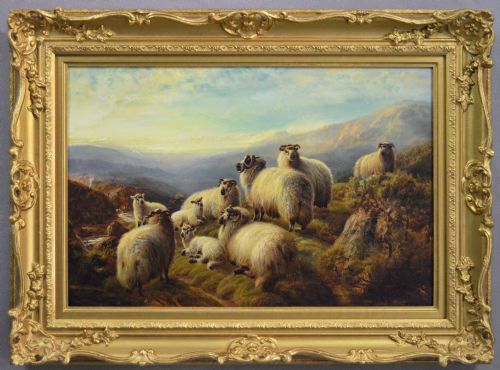
A highland sheep oil painting captures rural pastoral scenes across Victorian and early twentieth-century periods. These works focus on pastoral landscapes featuring flocks resting in glens, near lochs, or upon moorlands.
The pieces on this page originate predominantly from nineteenth-century and early twentieth-century British and Scottish traditions. Collectors encounter works on canvas as well as wood panel formats, often framed in period giltwood.
Subjects range from tranquil grazing flocks to hardy animals navigating winter snow alongside cattle. The Scottish School dominates these pastoral compositions, frequently pairing animal portraits with dramatic highland topography.
Distinctions in Quality
Quality rests upon the artist's handling of animal anatomy and natural light across the fleece. Superior hands define individual forms with anatomical precision rather than generic brushwork.
The integration of the flock into the wider landscape separates standard decorative works from accomplished regional art. Strong compositions balance pastoral subjects with convincing atmospheric depth in the Scottish terrain.
Listings feature works executed in oil on canvas and wood panel, housed within period giltwood and gesso frames.
Tom Campbell·Robert Watson·William Watson Jnr·Douglas Cameron·William Henry Mander·Charles Jones·GW Horlor·Frederick Richard Lee·Thomas Sidney Cooper·Henry Birtles·W Parks·William H Watson·E Haigh·George Melvin Rennie·Alfred Morris
The Highland Sheep Oil Painting Glossary
- Giltwood
- Wood carved and coated with gold leaf. This material forms the primary decorative frame surrounding many nineteenth-century canvases.
- Gesso
- A plaster mixture applied to wood frames before gilding. It provides a smooth base for intricate moulded ornamentation.
- Wood Panel
- A rigid flat support used by artists instead of canvas. Several works utilise this firm surface for detailed pastoral scenes.
- Scottish School
- A regional grouping of artists working north of the border. Their output focuses heavily on local topography and rural animal life.
Highland Sheep Oil Painting: Frequently Asked Questions
What periods do these paintings date from?
The available selection spans the nineteenth century up to the early decades of the twentieth century. Victorian examples sit alongside works produced around nineteen ten and nineteen twenty.
Most pieces reflect nineteenth-century pastoral traditions and the Scottish School style. Dates range across the Victorian era into the Edwardian period.
What surfaces were used for these artworks?
Painters applied oil pigments primarily to woven canvas or rigid wood panels. Canvas supports allow for larger compositional depth in expansive moorland scenes.
Wood panel supports appear in earlier twentieth-century examples. Both mediums preserve the thick impasto used to render wool textures.
How should I hang a framed oil painting?
Heavy giltwood frames require secure wall fixings suited to the combined weight of timber and canvas. Professional picture hooks attached to wall studs provide stable support.
Position paintings away from direct sunlight and strong heat sources. Stable indoor humidity protects both the oil pigments and the underlying canvas or panel.
Are original period frames common?
Many works retain contemporary giltwood and gesso surrounds from the Victorian or Edwardian eras. These ornate frames complement the pastoral subject matter.
Frame designs vary from simple moulded timber to heavily decorated gesso ornamentation. Original framing enhances the historical context of each canvas.