

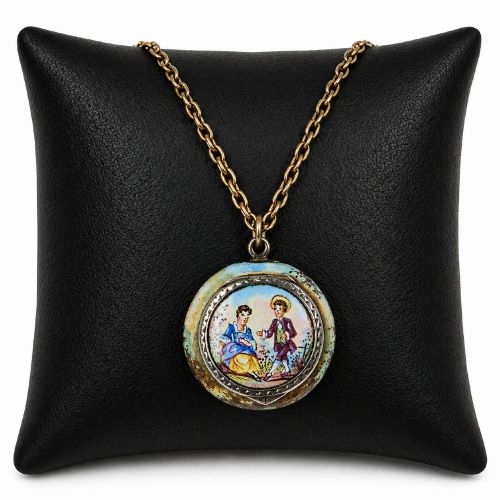


Gold Enamel Locket
A gold enamel locket combines precious metalwork with vitreous colour, housing miniature portraits, hair work or photographs close to the heart.
Gold Enamel Locket
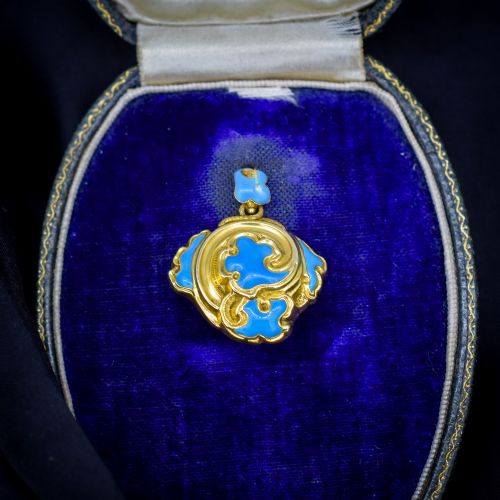
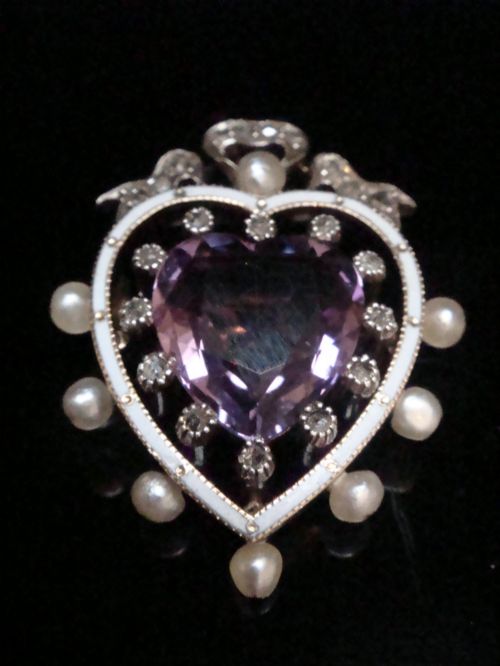
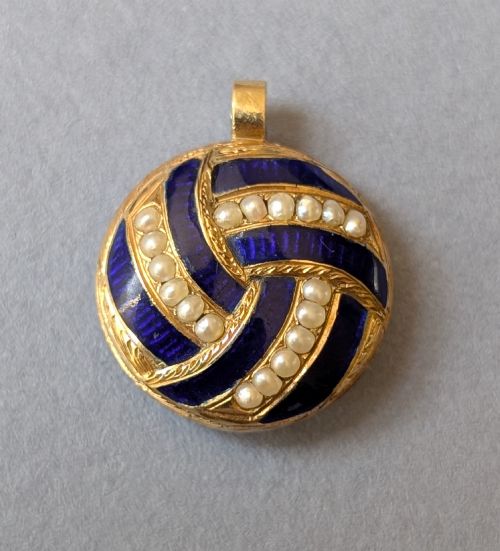
A gold enamel locket is a hinged pendant designed to hold personal mementoes, spanning periods from the Georgian and 18th century through to the Edwardian era. The pieces seen most frequently on this page originate from the Victorian period, often combining high-carat gold with rich blue or black enamel. Forms range from simple geometric lockets to elaborate heart-shaped pendants, starburst motifs and portrait miniatures.
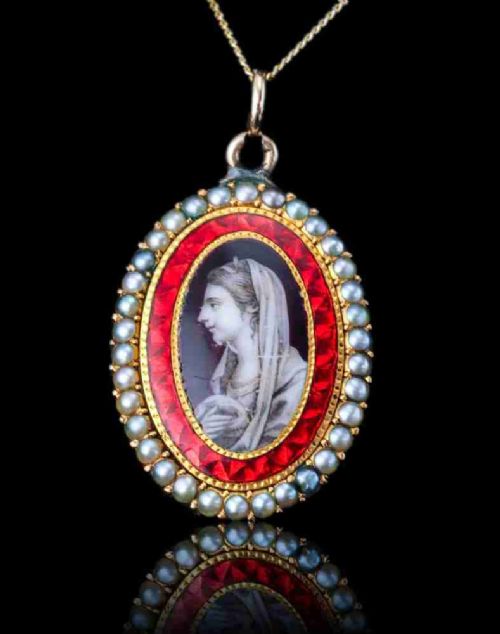
Mourning and remembrance pieces form a distinct category within these listings, incorporating hair work, sepia portraits and pearls alongside black or white enamel. Other examples lean towards decorative styles, utilising guilloche work, plique-a-jour and rose-cut diamonds. Buyers encounter both dedicated lockets meant for photographs and pendant brooches that serve a dual purpose.
Materials and construction
Construction relies heavily on high-carat gold, predominantly 15ct and 18ct, alongside 9ct and occasionally lower or higher standards. Enamel is fused to the metal surface through high-temperature firing, creating smooth coloured fields or translucent guilloche patterns that reveal engine-turned engraving beneath.
Gemstone embellishment accompanies the enamel work in many examples, utilising natural pearls, seed pearls, diamonds and turquoise. Glass panels frequently back the interior compartments to protect hair work or portrait miniatures painted on ivory, card or vellum.
Gold Enamel Locket Retail Price Guide 2026
Typical asking prices for gold enamel locket among the pieces listed under this phrase on Sellingantiques today, from the lower quarter to the upper quarter. They describe what is for sale here now, not the wider market.
Materials utilised across the inventory include 9ct, 15ct, 18ct, and 22ct gold, paired with seed pearls, diamonds, and turquoise.
Assessing quality and craftsmanship
Quality rests on the fineness of the enamel work and the precision of the gold smithing. Pieces featuring crisp guilloche patterns, undamaged vitreous enamel free from major chips, and securely hinged compartments represent superior craftsmanship.
The sophistication of the internal contents and supplementary stones further distinguishes the range. Finely executed portrait miniatures, well-matched natural pearls, and intricate hair work elevate a piece above standard mass-produced or purely utilitarian designs.
Henry Bone ARA·Christian Friedrich Zincke
The Gold Enamel Locket Glossary
- Guilloche
- An ornamental technique in which a precise, intricate geometric pattern is mechanically engraved into an underlying metal substrate before translucent enamel is applied. This method creates a shimmering effect that catches the light as the pendant moves.
- Plique-a-jour
- A vitreous enamelling technique where the enamel is applied within a cellular framework without a backing metal, allowing light to shine through the transparent or translucent colour like stained glass.
- Mourning locket
- A piece of commemorative jewellery containing provisions for hair work, photographs or painted portraits to honour a deceased person. These typically utilise black, dark blue or white enamel.
- Rose-cut diamond
- An antique diamond cut featuring a flat base and a domed crown consisting of triangular facets that rise to a point. This cut produces a softer, broader sparkle than modern brilliant cuts.
Gold Enamel Locket: Frequently Asked Questions
What goes inside a gold enamel locket?
These pieces traditionally house tiny painted portrait miniatures, dried hair arranged in decorative patterns, or small photographs of loved ones. Many contain glass-backed compartments designed specifically to preserve these delicate mementoes safely.
Over the centuries, the contents have shifted from painted likenesses and memorial hair work towards standard photographic prints. The internal frames and bezels remain engineered to hold these thin inserts securely in place.
How do I date a gold enamel locket?
Dating relies on a combination of stylistic clues, such as the colour palette of the enamel, the presence of specific motifs like starbursts or pansies, and the construction of the hinge and clasp. Georgian and early Victorian pieces often feature closed-back settings and hand-painted hair work, while Edwardian examples show lighter guilloche patterns.
Hallmarks stamped on the metal loop or interior rim provide official confirmation of the gold purity and assay office. When hallmarks are absent, stylistic comparison with dated comparative pieces in the archive helps narrow the period.
Can I wear my locket every day?
Enamel is essentially glass fused to metal, meaning it requires care to prevent scratching or chipping against harder substances. While solid gold mountings are durable, the vitreous surfaces on these antique items benefit from gentle handling and removal during physical activities.
Store the pendant separately from other jewellery to avoid surface abrasion on the enamel panels. Professional cleaning is rarely necessary beyond a soft, dry cloth to remove everyday oils.
What is the difference between a pendant and a locket?
A pendant is any decorative ornament suspended from a necklace, whereas a locket specifically incorporates a hinged compartment that opens to reveal an enclosed space. Many items in this category function as both by combining the hollow opening mechanism with decorative exterior stones or enamel.
Some historical pieces also double as brooches, featuring a detachable pin mechanism on the reverse alongside the suspension loop. This versatility allowed wearers to pin the piece to clothing or hang it from a chain.