



Gold Photo Locket
A gold photo locket carries portraits close to the heart in hinged cases of precious metal.
Forms and periods
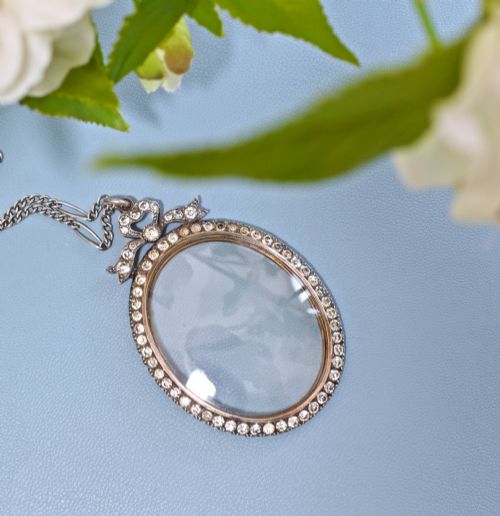
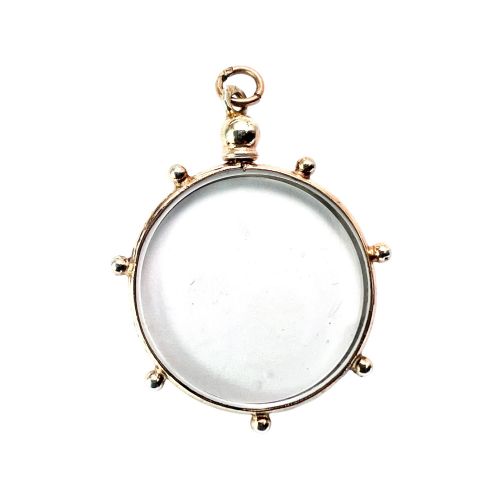
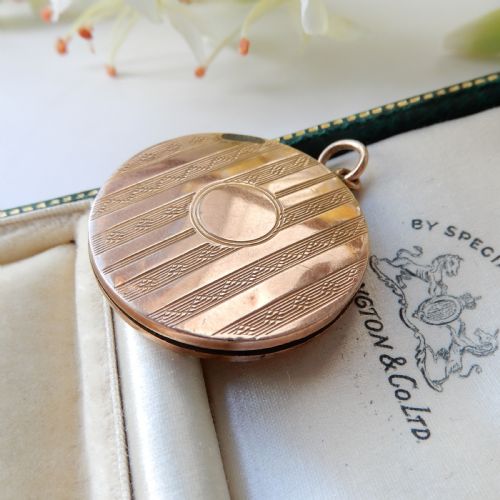
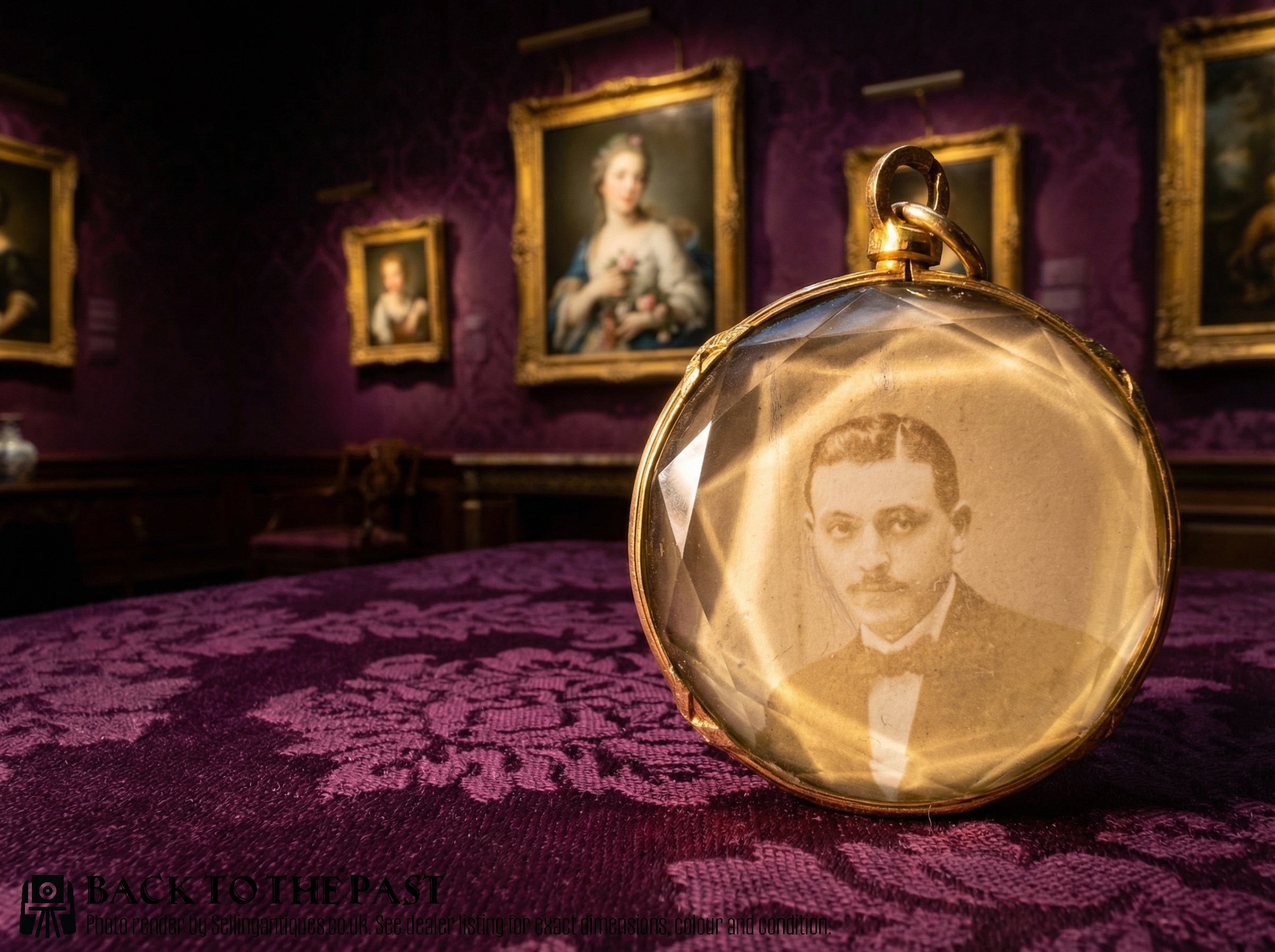
A gold photo locket brings together portrait miniatures and personal keepsake storage in a portable form. When you search for a gold photo locket, you encounter pieces spanning the Victorian and Edwardian eras through to the mid-twentieth century.
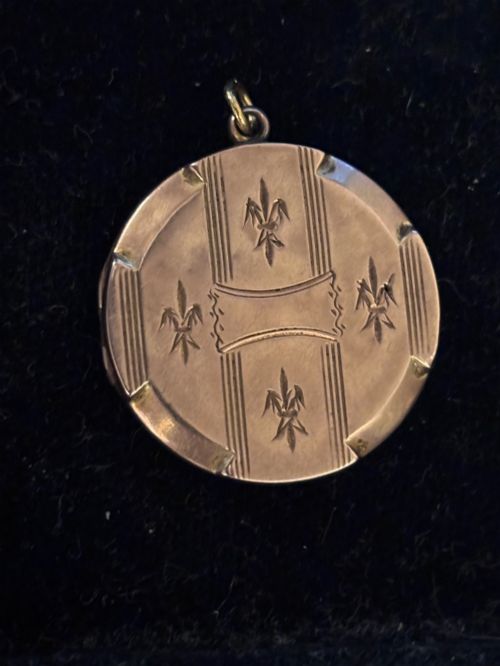
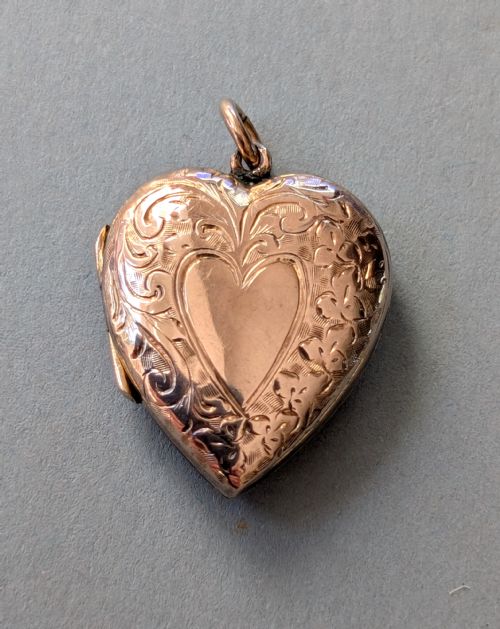
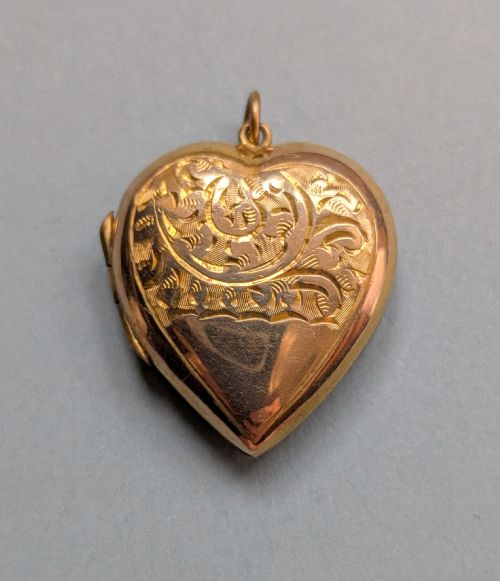
The selections on this page range from solid 18ct and 9ct gold to rolled gold and gilt metal. Oval and round pendants dominate, alongside heart shapes and book chain collars.
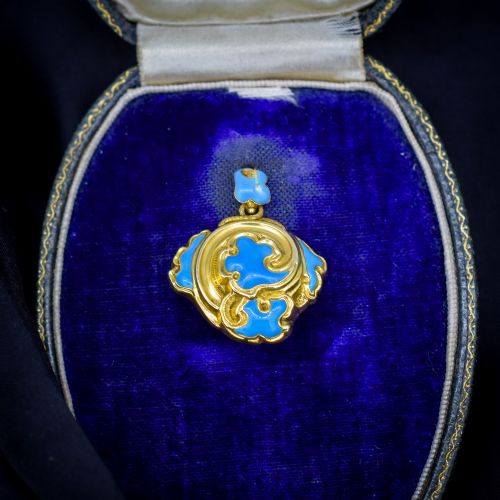
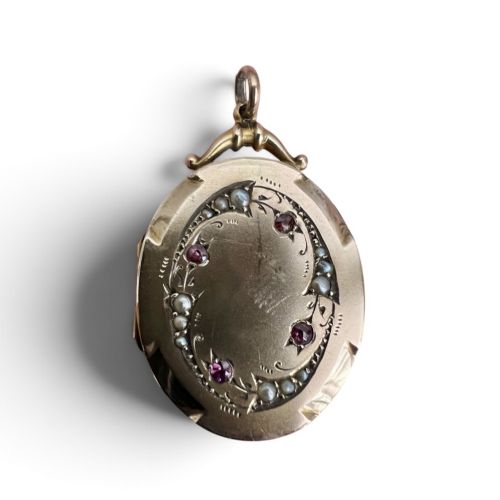
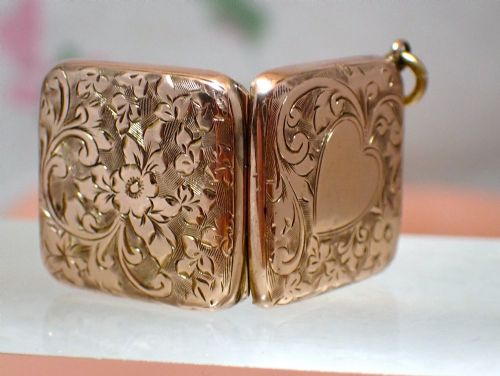
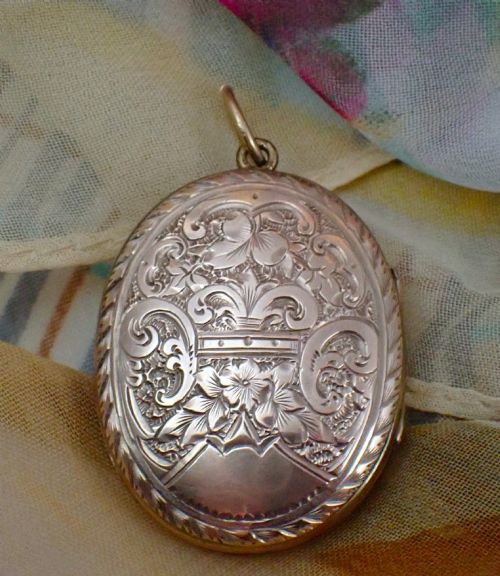
Victorian examples frequently display detailed floral engraving, turquoise and pearl clusters, or blue enamel star motifs. Edwardian and later specimens offer cleaner hinged frames designed for open or double-sided display.
Materials and construction
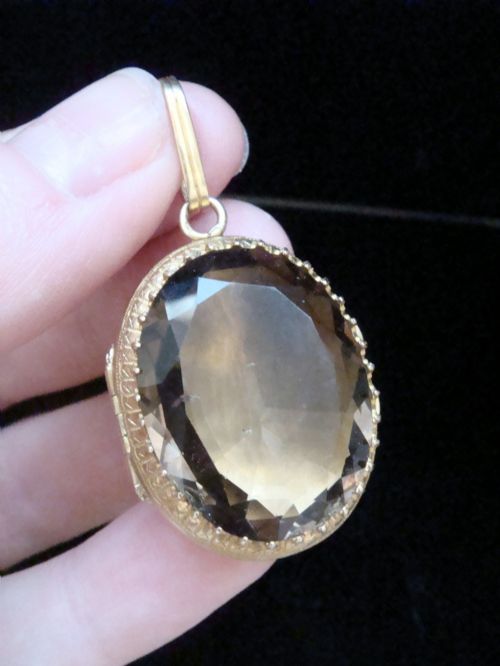
Goldsmiths constructed these pieces using 15ct and 18ct yellow or rose gold, alongside 9ct gold, rolled gold, and gilt metal. Many examples incorporate glass panels, seed pearls, turquoise stones, old-cut diamonds, and coloured enamel.
Hinged compartments, snap closures, and internal glass frames secure the paper photographs safely within the gold casing. Master artisans employed hand engraving, wirework, and delicate cluster settings to decorate the exterior surfaces.
Retail Price Guide 2026
Typical UK retail prices for gold photo locket, calculated from the Sellingantiques database of over a million retail prices indexed since 2003. This retail price guide relies exclusively on Sellingantiques data; no external sources or auction records are used, so the figures do not describe the wider market.
The inventory spans Victorian, Edwardian, and mid-twentieth century periods in oval, round, and heart configurations.
The markers of distinction
Quality rests in the weight of the gold, the precision of the hinge, and the complexity of the ornamentation. Solid 18ct gold and marked pieces with intricate hand engraving or precious gem borders represent the highest tier.
Rolled gold and back-and-front variants offer lighter construction while maintaining the visual appeal of solid metal. The presence of original glass inserts and intact internal photograph frames elevates a piece considerably.
The Gold Photo Locket Glossary
- Back and front
- A construction method where the outer bezels consist of gold while the internal plates utilise a base metal.
- Rolled gold
- A durable material made by fusing a sheet of gold to a base metal core under heat and pressure.
- Mourning locket
- A commemorative piece, often featuring black enamel or hair work, created to remember a deceased loved one.
- Fob pendant
- A small ornament attached to a pocket watch ribbon or chain, frequently designed as a hinged photo locket.
- Book chain
- A Victorian necklace style composed of folded metal links resembling the covers of miniature books.
Frequently Asked Questions
How do I open a vintage gold locket?
Most hinged examples feature a small thumbnail notch along the side seam to release the snap closure. Gentle pressure on this edge allows the case to swing open on its pin hinge.
Avoid forcing stuck covers, as older metal frames and internal glass retaining rings can bend or crack under uneven pressure.
Can I put modern photographs inside an antique locket?
Yes, standard paper photographs can be trimmed with small scissors to fit the internal dimensions of the bezel. Using a thin card template helps measure the exact aperture before cutting.
Original paper portraits found inside should be preserved carefully if they hold historical interest for the piece.
What is the difference between solid gold and rolled gold?
Solid gold pieces consist entirely of precious metal throughout their entire structure, such as 9ct or 18ct gold. These retain their material value and polish evenly over generations of wear.
Rolled gold layers a sheet of solid gold over a supportive base metal core, offering the appearance and wear resistance of gold at a lighter weight.
How do I date a Victorian photo locket?
Stylistic clues such as floral hand engraving, seed pearl star clusters, and black mourning enamel point toward the nineteenth century. Hallmarks stamped inside the casing provide specific assay office marks and years.
Comparing the closure mechanism and chain style with documented pieces helps narrow down the decade of manufacture.