

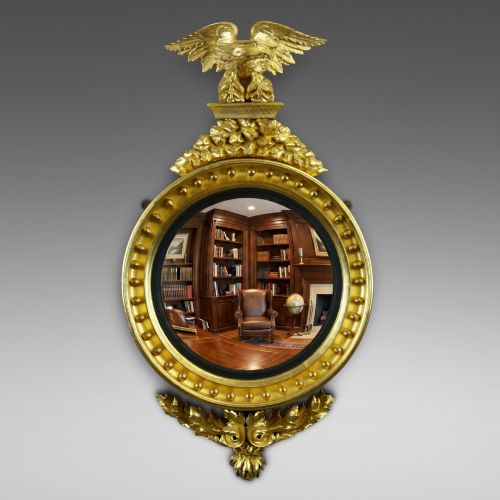
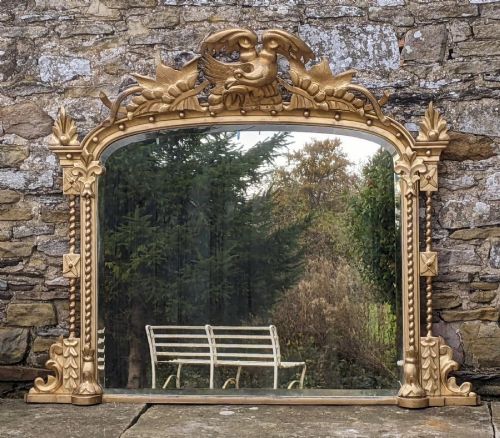
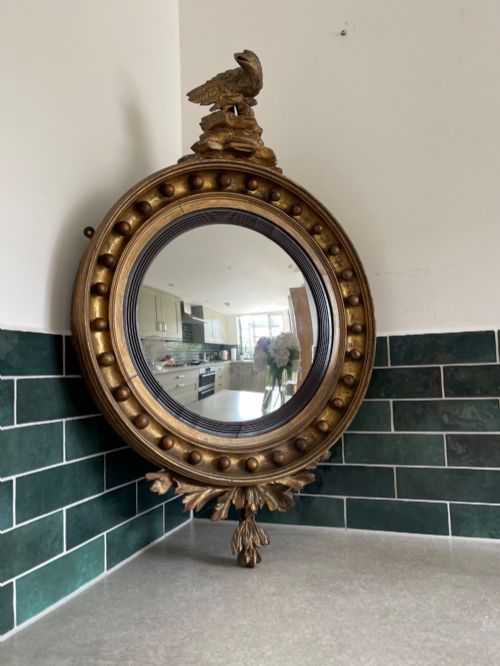


Gold Eagle Wall Mirror
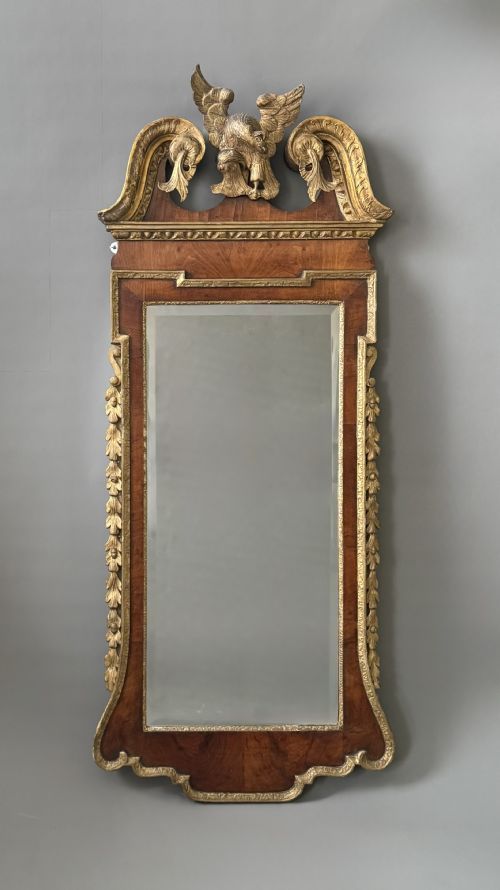
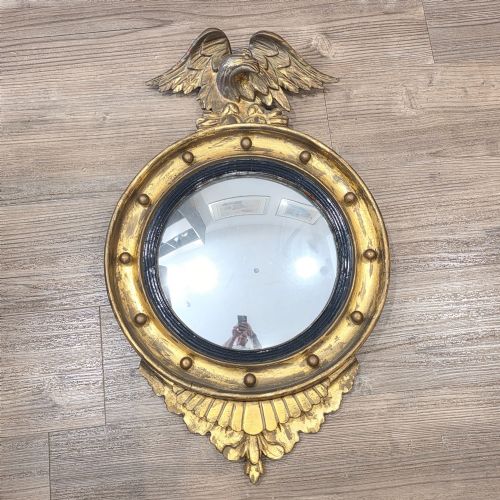
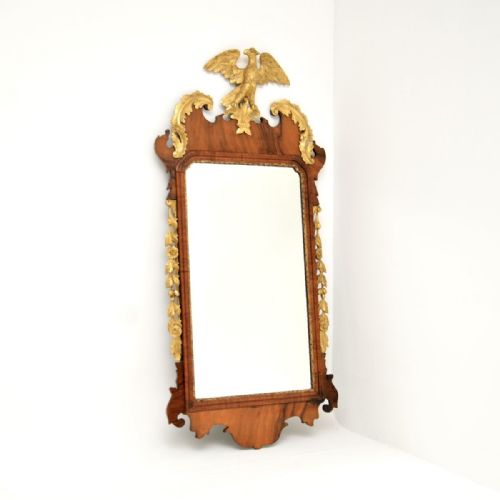
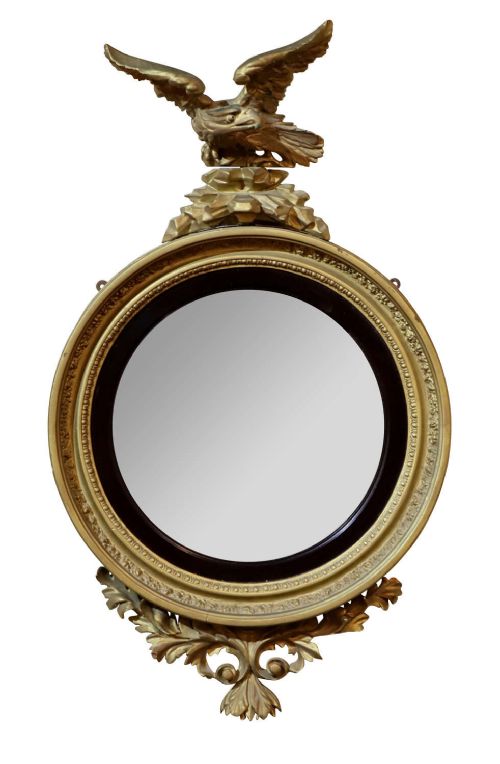
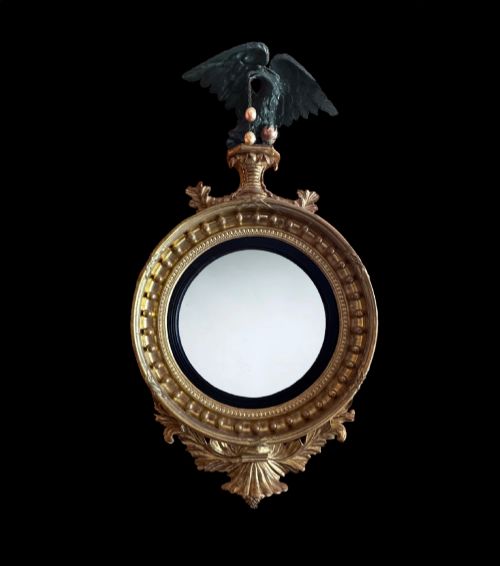
A gold eagle wall mirror brings intense focus to a room, dominated by circular convex plates and traditional spread eagle crests.
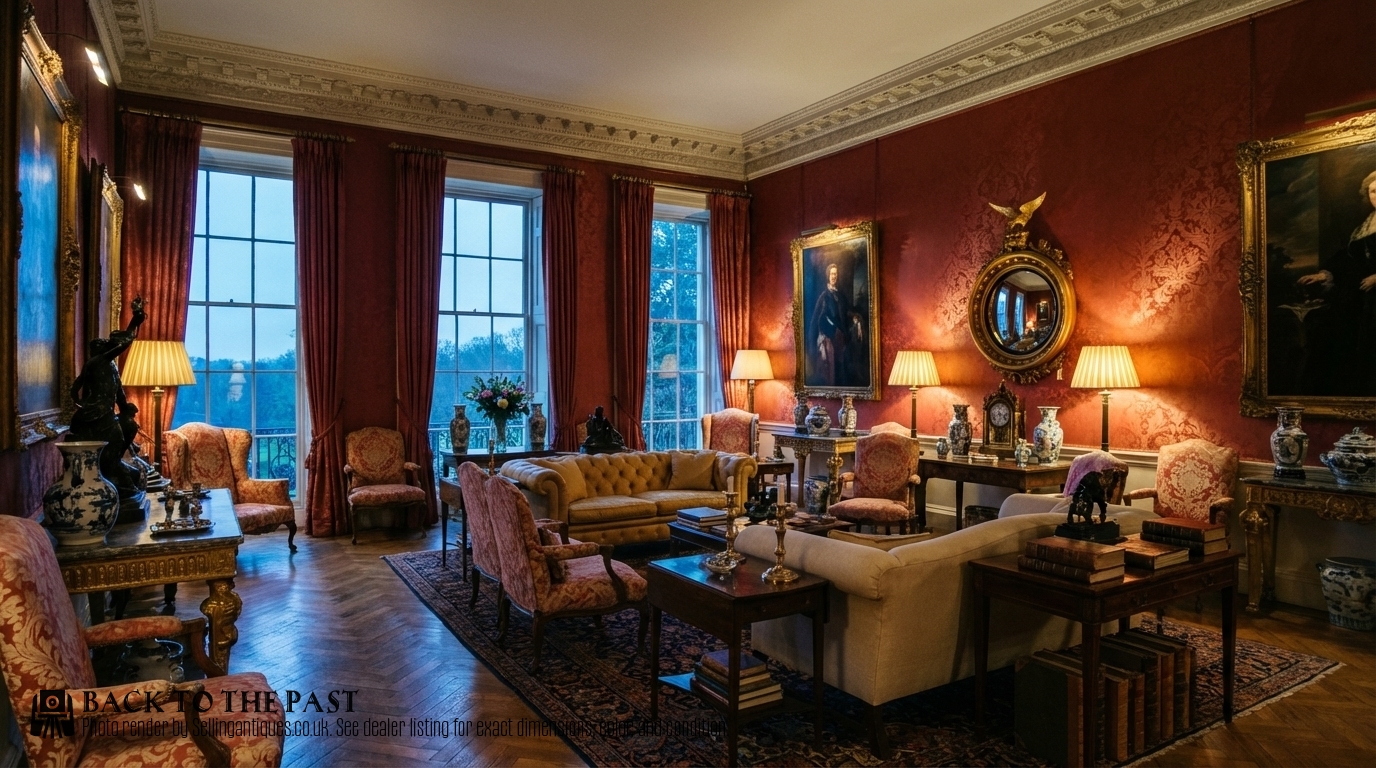
Gold Eagle Wall Mirror
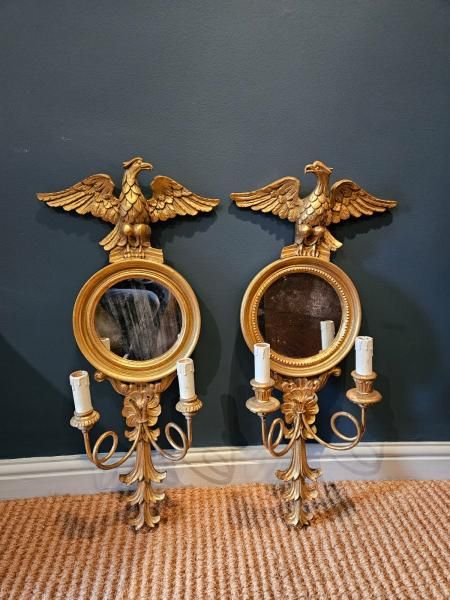
A gold eagle wall mirror draws the eye through a distinctive circular convex plate surmounted by a carved bird of prey. These pieces emerge predominantly from the Regency and Georgian eras, alongside later revivals from the nineteenth and twentieth centuries. Buyers frequently encounter circular convex formats flanked by candle sconces or finished with elaborate girandole details.
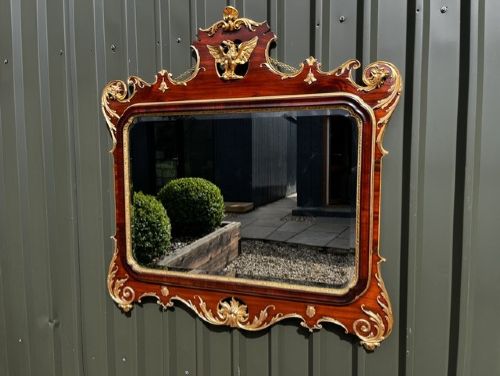
The architectural presence of these mirrors suits principal reception rooms and hallways where historical depth matters. Makers often paired the primary gilded frame with ebonised details or walnut elements to create striking visual contrast. Such items serve as both functional optics and commanding decorative focal points within traditional interiors.
Materials and construction methods
Artisans built the structural core of a gold eagle wall mirror using dense timbers like mahogany and walnut, frequently applying gesso to form intricate surface ornaments. Guilders then coated the moulded plaster and wood with delicate gold leaf to achieve a brilliant metallic sheen. Ebonised wood details often frame the inner margins to accentuate the depth of the convex glass.
Convex mirror glass requires specialised blowing and silvering techniques to produce a warped plate that captures a panoramic reflection of the interior. Carvers shaped the crests into detailed spread eagles or Hoho birds using traditional hand tools before applying the final gilded finish. Brass components frequently support the candle arms on girandole variants.
Convex mirrors were historically nicknamed bank manager's eyes because their wide angle let clerks watch the whole room at once.
Distinctions in quality and execution
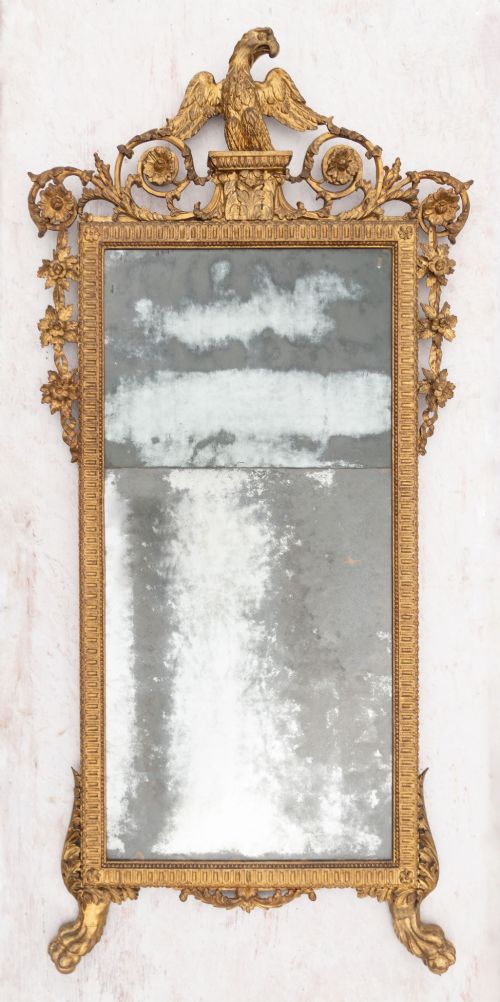
The definition and depth of the carved eagle crest separate standard production from superior examples. Master carvers rendered feather details with anatomical precision, whereas lesser workshops produced softer, more generalised forms. The crispness of the surrounding gesso mouldings and the preservation of the original gold leaf further dictate the standing of a piece.
Original mirror plates display subtle imperfections and silvering wear that differentiate period glass from later replacements. The integrity of the underlying timber frame and the secure attachment of the crest determine the structural longevity of the mirror.
The Gold Eagle Wall Mirror Glossary
- Convex mirror
- A circular mirror with an outward-curving glass plate that reflects a wide, distorted field of vision. This optical property made them popular for monitoring large spaces.
- Giltwood
- Timber carved and coated with gold leaf or metallic paint to create a lustrous golden finish. It forms the primary visual element of traditional wall mirrors.
- Gesso
- A plaster mixture applied to wood frames to provide a smooth base for carving and gilding. This material allows for intricate relief ornamentation.
- Girandole
- A decorative wall mirror featuring attached candle sconces that reflect candlelight into the room. They combine illumination with optical expansion.
- Parcel gilt
- A finishing technique where only specific portions of a wooden object receive gilding, leaving the natural grain of walnut or mahogany visible elsewhere.
Gold Eagle Wall Mirror: Frequently Asked Questions
Where should I hang a convex mirror?
These mirrors suit central locations in principal rooms where the wide reflection can capture an entire interior space.
Position the piece at eye level to maximise its optical impact and ensure the carved eagle crest commands the wall effectively.
How do I identify a Regency period mirror?
Regency pieces often feature circular convex glass plates framed by gilded gesso with distinct ball accents and prominent eagle crests.
Examine the construction methods and timber backing to determine the age of the frame relative to the nineteenth-century style.
What is the difference between an overmantel and a wall mirror?
Overmantel mirrors are traditionally wider formats designed to sit specifically above a fireplace mantelpiece.
Standard wall mirrors feature circular or vertical proportions intended for general display across various interior walls.
Why do some mirrors include candle sconces?
Mirrors fitted with candle arms function as girandoles, designed to multiply the flickering light of candles across the room.
Brass sconces extend from the gilded frame to provide both practical illumination and decorative symmetry.