


Gold Eagle Crested Mirror
A gold eagle crested mirror brings commanding presence to a room, uniting convex glass and gilded wood in a singular silhouette.
Gold Eagle Crested Mirror
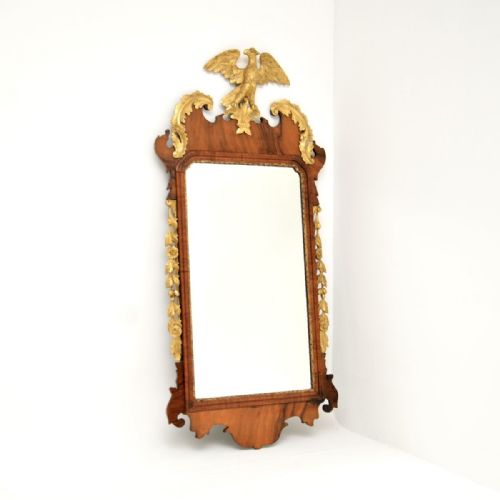
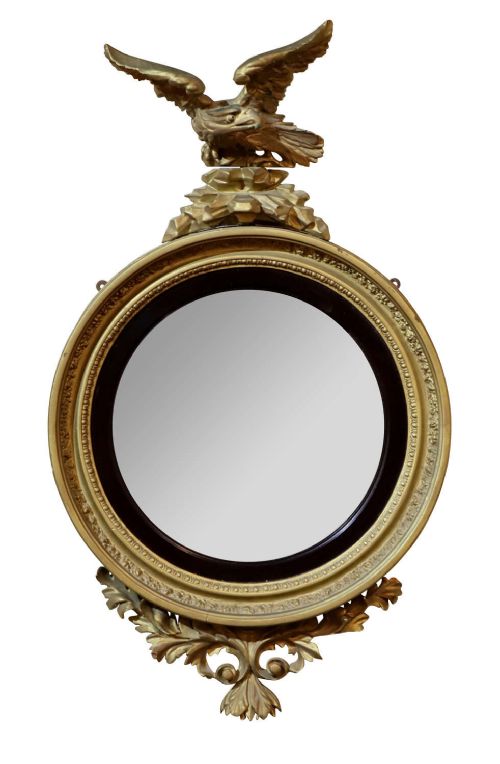
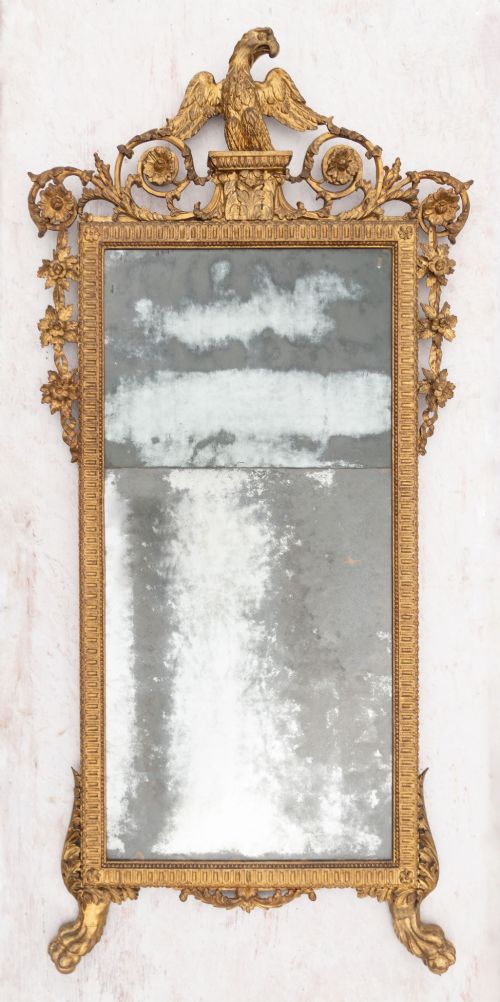
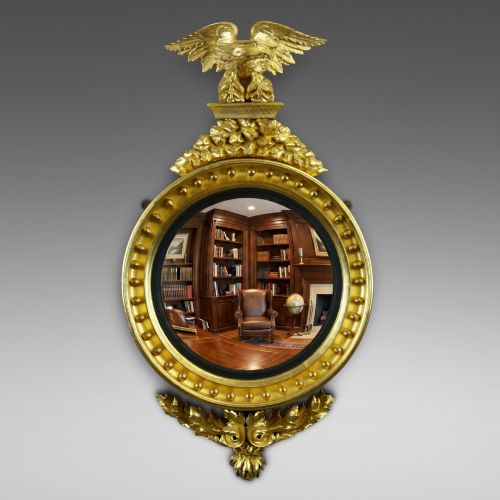
A gold eagle crested mirror is a statement wall hanging defined by its bird crest and gilded frame. These pieces occupy a prominent place in historic interiors, catching light and reflecting the room through curved or flat mirror glass.
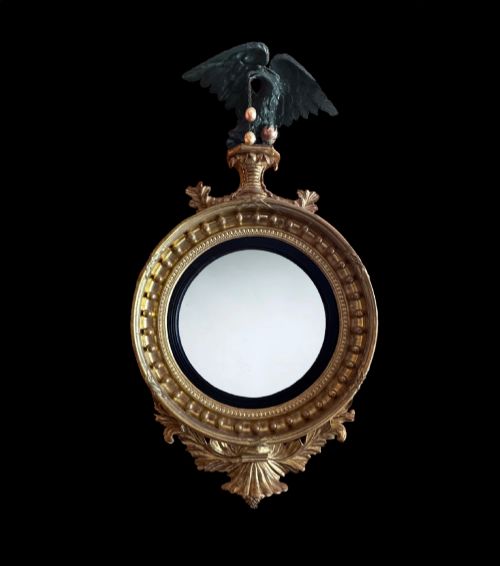
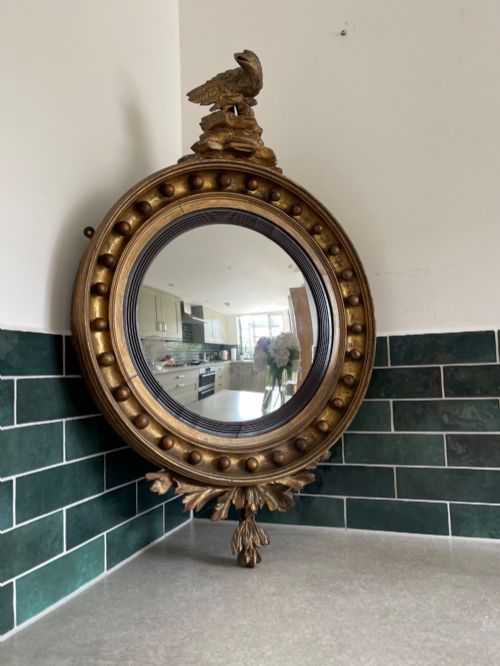
The most common version met on this page is the Regency circular convex mirror featuring a spread eagle surmount. These round formats often date from the early nineteenth century and frequently incorporate ebonised details alongside their giltwood surfaces.
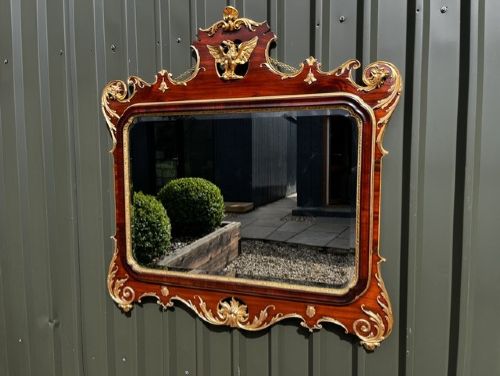
Alongside circular convex forms, listings include rectangular overmantel mirrors and tall pier mirrors from Georgian and Victorian periods. Mahogany parcel gilt variants also appear, offering alternative wood tones beneath the primary gilding.
Materials and construction methods
Giltwood and gesso form the primary visual vocabulary of these frames, often built upon a carved wooden base. Artisans applied thin layers of gold leaf over prepared gesso surfaces to achieve a luminous metallic finish.
Secondary materials include mahogany and ebonised wood, frequently paired with parcel gilt highlights. Brass elements occasionally appear alongside mirror glass, completing the structural composition of the frame.
Many convex mirrors feature small carved balls around the outer frame ring, originally intended to catch stray reflections like tiny luminous planets.
Distinctions in quality
Quality reveals itself in the depth and sharpness of the carved eagle crest and the surrounding frame ornamentation. Superior examples display crisply defined feathers and balanced proportions rather than simplified, flat carving.
The application of the gold leaf and the preservation of the original glass plate heavily influence the character of each piece. Finer mirrors maintain integrated surface patination across both the wooden substrate and the reflective glass.
The Gold Eagle Crested Mirror Glossary
- Convex mirror
- A round mirror with an outward-curving glass surface that offers a wide-angle reflection of the interior space. These curved plates distort the edges while pulling the room into a single circular frame.
- Giltwood
- Timber that has been coated with a thin layer of gold leaf or gold paint. This technique creates a bright, reflective surface that enhances the carved details of the frame.
- Gesso
- A plaster-like mixture applied to wooden frames as a smooth base for gilding. Artisans carved intricate details directly into this ground layer before applying gold leaf.
- Parcel gilt
- A decorative treatment where only specific portions of a wooden object are gilded, leaving the underlying timber exposed. This technique highlights particular carved elements against a dark wood grain.
- Overmantel mirror
- A large wall mirror designed specifically to hang above a fireplace mantel. These horizontal formats often span the width of the fireplace surround.
Gold Eagle Crested Mirror: Frequently Asked Questions
Where should I hang a convex mirror?
These mirrors suit principal reception rooms and hallways where their wide-angle reflection can capture the entire space.
Hanging them at eye level ensures the curved glass effectively gathers ambient light from surrounding windows and lamps.
How do I date a giltwood mirror?
Dating relies on examining the frame construction, the carving style, and the composition of the underlying gesso. Period characteristics from Georgian and Regency eras provide clear stylistic markers for comparison.
Secondary woods visible at the reverse also help determine the approximate age of the timber frame.
What is a girandole mirror?
A girandole is a wall mirror featuring attached candle arms that project forward from the frame. The polished metal or glass of the candle branches helps amplify candlelight within the evening interior.
These functional arms distinguish standard wall mirrors from illuminated variants.
Why does the eagle feature on these frames?
The spread eagle served as a popular neoclassical motif symbolizing authority, vigilance, and imperial power during the Georgian and Regency periods. Carvers positioned the bird atop the frame to crown the composition with dramatic height.
This symbolic bird became a defining feature of luxury wall furniture.