
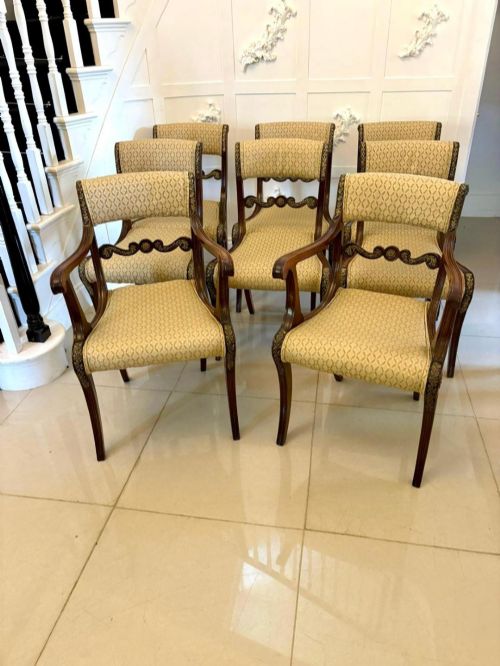
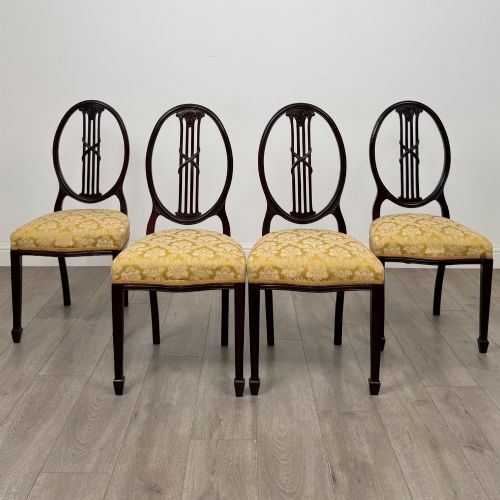
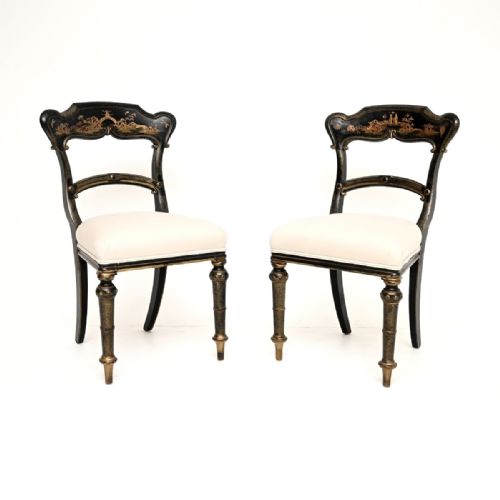
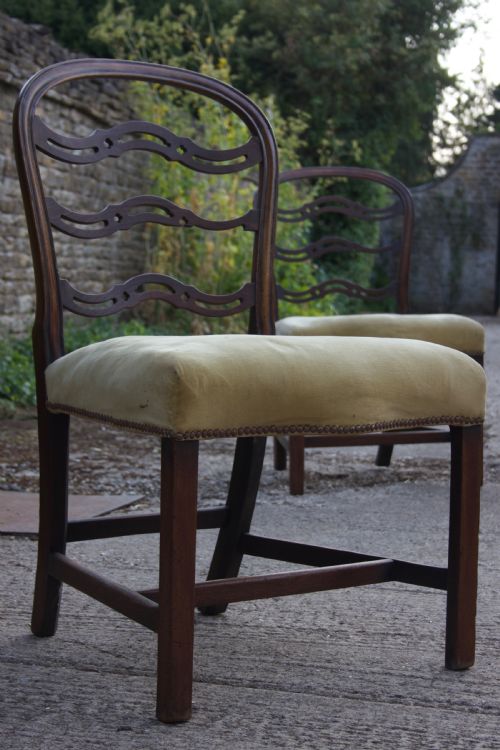
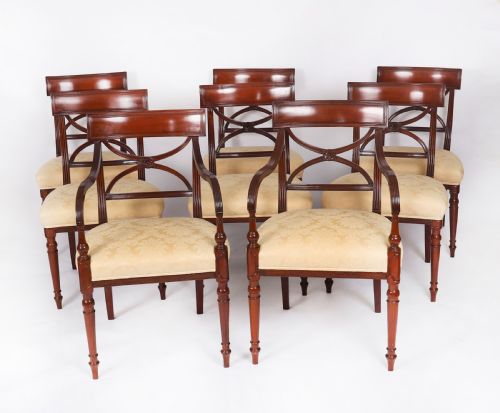
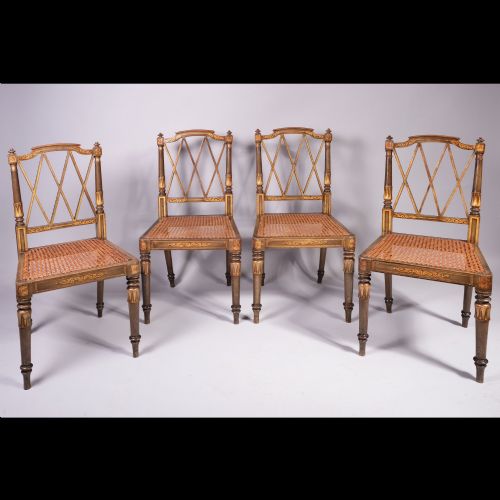
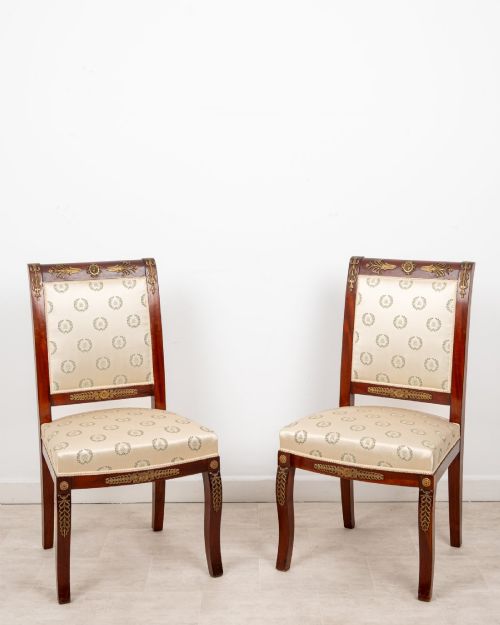


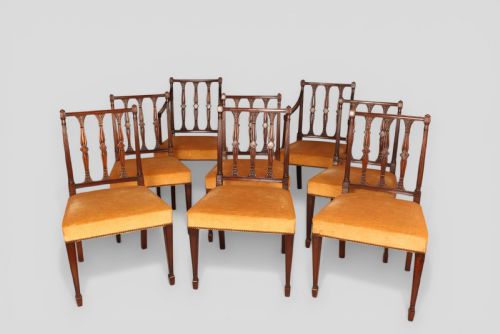


Gold Dining Chairs
Gold dining chairs bring warmth and historical styling to an interior, drawing on centuries of cabinet-making traditions from the Regency to the Arts and Crafts movement.
Gold Dining Chairs
When searching for gold dining chairs, collectors encounter pieces defined by gilded surfaces, golden oak timbers, and warm honey-toned veneers. The selection ranges from formal Regency and Victorian giltwood frames to sturdy Arts and Crafts golden oak seating.
The term encompasses various forms, from single side chairs and carvers to large sets intended for substantial dining tables. These pieces bridge formal Continental design and robust English cabinet-making.
Victorian and Edwardian examples sit alongside earlier Georgian prototypes, reflecting how different eras interpreted the desire for golden hues in domestic spaces.
Materials and construction
Makers utilised solid timbers such as mahogany, walnut, oak, and rosewood as the structural foundation for these chairs. Golden oak frequently appears in Arts and Crafts pieces, while finer formal seating relies on dense hardwoods capable of supporting intricate carved details.
Surface treatments include traditional water gilding, gold paint, and ormolu mounts applied to frames. Upholstery materials range from leather and cane seating to damask and silk fabrics secured with traditional methods.
Design influences span Georgian proportions, Victorian revival styles, and Arts and Crafts movement ideals.
Assessing quality in construction and finish
Quality rests in the crispness of the carving, the integrity of the timber frame, and the survival of the original gilding or finish. Superior sets display uniform colour and harmonious grain patterns across every chair.
The application of the gilt layer, whether leaf or paint, dictates visual longevity and adherence to the underlying wood or gesso. Original upholstery platforms and tight joinery separate standard production items from exhibition grade suites.
Blyth And Sons·G Norman·Heals
The Gold Dining Chairs Glossary
- Giltwood
- Timber coated with gold leaf or powder over a prepared gesso base. This finish provides the characteristic metallic brilliance seen on French and English revival seating.
- Carver
- An armchair designed with elbow rests, traditionally placed at the head of a dining table. These often accompanied matching sets of single chairs.
- Gesso
- A plaster-like mixture applied to wood frames to create a smooth surface for gilding. It allows carvers to achieve sharp relief details beneath the gold layer.
- Ormolu
- Gilded bronze mounts fixed to furniture frames for decorative accent. This technique is prominent on nineteenth-century Continental and French Empire revival pieces.
- Balloon back
- A rounded, curved chair back resembling a balloon shape, popular during the Victorian era. This form provides ergonomic support while displaying figured timber veneers.
Gold Dining Chairs: Frequently Asked Questions
How do I care for antique gilt surfaces?
Dust surfaces gently with a soft, dry brush and avoid liquid cleaners that can damage fragile gold leaf. Keep chairs away from direct sunlight and moisture to preserve the gesso and metal.
Professional restoration is recommended if the gilt layer begins to flake or separate from the timber frame. Regular gentle maintenance protects the historical finish for daily use.
Can I mix gold chairs with modern tables?
Combining antique gold seating with contemporary tables creates a striking contrast that highlights the craftsmanship of the chairs. The warm metallic tones bridge different eras of interior design.
Ensure seat heights align comfortably with the underside of the table apron before pairing disparate styles together.
What is the difference between single and carver chairs?
Single chairs feature an open frame without armrests, designed to maximise seating capacity around a dining table. They slide neatly beneath the surface when not in use.
Carvers include structural armrests for added comfort, traditionally reserved for the host and hostess at the table ends.
How do I identify a Victorian golden oak chair?
Victorian golden oak furniture exhibits a warm, honeyed timber tone achieved through natural ageing and finishing. Arts and Crafts examples often feature exposed joinery, slatted backs, and functional design.
Look for hand-carved details and substantial construction methods typical of nineteenth-century English workshops.