
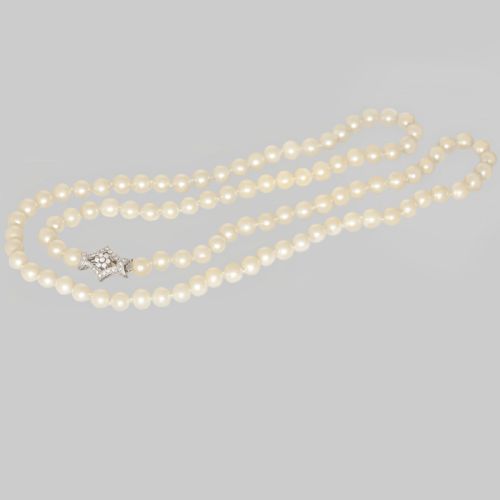


Gold Diamond Clasp Necklace
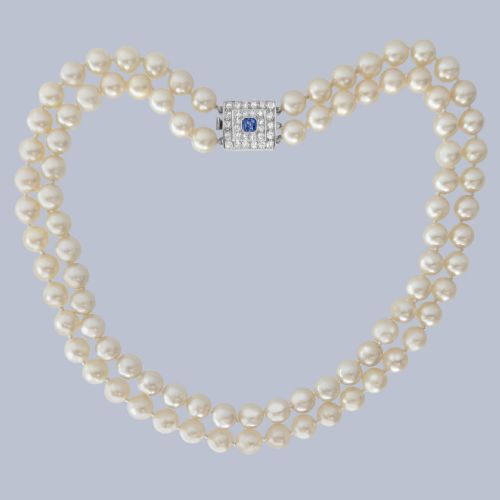
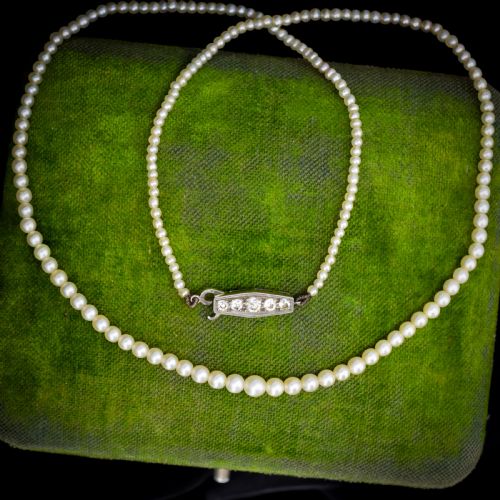
A gold diamond clasp necklace pairs the quiet lustre of pearls with a sparkling centrepiece that was often designed to be worn at the front.
Gold Diamond Clasp Necklace
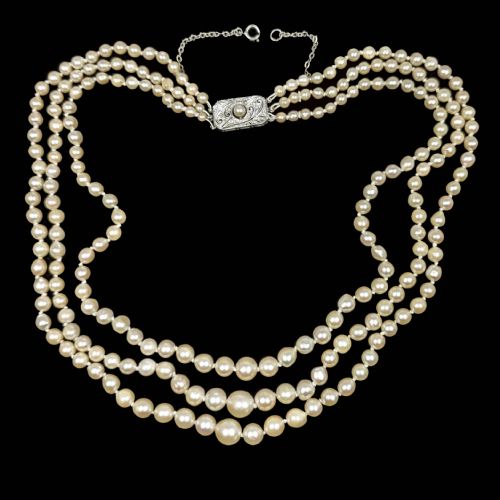
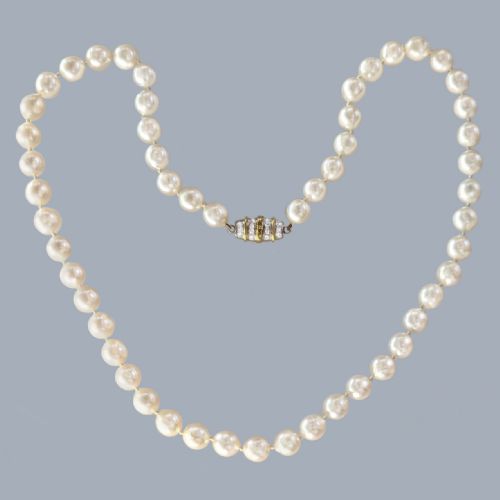
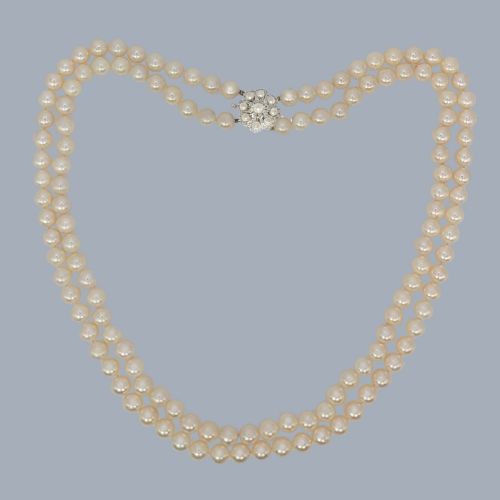
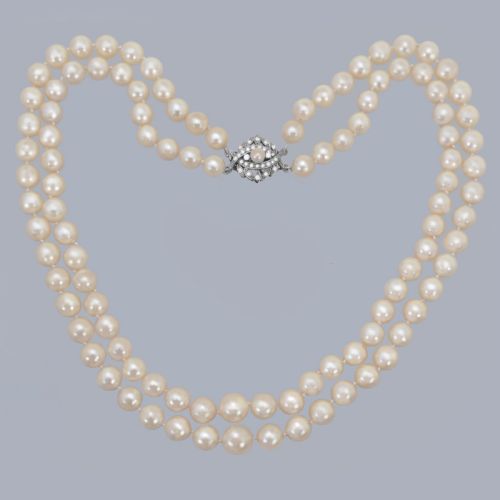
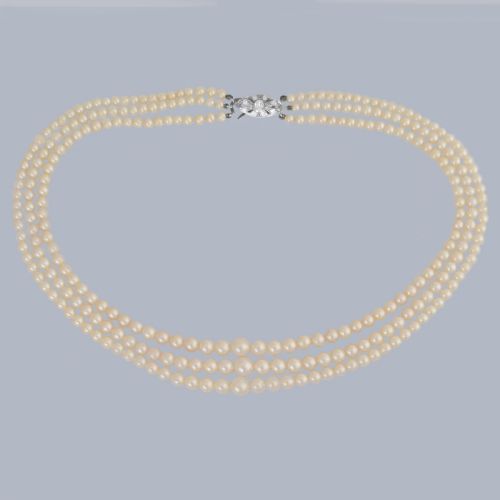
A gold diamond clasp necklace centres on multi-strand pearls secured by a decorative fastening set with diamonds and occasionally coloured stones like sapphires, rubies or emeralds. Buyers searching for a gold diamond clasp necklace will frequently encounter multi-strand configurations spanning single, double, triple and longer rows.
The pieces on this page span the Edwardian period through the Art Deco era and into mid-century modern designs of the 1950s and 1960s. Formats range from tight chokers to multi-strand lengths of cultured and saltwater pearls fitted with secure box or tongue clasps.
How they were made
The construction pairs knotted silk threads supporting pearls with precious metal mountings in 9ct or 18ct white and yellow gold, alongside platinum. Jewellers set diamonds using older cuts such as rose cuts in earlier pieces and old European cuts alongside brilliant cuts in later mid-century examples.
Clasps were engineered as structural jewellery pieces, often formed into floral, foliate or geometric cluster shapes that functioned both as a mechanical fastener and a decorative focal point.
The documented pieces span the Edwardian era, the Art Deco 1920s and 1930s, and mid-century 1950s and 1960s production.
What varies in quality
Quality is determined by the uniformity, lustre and origin of the pearls, whether natural saltwater or graded cultured specimens, paired with the carat weight and cut grade of the accompanying diamonds. The complexity of the clasp metalwork, such as pierced platinum work or multi-stone gem clusters, distinguishes finer workshops from standard production.
The integrity of the stringing also plays a role, with professional recent restringing ensuring the longevity of multi-strand layouts.
The Gold Diamond Clasp Necklace Glossary
- Cultured pearl
- Pearls formed with human intervention by inserting a nucleus into an oyster, widely utilised from the early twentieth century onwards.
- Old cut diamond
- A hand-faceted diamond shape typical of earlier periods, featuring a smaller table and a higher crown than modern brilliant cuts.
- Box clasp
- A secure fastening where a tapered metal tongue clicks into a decorative box housing, often released by a side safety catch.
- Saltwater pearl
- Pearls grown in marine pearl oysters, prized for their deep orient and natural formation over years in the sea.
Gold Diamond Clasp Necklace: Frequently Asked Questions
How do I wear a clasp necklace?
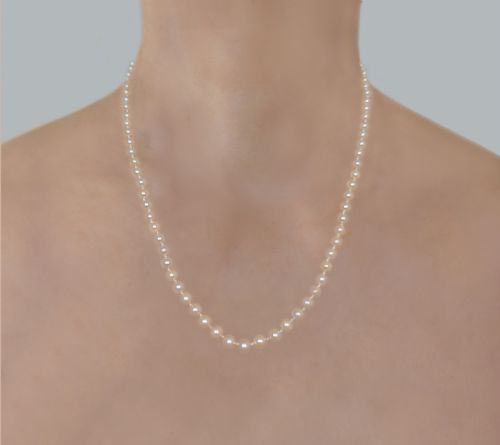
These necklaces were historically designed so that the decorative diamond fastening could be rotated to the front as a pendant feature or worn discreetly at the nape of the neck.
Matching the length, from short chokers to multi-strand opera lengths, helps integrate the piece with both high necklines and evening wear.
Were these clasps originally made for the pearls?
Many Edwardian and mid-century clasps were conceived entirely as integral parts of the piece by the original jeweller, utilising matching gold and platinum settings.
In some instances, antique gemstone brooches were converted into necklace clasps during period redesigns.
How do I date a pearl and diamond necklace?
Dating relies on mounting styles, such as geometric platinum Art Deco frames versus organic mid-century floral gold clusters, alongside British hallmarks.
Assay office marks and date letters stamped onto the gold tongue provide precise verification for pieces originating in London or Birmingham.
What is the difference between single and multi-strand?
Single-strand iterations present a singular line of pearls leading to the diamond focal point, offering a minimalist profile.
Double and triple-strand layouts layer the pearls closely together, creating a wider collar effect that requires a more substantial box clasp to support the tension.