



Gold Damask Bench
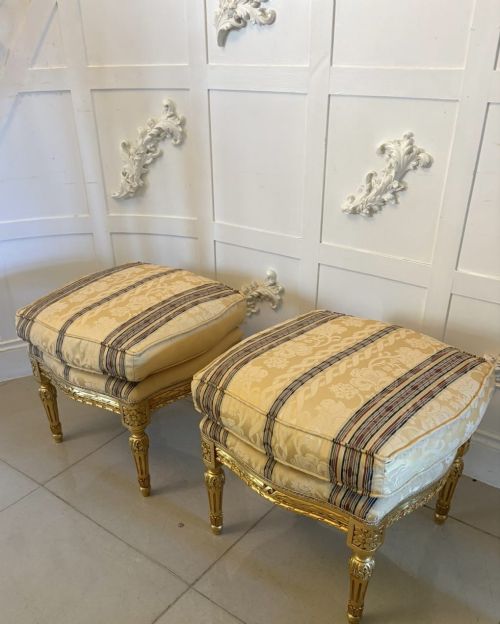
These gold damask bench pieces offer classical seating, bringing French giltwood and damask upholstery into period interiors.
Gold Damask Bench
A gold damask bench encompasses various seating forms upholstered in patterned silk or textile fabrics, often paired with gilded wooden frames. When exploring these examples, buyers will frequently encounter nineteenth-century pieces reflecting French revival aesthetics.
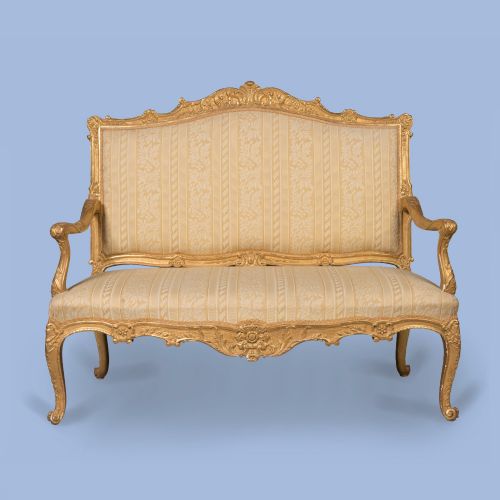
The inventory on this page ranges from window seats and footstools to larger settees and canapés. These seating forms span the nineteenth century up to nineteen-twenty, drawing heavily on Louis styles and baroque revivals.
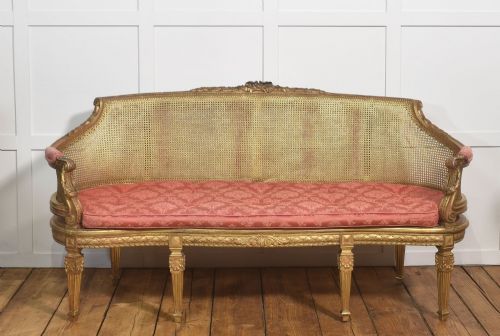
Makers and workshops produced these giltwood and cane items for formal reception spaces and drawing rooms. The presence of silk damask upholstery defines the visual character of these particular seating options.
Materials and construction
Construction relies upon carved wood frameworks, predominantly finished in giltwood or gold paint to achieve a metallic sheen. Artisans shaped these frames using traditional joinery techniques suited for decorative salon furniture.
Upholstery involves damask fabric, silk damask, and standard textile applications secured over the internal padding. Certain variants incorporate cane panels within the wooden structure to lighten the visual weight of the frame.
Gold Damask Bench Retail Price Guide 2026
Typical asking prices for gold damask bench among the pieces listed under this phrase on Sellingantiques today, from the lower quarter to the upper quarter. They describe what is for sale here now, not the wider market.
Several pieces arrive with cane panels, proving that even formal eighteenth-century French courts appreciated a nice breeze through the back.
Distinguishing quality in gold damask seating
Quality rests primarily upon the depth and crispness of the wood carving across the frame. Finer examples display intricate foliage and scrollwork executed by skilled hands rather than mechanical replication.
The choice of textile elevates a piece, with heavy silk damask demonstrating superior material investment compared to standard fabric. Preservation of the original gilding and structural integrity further separates standard production from exceptional work.
The Gold Damask Bench Glossary
- Giltwood
- Wood that has been coated with gold leaf or gold paint to simulate solid precious metal. This finish provides the characteristic metallic gleam seen on nineteenth-century frames.
- Damask
- A reversible figured fabric woven on a loom, featuring patterns formed by contrasting warps and wefts. It provides the decorative textile surface associated with these seats.
- Canapé
- A traditional French term for an ornamental sofa or settee designed with an upholstered back and arms. These seating forms often display revival styling.
- Louis XVI Style
- A neoclassical design movement characterised by straight lines, symmetry, and classical ornamentation. Pieces from this tradition often feature fluted legs and rectilinear frames.
- Cane
- Strips of woven rattan used to form breathable panels for seat backs and frames. It appears frequently alongside gilded woodwork in French-influenced seating.
Gold Damask Bench: Frequently Asked Questions
What periods do these pieces date from?
The inventory spans the nineteenth century through to the early twentieth century, specifically covering decades like eighteen-seventy, eighteen-eighty, nineteen-hundred, nineteen-ten, and nineteen-twenty.
These dates reflect the popularity of revival movements that reinterpreted earlier French court styles for Victorian and Edwardian homes.
How were these benches used historically?
Historically, gilded seating served a decorative and functional role in formal reception rooms, parlours, and drawing rooms. They provided refined seating for guests during social gatherings.
Smaller variants like window seats and footstools were positioned in specific alcoves or paired with larger salon suites to coordinate the interior decor.
How do I distinguish Louis styles on these frames?
Louis XV style pieces typically exhibit curved lines, asymmetrical rococo motifs, and cabriole legs. They emphasise organic flow and playful ornamentation.
In contrast, Louis XVI style examples favour straight lines, geometric symmetry, and classical details such as fluted columns or square-tapered legs.
How do I care for silk damask upholstery?
Silk damask requires protection from direct sunlight to prevent textile degradation and fading over time. Gentle dusting with a soft brush helps maintain the fabric surface.
Professional textile conservation methods should be consulted for deeper cleaning to preserve the woven pattern and delicate fibres.