



Gold Carved Sofa
A gold carved sofa brings giltwood and upholstery together in pieces shaped by French and English tastes.
Gold Carved Sofa
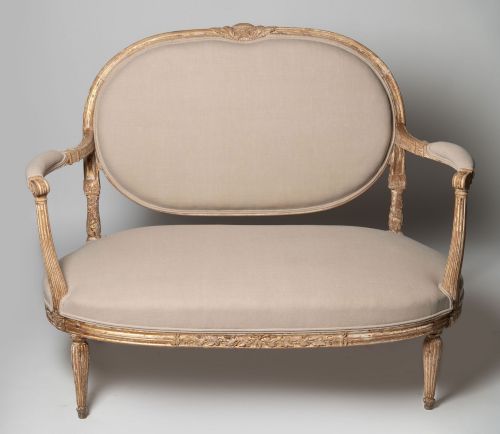
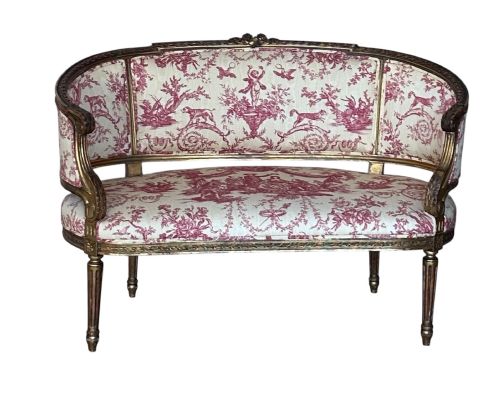
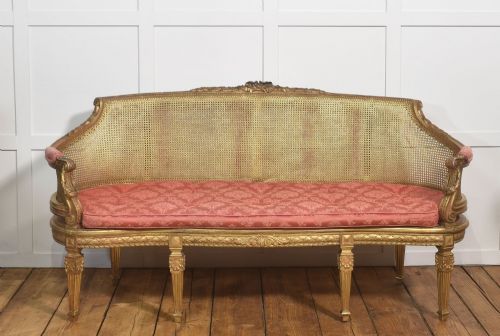
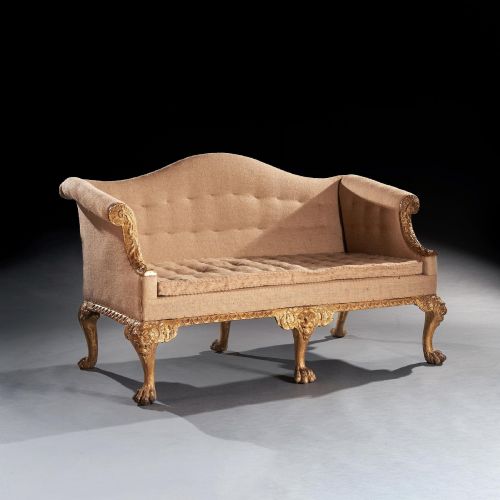
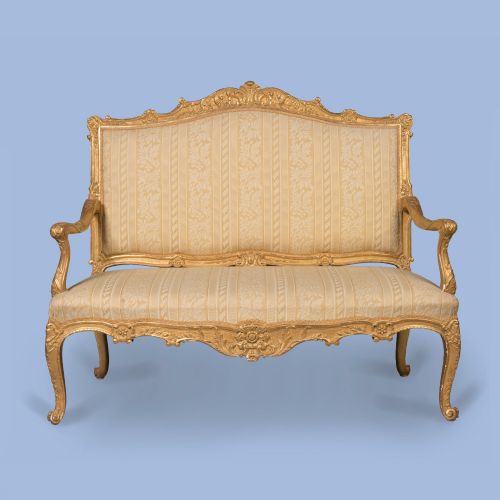
A gold carved sofa encompasses settees, canapés, and salon suites originating from the eighteenth, nineteenth, and early twentieth centuries. These seats draw upon Louis XV, Louis XVI, Regency, and Victorian styles, often displaying carved wooden frames finished with gilding.
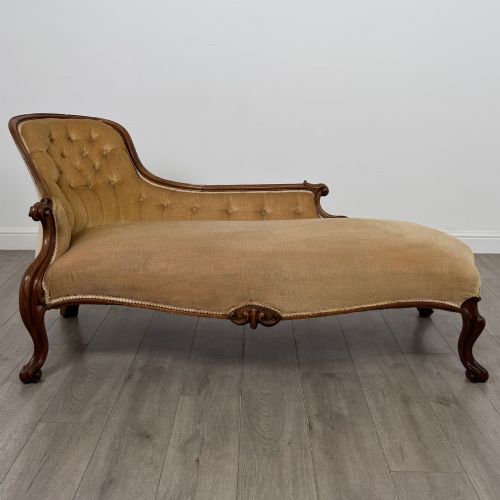
The pieces appearing most frequently on this page are nineteenth-century French giltwood settees and two-seat sofas. Buyers also encounter English mahogany settees, Victorian gilt sofas, and larger salon suites combining small sofas with matching chairs.
How they were made
Frames rely on timbers such as beech, walnut, fruitwood, and mahogany, shaped through manual carving and joinery. Artisans applied gold leaf or gilding to the wood surfaces, sometimes combining paint or exposed natural grain.
Upholstery uses textiles including velvet, damask, silk, and cane panels. Seat platforms incorporate traditional stuffing and webbing techniques suited to each period style.
Periods represented span from the eighteenth-century George II era through the Victorian period and into the early twentieth century.
What varies in quality
The crispness and depth of the hand carving dictate the visual standard of the frame. Skilled artisans produced fluid acanthus leaves, scrollwork, and lion mask details with sharp definition, whereas routine pieces show softer, shallower relief.
The integration of the gilding and the integrity of the underlying timber structure distinguish finer examples. Original upholstery methods and well-preserved textiles or cane work further separate standard regional seating from exceptional salon pieces.
Giles Grendey·Holland + Son
The Gold Carved Sofa Glossary
- Giltwood
- Timber coated with gold leaf or metallic paint over a prepared gesso ground. This finish provides the characteristic metallic sheen seen on French and English period frames.
- Canapé
- A decorative settee or small sofa featuring an exposed wooden frame, originating in France during the eighteenth century. These seats often display upholstered backs and seats supported by carved legs.
- Louis XV Style
- A decorative aesthetic defined by asymmetrical scrolls, cabriole legs, and floral carving. This style emerged during the eighteenth century and saw revivals through the nineteenth century.
- Louis XVI Style
- A neoclassical design language characterised by straight tapered legs, fluting, and geometric symmetry. Pieces in this manner reflect classical Greek and Roman architectural motifs.
Gold Carved Sofa: Frequently Asked Questions
How do I identify a Louis XV style sofa?
Look for curved lines, cabriole legs, and asymmetric scrollwork on the wooden frame. These pieces often feature floral carvings and rounded backrests.
Check for nineteenth-century revival markers if the timber and construction methods appear more recent than the eighteenth century.
What is the difference between a settee and a sofa?
The terms are often used interchangeably, though settee traditionally denotes a lighter, two-seat wooden framed seat with upholstered components. Sofas can include larger upholstered frames designed for multiple occupants.
Both forms appear frequently in nineteenth-century French salon suites alongside matching armchairs.
Where were giltwood sofas placed historically?
Giltwood sofas were designed for principal reception rooms, salons, and formal drawing rooms. Their reflective gold finishes suited candlelit interiors and social gatherings.
Today, they function as statement seating in living spaces or bedrooms.
Can I use a antique gilt sofa daily?
Period giltwood sofas require careful placement away from direct sunlight and moisture to protect the delicate leaf finish. Normal sitting is generally fine, but heavy daily use may strain antique joinery and vintage upholstery.
Consider the structural stability of the frame before assigning heavy traffic to these historic seats.