


Gilded Wooden Bench
A gilded wooden bench brings dramatic neoclassical line and gold leaf warmth into a room, serving as an exceptional statement seat.
Gilded Wooden Bench
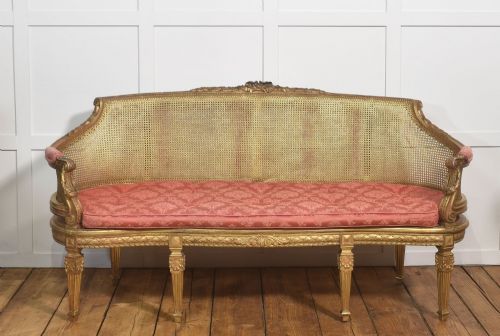
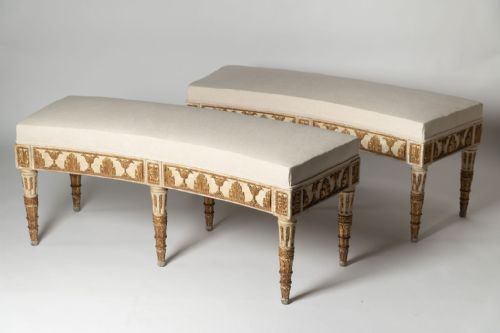
When you search for a gilded wooden bench, you encounter a refined selection of seating forms spanning the nineteenth century and early twentieth century. The inventory on this page encompasses French Louis XVI style settees, Italian painted stools, Regency empire couches, and Swedish empire day seats.
The objects vary from small footstools and window seats to grand country house sofas and carved canework couches. Makers applied giltwood, gold leaf, and painted wood finishes to timber frames, often pairing them with textile, linen, and cane upholstery.
Buyers most frequently meet nineteenth century examples showing French, Italian, and Swedish neoclassical influences. These pieces range from simple X-frame stools to elaborate Louis XV canapes and Asian folk art seats.
How they were made
Artisans constructed these frames from timber, employing hand carving techniques to shape intricate details into wood before applying finishes. Craftsmen then covered surfaces in gold leaf or giltwood, creating the luminous metallic sheen characteristic of these forms.
Upholstery methods involved securing textiles, linen, and cane to the wooden armature. Canework seats utilised woven natural materials, while soft furnishings incorporated traditional fabric coverings over padded foundations.
The listings feature pieces spanning the nineteenth century, Regency era, and early twentieth century in giltwood, timber, cane, and textile.
What varies in quality
The sophistication of the hand carving on the wooden frame dictates the distinction between standard production and superior craftsmanship. Crisp, deep relief work in the timber indicates skilled hand labour rather than mechanical shaping.
The integrity and application of the gold leaf or giltwood surface determine visual longevity. Original gilding that retains its depth and texture demonstrates higher grade workshop execution.
John Tesch
The Gilded Wooden Bench Glossary
- Giltwood
- Wood covered with a thin layer of gold leaf or gesso and gold powder. This finish provides the characteristic metallic brilliance seen on neoclassical seating.
- Canework
- Woven cane material utilised for seat panels and backrests. It offers a lightweight, flexible surface popular in French and Edwardian seating designs.
- Canape
- An antique French upholstered sofa typically featuring an exposed wooden frame. These seats often display elaborate carving and graceful curved lines.
- Empire Style
- A neoclassical design movement spanning the nineteenth century characterised by classical motifs and heavy symmetry. Pieces from this period draw inspiration from ancient Roman and Greek forms.
- X-Frame
- A structural furniture base formed by intersecting diagonal wooden supports. This ancient configuration provides sturdy load-bearing capability for stools and benches.
Gilded Wooden Bench: Frequently Asked Questions
How do I date a gilded wooden bench?
Examining the timber construction methods, tool marks, and fastening types helps establish the period of manufacture. Stylistic markers such as Regency neoclassical lines or Edwardian revival details further narrow the date.
Comparing the wear patterns on the gold leaf and the underlying gesso provides additional clues regarding the age of the surface finishing.
Where should I place a giltwood seat?
These decorative seats function effectively in entryways, living rooms, and bedrooms as accent pieces. Placing them away from direct sunlight protects the delicate gold leaf and textile upholstery from fading.
Their striking metallic finish allows them to anchor a room design or complement existing neoclassical furniture arrangements.
How do I care for antique giltwood?
Dust the wooden frame gently with a soft, dry brush to prevent accumulation without disturbing the delicate metallic surface. Avoid liquid cleaners and chemical polishes that can strip the gold leaf.
Maintaining stable indoor humidity levels prevents the underlying timber from expanding and contracting, which protects the gesso and gilding from cracking.