


French Cane Back Sofa
These french cane back sofa examples combine woven seating with timber frames, offering traditional seating with notable decorative presence.
French Cane Back Sofa
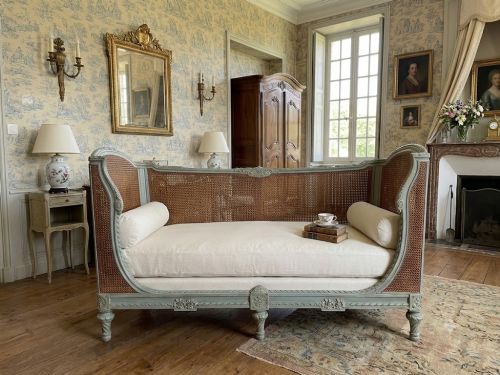
A french cane back sofa brings together classic seating forms such as settees, daybeds, and couches across periods spanning the eighteenth century through to the early twentieth century. These seating pieces appear in varied regional expressions, including Swedish Gustavian and Louis XVI revival designs.
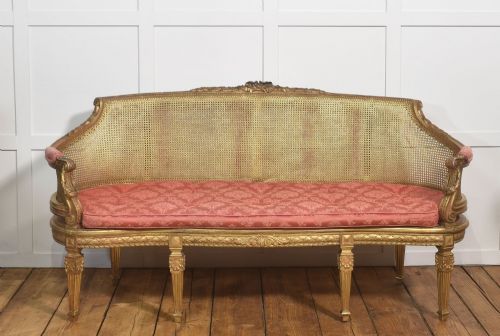
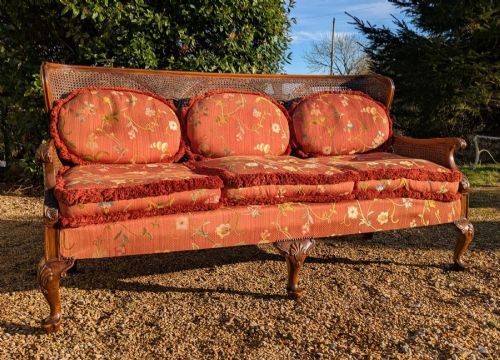
The most common examples on this page follow the Louis XVI style and Louis XV style, alongside Edwardian neoclassical revival pieces. Buyers frequently encounter frames finished in giltwood, painted wood, or carved walnut, upholstered with fabrics including damask and linen alongside feather cushions.
How they were made
Frames are constructed from sturdy timbers like walnut, beech, and giltwood, often featuring hand-carved detailing that defines styles from the eighteenth to the twentieth century. Canework is meticulously woven into the backrests and sometimes the sides to create a supportive yet lightweight structural mesh.
Upholstered elements utilise traditional materials such as linen and damask fabrics, frequently paired with feather cushions for comfort. Painted wood and gilded finishes are applied directly to the timber frames to achieve the decorative aesthetic characteristic of French chateau and revival furniture.
Some daybeds retain feather cushions designed to make afternoon reclining remarkably comfortable.
What varies in quality
The fineness of the timber carving and the uniformity of the cane weave distinguish superior examples from simpler ones. Crispness in the carved walnut or giltwood details indicates a higher standard of craftsmanship.
The choice of frame material and finish significantly influences the character of the piece, with genuine period gilding or carefully applied paintwork showing greater depth than later alterations. Integrated details like feather cushions and high-grade damask or linen upholstery also elevate the overall execution.
The French Cane Back Sofa Glossary
- Cane
- A material woven from stripped rattan or similar plant stems to form a breathable mesh panel. It provides lightweight structural support for chair backs and settees.
- Bergere
- An enclosed upholstered armchair or sofa featuring wooden frames and caned or upholstered sides. These pieces often include loose seat cushions for added comfort.
- Giltwood
- Timber treated with a thin layer of gold leaf or metallic gilt finish. This technique enhances the decorative brilliance of formal furniture frames.
- Canape
- The traditional French term for a settee or sofa designed for multiple occupants. These seating forms often display elaborate stylistic carvings.
French Cane Back Sofa: Frequently Asked Questions
What is a french cane back sofa?
These pieces are decorative seating furniture featuring woven caned backrests within timber frames like walnut, beech, or giltwood.
They encompass settees, daybeds, and couches produced across various periods including the eighteenth and nineteenth centuries.
How were these sofas used?
They served as formal and domestic seating in reception rooms and salons across grand residences and homes.
Their decorative frames and comfortable cushions made them suitable for both formal entertaining and daily relaxation.
How do I style a cane sofa?
Integrate the piece into a traditional or transitional interior where the wooden frame and woven cane can serve as a focal point.
Complement the existing upholstery, such as linen or damask, with neutral surroundings to highlight the carved details.
How do I tell periods apart?
Examine the stylistic details, such as the straight lines of Louis XVI revival designs compared to the curved contours of Louis XV pieces.
Materials and construction methods also offer clues, with eighteenth-century examples showing distinct hand-crafting traits separate from later revival pieces.