


Gold Carved Pedestal
A gold carved pedestal elevates objects and spaces, bringing classical form and metallic brilliance into interiors through 18th century, 19th century, and early 20th century designs.
Gold Carved Pedestal
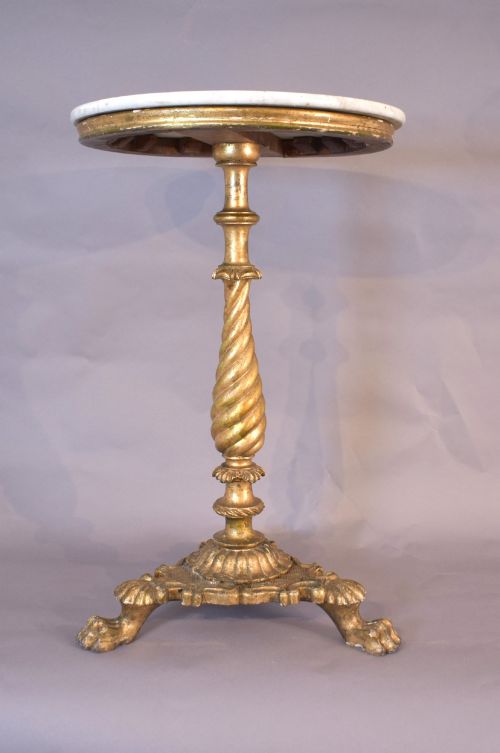
A gold carved pedestal search leads buyers to sculptural stands, torcheres, and occasional tables designed to support urns, statues, and plants. These furnishings emerge from 18th century, 19th century, and early 20th century periods, reflecting Italian Baroque, French Chateau, Neoclassical, and Victorian tastes.
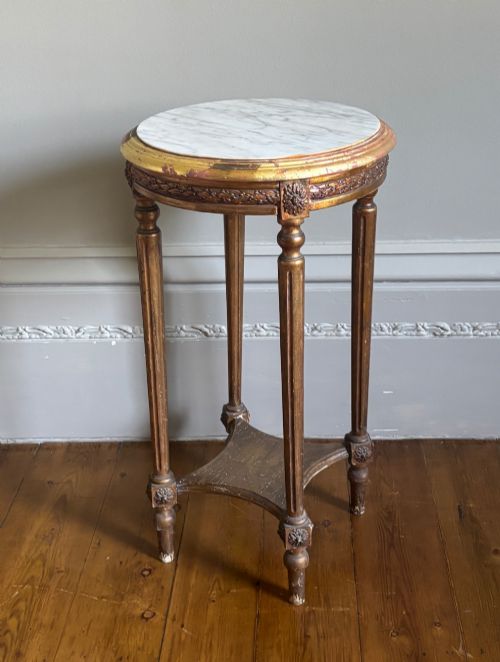
The most common versions met on this page include gilded wooden torcheres, tripod tables with marble tops, and painted columns. Makers across Italy, France, England, and Scandinavia produced these pieces to anchor corners and display decorative arts.
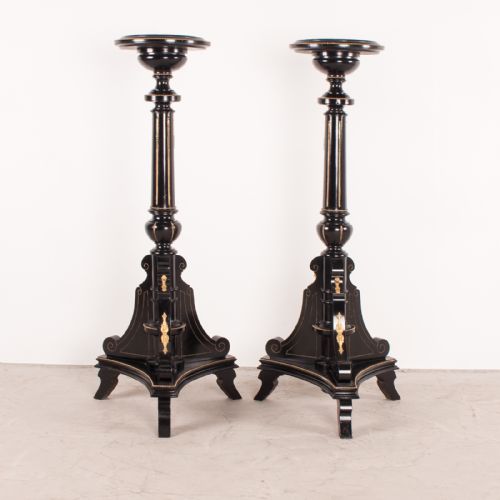
Forms range from tall fluted columns to tripod plant stands and figural supports like Venetian blackamoor torcheres. Each piece serves primarily to lift display items into the line of sight within formal rooms.
Materials and construction
Craftsmen shaped these furnishings from lime wood, carved wood, walnut, and rosewood before applying surface treatments. Giltwood and gold leaf provide the characteristic metallic sheen, often built up over layers of gesso on a wood base.
Many examples incorporate inset marble tops or polychrome paint alongside the gilding. Brass and ebonised details appear in specific aesthetic movement and Victorian pieces to create contrast against the bright gold surfaces.
Several Venetian figures double as botanical hosts, letting carved wooden nobility forever carry your indoor ferns.
Distinctions in craftsmanship
Quality separates in the depth and crispness of the wood carving, where deep undercut foliage and confident figural modelling distinguish master workshops from standard production. The preservation of original gilt polychrome and gold leaf surfaces maintains the integrity of the piece.
Structural stability in slender tripod bases and columns indicates superior joinery and seasoned timber selection. The integration of heavy stone elements, such as fitted marble tops, requires precise carpentry to balance the upper weight against slender legs.
The Gold Carved Pedestal Glossary
- Torchere
- A tall ornamental stand designed to hold a light or a decorative object. These vertical pieces elevate plants and sculptures in room corners.
- Giltwood
- Wood that has been coated with gold leaf or gold powder. This surface treatment creates a luminous metallic finish across carved details.
- Gesso
- A plaster mixture applied to wood surfaces as a base for gilding or painting. It allows craftsmen to model sharp relief details before applying gold leaf.
- Triform
- Having three sides or three feet arranged in a triangle. This base configuration provides stability for tall pedestals and small tables.
- Polychrome
- Decorated in multiple colours. This painted finish often combines with gilding on Venetian figures and stands.
Gold Carved Pedestal: Frequently Asked Questions
What were antique pedestals used for?
These furnishings functioned primarily to elevate sculptures, porcelain urns, and botanical specimens in domestic interiors. By raising display items, they drew attention to decorative arts placed in room corners or halls.
They also served practical roles as small occasional tables or lamp stands in formal reception rooms. The sturdy column and tripod designs supported heavier marble tops and bronze figures safely.
How do I identify a 19th century torchere?
Nineteenth century examples often display Victorian, Neoclassical, or Aesthetic Movement motifs such as reeded columns, classical caryatids, and heavy gesso ornamentation. Construction methods utilise period hardwoods beneath thick layers of gold leaf or paint.
Examine the patination of the gilt surface and the wear patterns on the base where floor contact occurs. Period pieces show consistent ageing in the gesso and wood substrate rather than uniform modern distressing.
Where should I place a pedestal in a room?
These stands suit empty corners, entrance hallways, or flanking points beside larger pieces of furniture. Their vertical proportion adds height variation to room layouts without consuming significant floor space.
Ensure the weight of the item placed on top matches the structural capacity of the stand, particularly with slender tripod bases. Positioning them away from direct heat sources protects the underlying wood and gesso layers from cracking.