


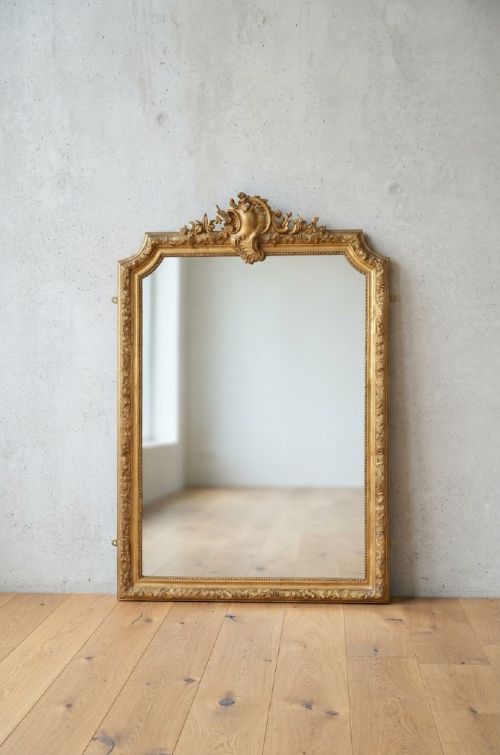
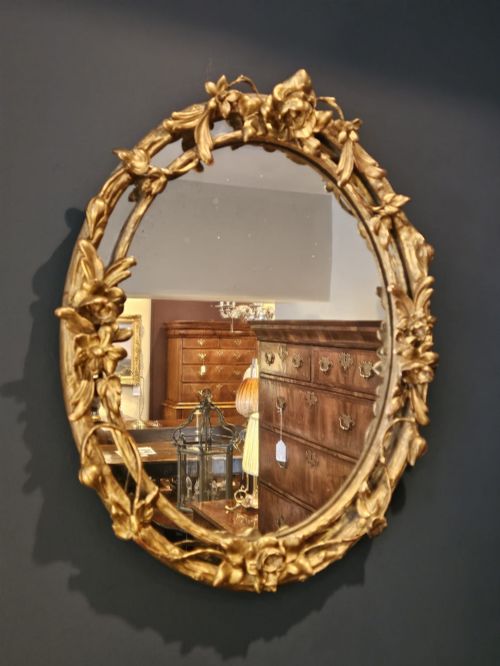
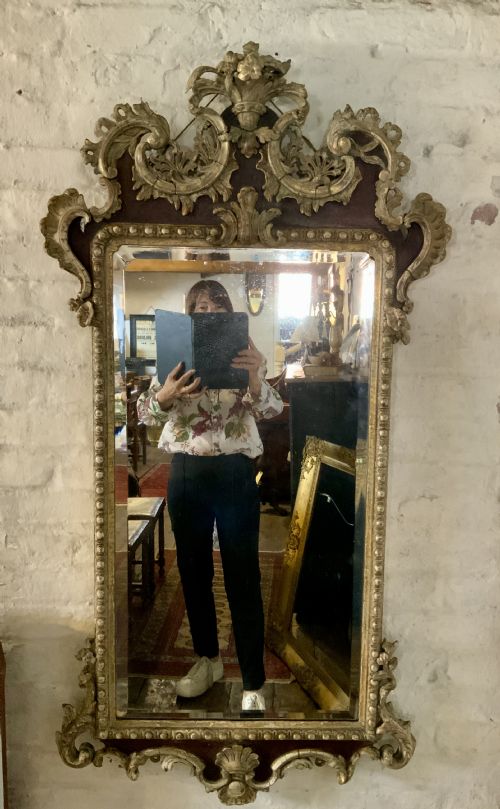
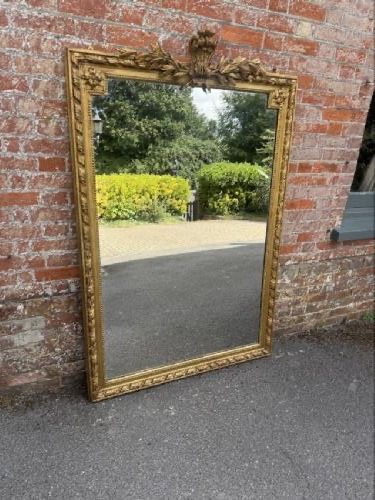



Gold Carved Accent Mirror
A gold carved accent mirror brings instant warmth and reflected light to a room, drawing the eye with gilded surface and carved detail.
Gold Carved Accent Mirror
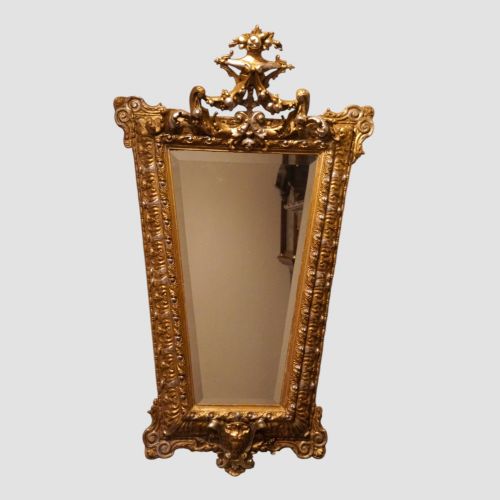
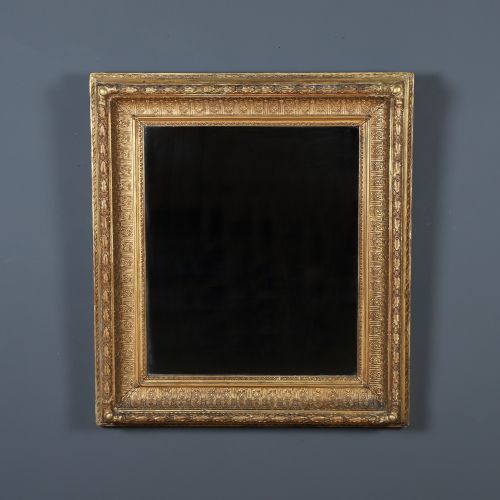
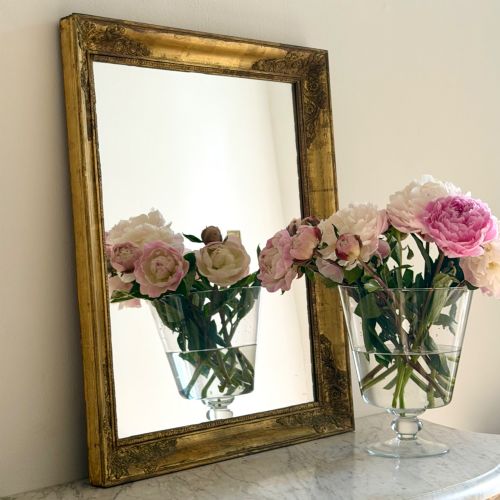
A gold carved accent mirror is typically a wall-mounted or overmantel looking glass framed in carved wood, giltwood, or gesso with a gold leaf finish. The pieces found here span centuries of design, encompassing English, French, and Italian origins from the eighteenth century through to the early twentieth century.
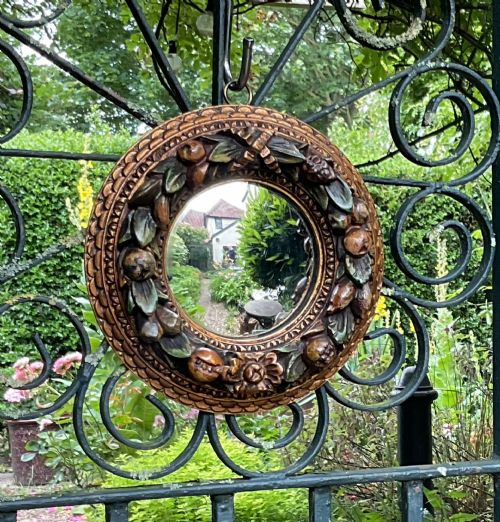
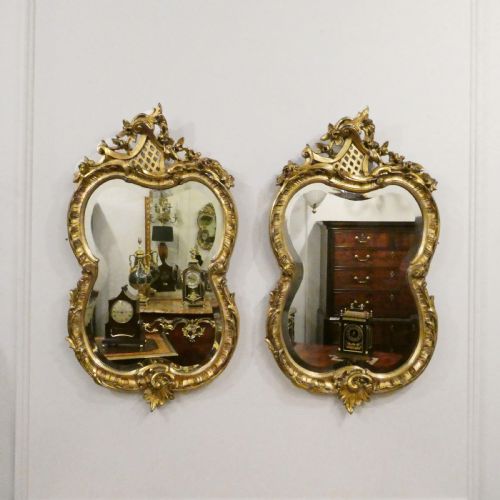
Buyers encounter a variety of forms ranging from small convex and pier mirrors to large overmantel mirrors and ornate cartouche shapes. Styles draw heavily on historical revivals, particularly Rococo, Baroque, and Regency designs, alongside specific regional interpretations like Florentine frames.
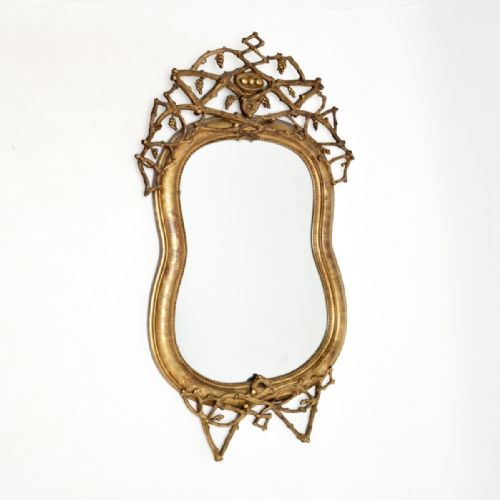
The typical example on this page relies on carved wooden structures finished in gold leaf or gesso, often displaying intricate floral, scroll, or vine motifs. These mirrors serve primarily as decorative wall accents while retaining their original function as reflective room fixtures.
How they were made
Maker workshops built the structural frames primarily from timber, utilising woods such as oak, walnut, and various softwoods for the carved elements. Artisans then applied layers of gesso to smooth the wooden surfaces before laying fine gold leaf or metal gilt across the carved relief.
Carving was executed by hand, producing elaborate surface decoration including rope twists, acanthus leaves, and rose vines depending on the period style. Glass plates were silvered and fitted into the completed frames, sometimes featuring hand-engraved details on the mirror plate itself.
The selection includes various forms such as pier mirrors, overmantels, and convex glasses.
What varies in quality
Quality rests in the crispness of the hand-carved wooden detail and the depth of the gilding technique applied over the gesso ground. Superior examples display sharply defined motifs and harmonious proportions that align with their respective historical style periods.
The condition and character of the original mirror glass and the integrity of the gilt surface differentiate finer decorative pieces. Items retaining their authentic period framing materials and hand-finished gold leaf exhibit greater artistry than later mass-produced alternatives.
John Belchier
The Gold Carved Accent Mirror Glossary
- Giltwood
- Wood that has been coated with gold leaf or gold paint. This finish creates the characteristic bright metallic sheen seen on antique frames.
- Gesso
- A plaster-like mixture applied to wood frames to create a smooth surface for gilding. It allows carvers to achieve fine relief details.
- Overmantel mirror
- A large horizontal mirror designed specifically to hang above a fireplace mantel. These pieces often anchor the decorative scheme of a principal room.
- Convex mirror
- A round mirror with a bulging curved glass plate that provides a wide, distorted panoramic reflection of the interior. They gained popularity during the Regency period.
- Pier glass
- A tall, narrow mirror designed to hang on the wall space between windows. These mirrors maximise natural light within period rooms.
Gold Carved Accent Mirror: Frequently Asked Questions
Where should I hang an overmantel mirror?
An overmantel mirror traditionally hangs directly above a fireplace mantel to reflect light and anchor the room's main focal point. Secure wall fixings are essential due to the substantial weight of these large wooden frames.
Position the mirror at a height that balances the fireplace opening and the ceiling proportions. This placement enhances the sense of space and illuminates darker corners with natural light.
How do I identify a Rococo style mirror?
Rococo style mirrors feature asymmetric scrolls, naturalistic shell motifs, and elaborate C-scroll carvings. The frames often present a fluid, organic outline without rigid symmetry.
Originating in the eighteenth century and revived during the Victorian era, these pieces prioritize decorative exuberance over straight architectural lines.
What is a convex mirror used for?
A convex mirror provides a wide-angle, fish-eye reflection that captures an entire room within a compact circular frame. Historically, this made them useful for monitoring activity across a parlour.
Today, they serve as striking wall accents that add depth and unusual perspective to hallways and living spaces.
How do I care for antique giltwood?
Dust antique giltwood gently with a dry, soft feather duster or a clean microfibre cloth. Avoid using water, chemical sprays, or abrasive cleaners, which can strip the delicate gold leaf and gesso layers.
Keep the mirrors away from direct sunlight and damp environments to protect the wooden substrate and the original silvering on the glass.