

Gold Candle Appliques
Gold candle appliques bring ornamental light to a room, mounted directly to the wall in pairs or sets.
Gold Candle Appliques
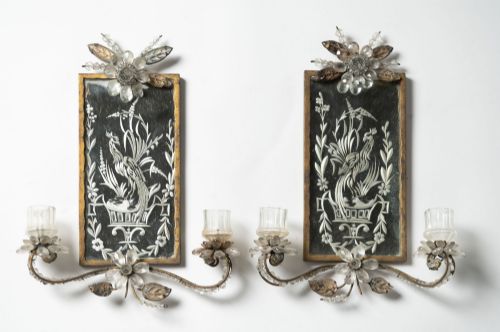
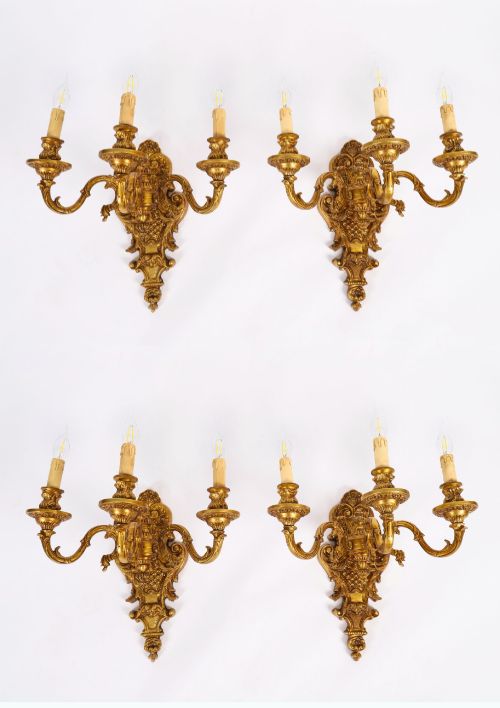
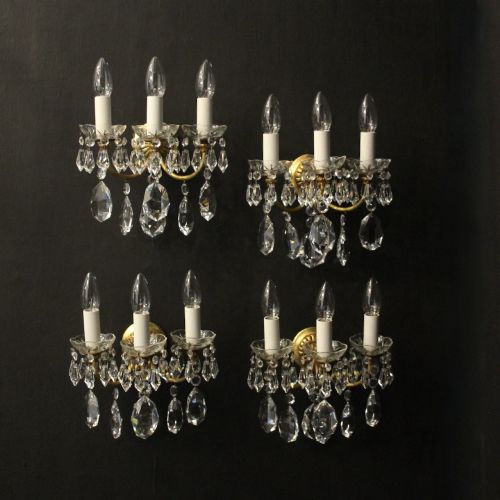
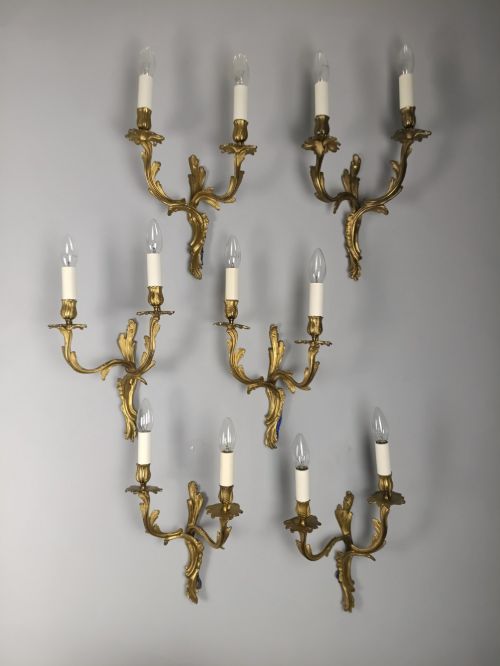
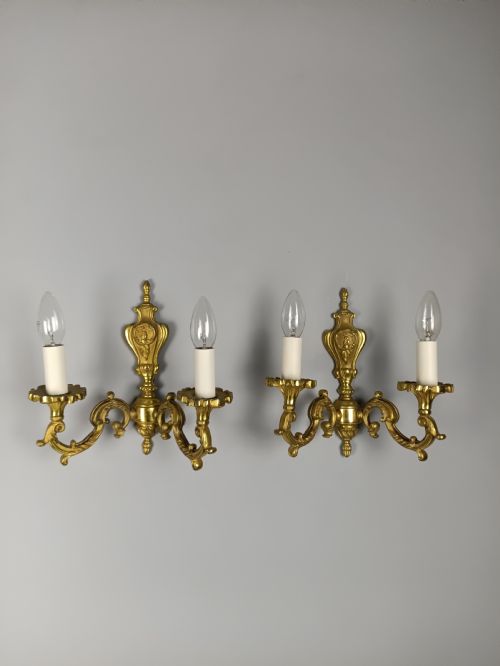
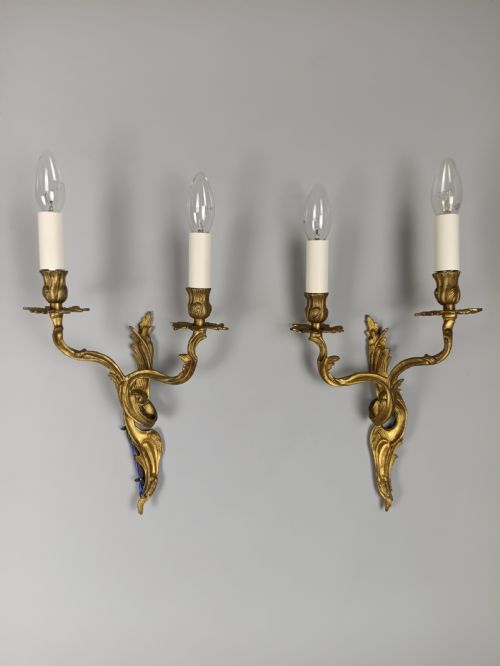
Gold candle appliques are decorative wall-mounted lighting fixtures designed to hold candles, appearing as wall lights, wall sconces, and wall chandeliers. When searching for gold candle appliques, a buyer encounters pieces primarily originating from French workshops, alongside Italian examples. These fixtures span periods from the eighteenth century through the early twentieth century.
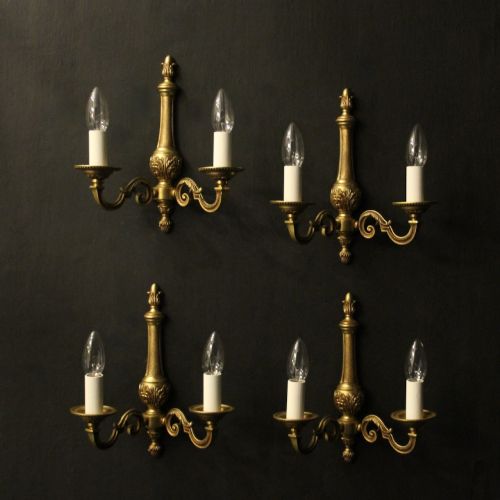
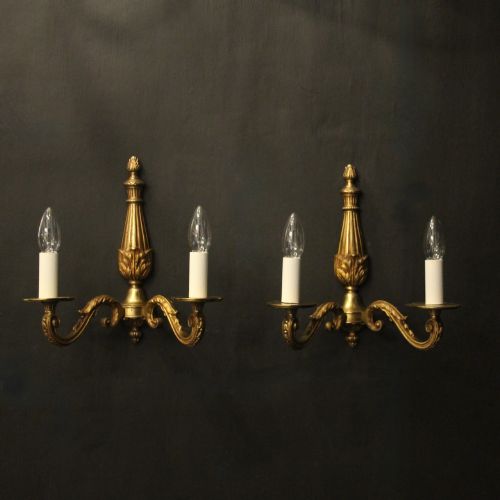
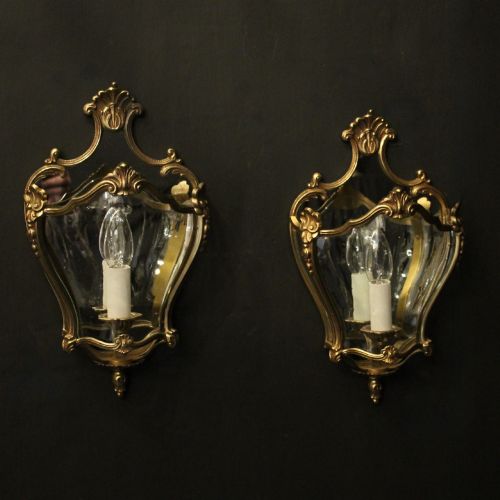
The most common examples on this page are French pairs and sets from the nineteen-twenties and nineteen-thirties, often featuring twin or triple arms. Alongside these mid-century pieces, nineteenth-century examples and earlier eighteenth-century Venetian and George III designs appear. Formats range from single-arm brackets to large multi-arm configurations and half lanterns.
Materials and construction methods
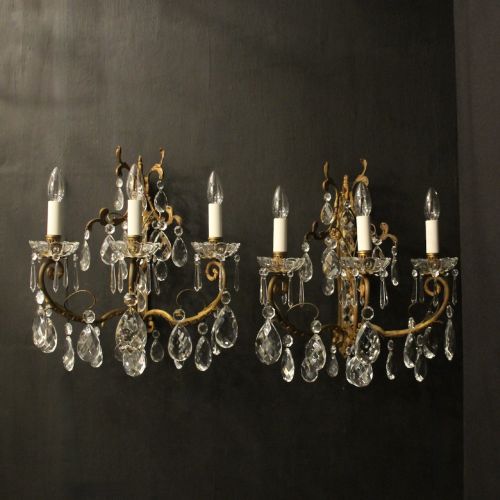
The construction relies heavily on cast metals such as bronze, brass, and ormolu, which receive a gold-colored surface treatment. Gilt bronze and gilded brass dominate the selection, providing a durable metallic structure that takes fine ornamental detailing. Many pieces incorporate glass or crystal elements to refract the candlelight.
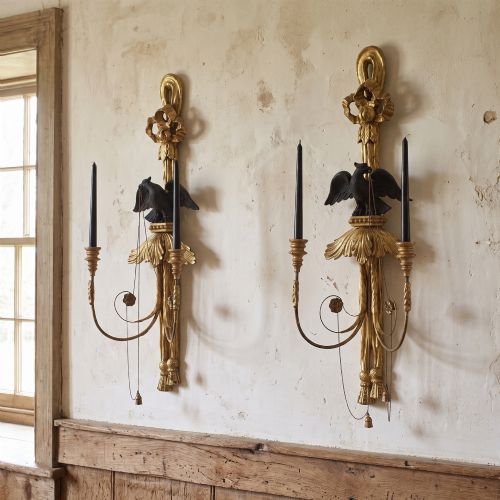
Carved wooden examples utilise giltwood and gesso, particularly in eighteenth-century and revival styles. Artisans shaped these materials into elaborate forms, applying thin layers of gold leaf or gilding to the carved wooden surfaces. Casting and carving techniques define the primary fabrication methods across all periods.
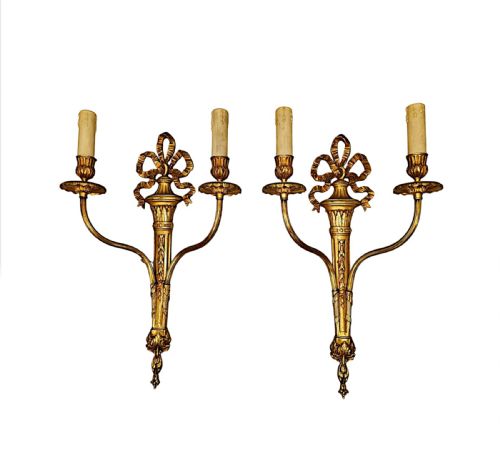
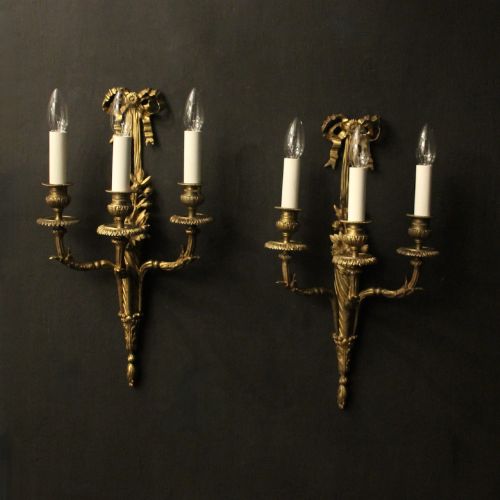
Ribbon motifs tied delicately into gilt metal bows appear among the French selections, bringing textile softness to hard bronze.
Distinctions in quality
Quality rests upon the crispness of the casting and the depth of the metalwork. Finely executed chasing and detailed surface work separate superior metal pieces from simpler production. The finesse of the carving dictates the standard in giltwood examples.
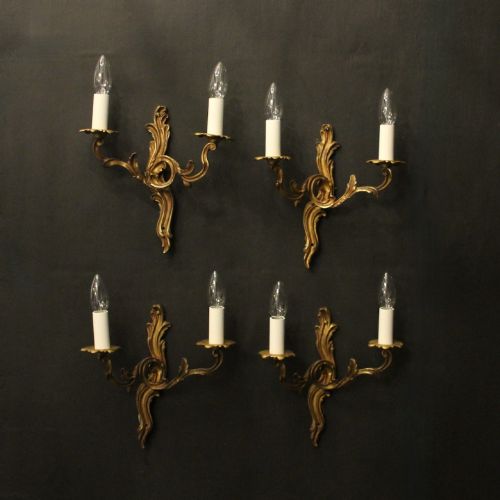
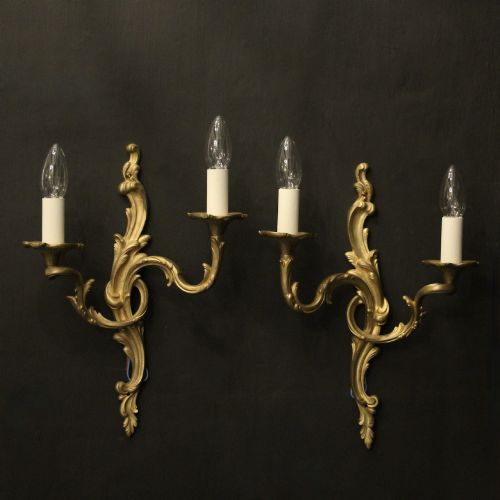
Design complexity and scale also differentiate the range. Larger sets with multiple branching arms and elaborate stylistic motifs, such as French Rococo or Louis XVI ornamentation, represent higher tiers of craftsmanship compared to plain single-arm brackets.
Maison Baguès
The Gold Candle Appliques Glossary
- Appliques
- Wall-mounted light fittings designed to hold candles or lamps. These fixtures project light outward from a vertical surface.
- Ormolu
- Finely ground high-carat gold mercury-gilded onto a bronze base. This technique creates a rich metallic lustre seen on French antique pieces.
- Giltwood
- Wood that has been coated with gold leaf or a gold-colored finish. This material is frequently found on eighteenth-century and revival wall sconces.
- Rococo Revival
- A nineteenth-century style replicating the asymmetric curves and naturalistic motifs of the eighteenth-century movement. Pieces in this style feature elaborate scrollwork and floral elements.
- Wall Sconce
- A decorative bracket fixture fixed to a wall for holding candles. These items serve both functional and ornamental purposes in interior spaces.
Gold Candle Appliques: Frequently Asked Questions
What are gold candle appliques?
Gold candle appliques are decorative wall-mounted fixtures designed to hold candles and illuminate interior spaces. They combine metal or wooden structures with gold-toned finishes to create a striking visual feature.
Most examples function as wall lights or sconces, featuring single, twin, or multiple branching arms for holding candles. Their design draws heavily on historical French and Italian decorative styles.
How were they used historically?
Historically, these fixtures were mounted in pairs or sets along the walls of reception rooms and hallways to distribute candlelight. Mirrors were often placed between them to reflect and multiply the illumination.
They provided ambient lighting before the widespread adoption of electricity, serving as both utility items and status symbols for affluent interiors.
How do I tell periods apart?
Distinguishing periods relies on identifying stylistic markers such as Rococo asymmetry, Neoclassical symmetry, or Louis XVI proportions. Eighteenth-century pieces often display hand-carved giltwood or heavier bronze casting.
Twentieth-century reproductions and later adaptations borrow these older motifs but frequently utilise standardised brass components and machine finishing techniques.