
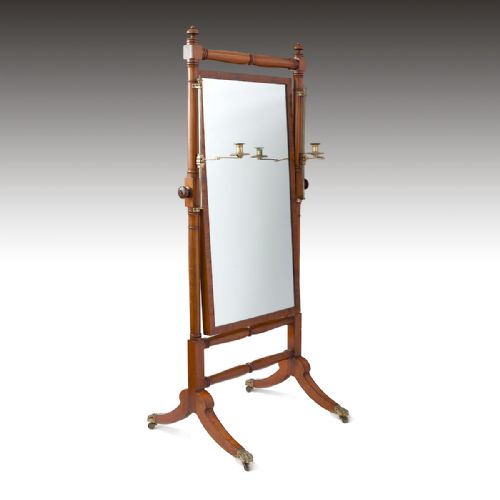
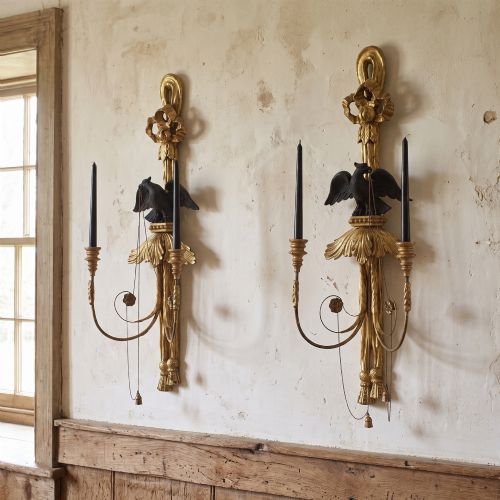
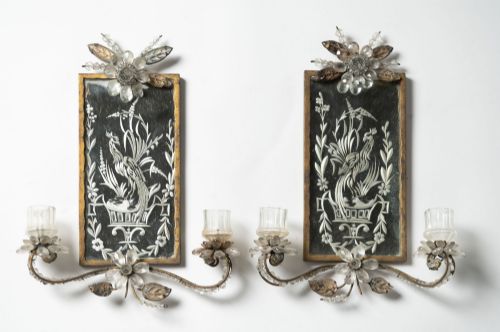
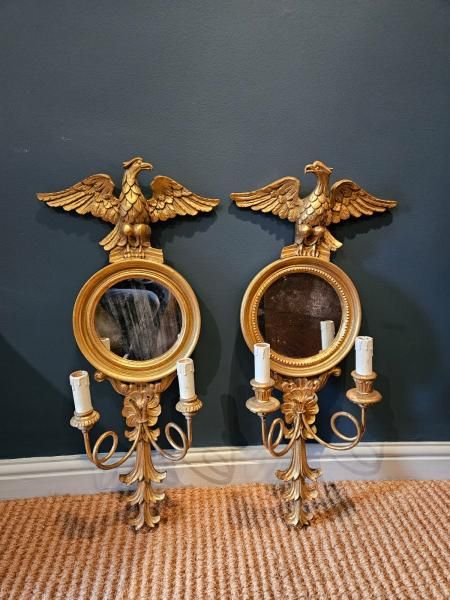


Regency Style Sconces
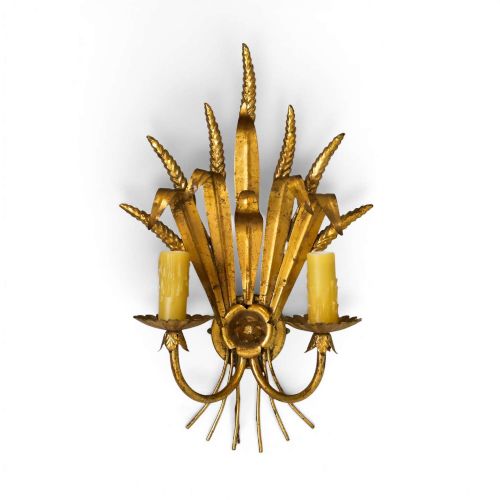
Regency style sconces bring classical symmetry and gleaming metalwork to a room, offering period charm through twin arms and gilded surfaces.
Regency Style Sconces
Regency style sconces draw upon classical motifs and symmetrical forms to illuminate interiors with traditional elegance. Buyers seeking this phrase encounter wall lights designed in the Regency aesthetic alongside later revivals from the twentieth century.
The selections span authentic period pieces as well as twentieth-century interpretations, including Edwardian and mid-century examples. Common formats include twin-armed brackets and wall-mounted lanterns constructed for electrical illumination or candlelight.
Most entries take the form of pairs, providing balanced ornamentation for flanking a mirror, fireplace or doorway. Alongside dedicated wall lights, the broader category encompasses related items such as girandoles and candlesticks sharing the same classical lineage.
How they were made
Construction relies heavily on cast and worked metals, predominantly brass, bronze, and gilt metal, which provide structural rigidity for supporting arms and backplates. Artisans applied gilding or patination to achieve reflective surfaces and rich metallic tones.
Giltwood and gesso appear frequently on decorative frames, carved to shape and finished with gold leaf or metallic paint. Glass components, including mirror backs and prismatic drops, amplify the illumination cast by the candles or bulbs.
Materials represented across the available stock include brass, giltwood, bronze, mahogany, and gesso.
What varies in quality
The refinement of the casting and the crispness of the carved detail distinguish finer examples from simpler production. Superior pieces exhibit carefully chased brass work and well-preserved gilding that retains its depth across intricate mouldings.
Material selection dictates the overall weight and presence of the piece, with solid bronze and heavy giltwood outperforming lighter plated alternatives. The integration of structural elements, such as securely joined arms and substantial backplates, reflects the standard of workshop execution.
Maison Baguès·Gillow
The Regency Style Sconces Glossary
- Sconce
- A wall-mounted light fixture designed to hold candles or electric bulbs. These fixtures typically project outwards from a backplate fixed directly to the wall surface.
- Giltwood
- Timber that has been coated with a thin layer of gold leaf or powder. This finish provides a bright, reflective surface characteristic of formal decorative pieces.
- Girandole
- A decorative wall mirror fitted with one or more candle sconces attached to the frame. The reflective glass serves to multiply the light cast into the room.
- Gesso
- A plaster-based material applied to wood before gilding to create a smooth surface for carving. It allows artisans to execute sharp relief details prior to applying gold leaf.
- Neoclassical
- A style inspired by the classical art and architecture of ancient Greece and Rome. It emphasises symmetry, restraint, and classical motifs such as urns and foliage.
Regency Style Sconces: Frequently Asked Questions
How do I wire old wall sconces?
Many vintage sconces have been adapted for modern electricity, while others retain older wiring that requires professional updating. An electrician can safely inspect and rewire the fittings to meet current safety standards.
When working with antique metal or giltwood frames, caution is necessary to avoid damaging the finish during installation. Proper mounting to wall studs ensures that heavier pieces are securely supported.
Are these sconces electrified?
The selection includes both electric wall lights and candle-bearing designs, reflecting different periods of manufacture. Listings specify whether a fixture is wired for electricity or configured for candles.
Electric variants often date from the twentieth century, including mid-century productions. Unwired or candle versions can sometimes be adapted, depending on the internal construction of the backplate.
How should I clean gilded sconces?
Gilded surfaces require gentle dusting with a soft, dry brush to prevent the loss of gold leaf. Moisture and chemical cleaners should be avoided, as they can strip the delicate finish.
Glass components and mirror plates can be cleaned sparingly with appropriate glass cleaner applied to a cloth rather than sprayed directly onto the surrounding frame. Regular maintenance preserves the metallic lustre without wearing down the underlying gesso.
What is the difference between Regency and George III style?
George III style encompasses the earlier neoclassical and rococo designs prevalent during the late eighteenth century. These pieces often feature intricate carved mahogany or elaborate giltwood ornamentation.
Regency style reflects the later Regency period and its subsequent revivals, leaning towards bolder, archaeology-inspired classical forms. The aesthetic frequently employs patinated bronze, bright brass, and clean architectural lines.