
Neoclassical Wall Appliques
Neoclassical wall appliques bring symmetry and classical ornament to interiors, ranging from single-arm brass lights to large gilt-bronze sconces.
Neoclassical Wall Appliques
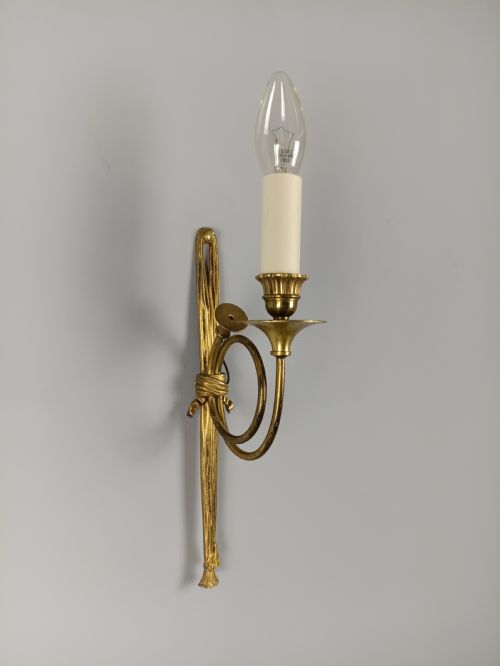
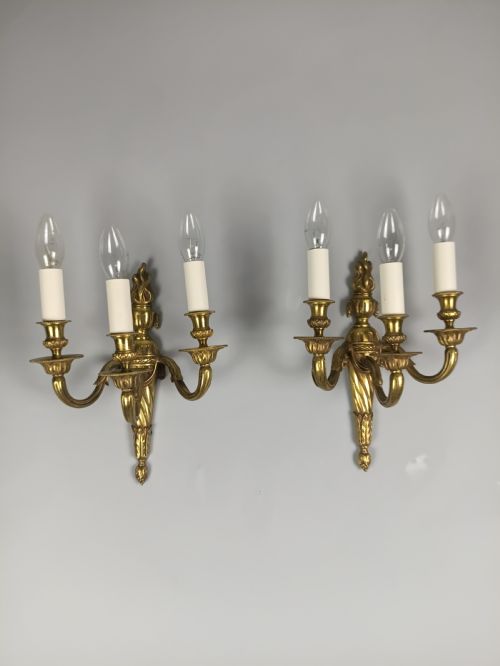
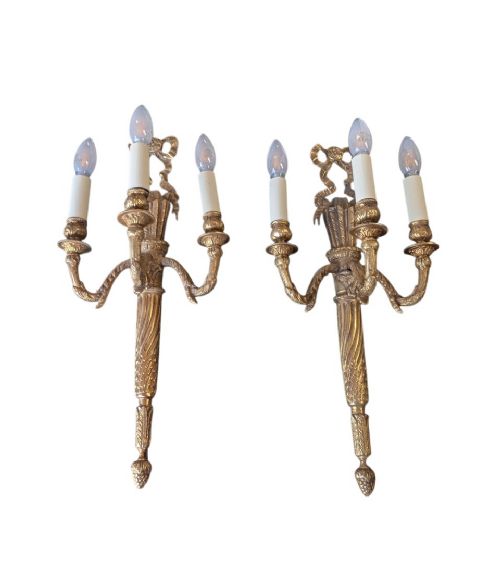
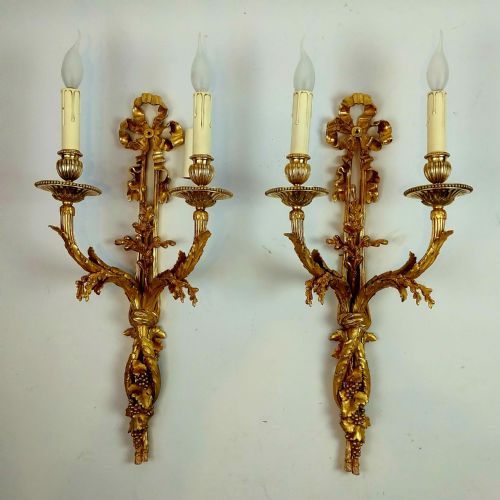
Neoclassical wall appliques are light fittings designed to mount directly onto vertical surfaces, taking the form of wall lights or wall sconces. When searching for neoclassical wall appliques, buyers encounter pieces originating primarily from the nineteenth and early twentieth centuries, alongside eighteenth-century examples.
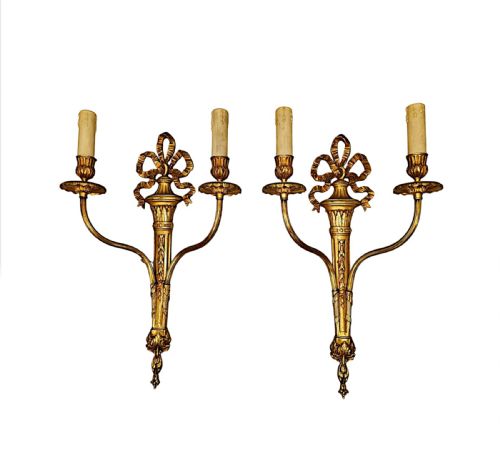
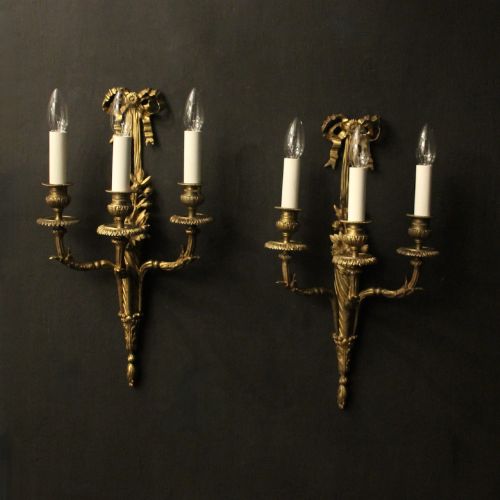
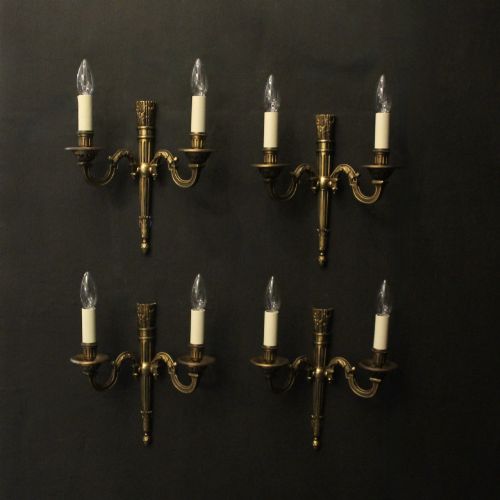
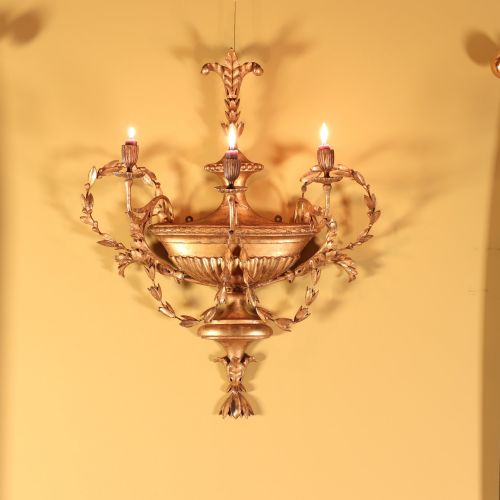
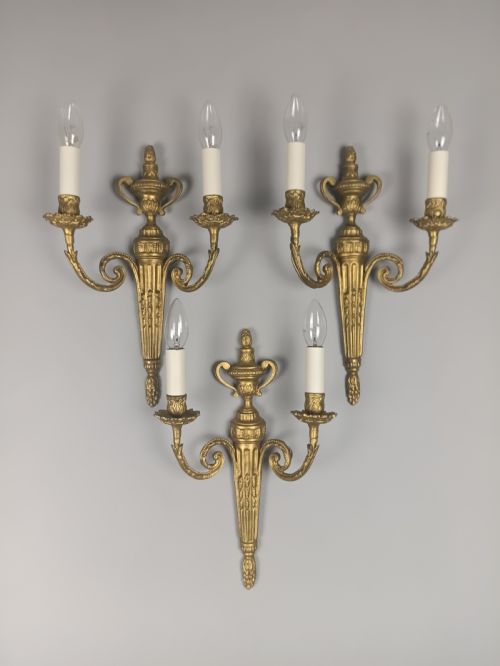
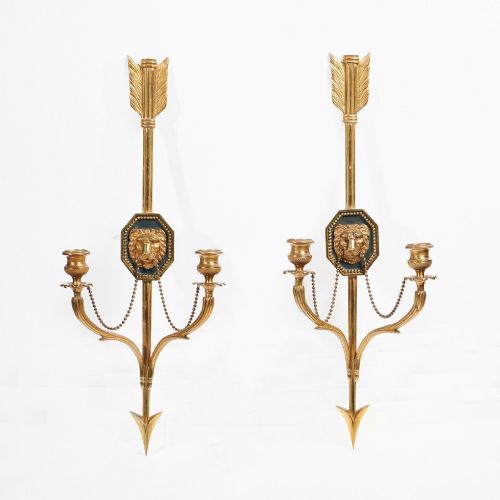
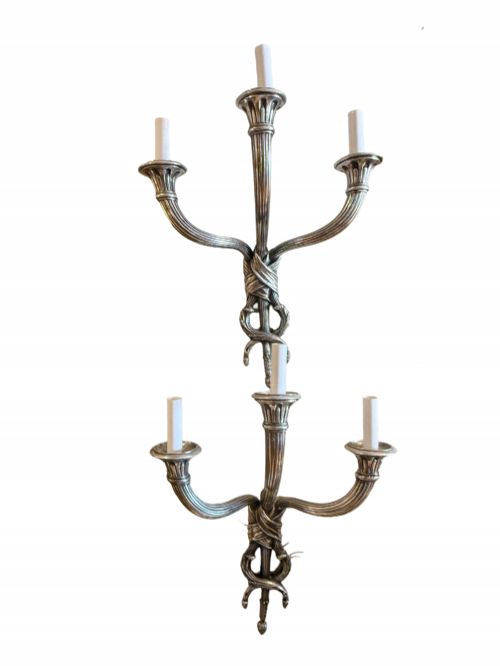
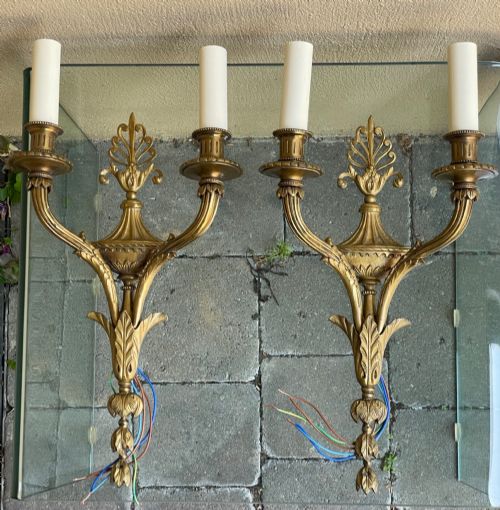
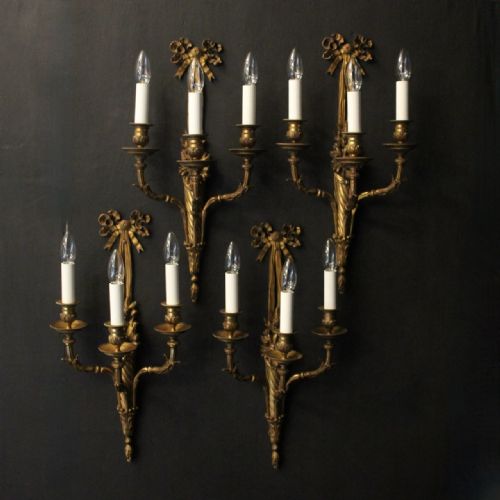
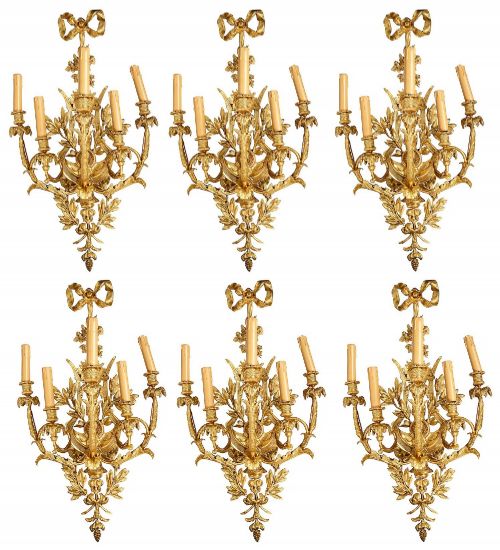
The selections span English, French, and Italian workshops, reflecting stylistic influences such as Louis XVI, French Empire, George III, and Adam styles. Pairs and sets of four or six are common, configured with twin arms, triple arms, or multiple branch formats designed for candles or wired for electricity.
Materials and construction
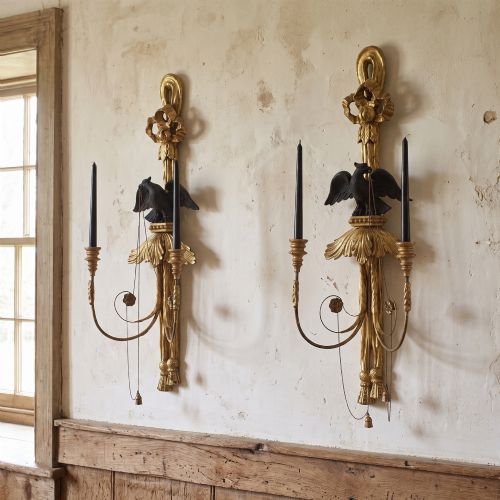
Makers utilised cast bronze, brass, and ormolu, applying gilding, gold leaf, or silvered finishes to metal surfaces to create reflective illumination. Giltwood and gesso appear in carved wooden fixtures, often incorporating carved details like eagle motifs or classical drapery.
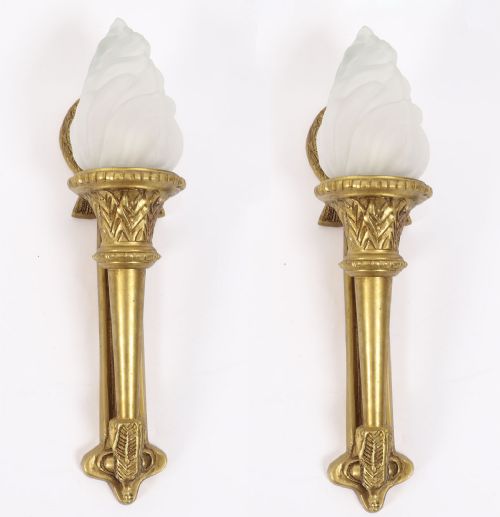
Casting and chasing techniques allowed artisans to form intricate decorative elements such as ram's head masks, flaming torches, and urns. Construction methods rely on heavy casting for structural backplates, paired with secured arms and drip pans.
Neoclassical Wall Appliques Retail Price Guide 2026
Typical asking prices for neoclassical wall appliques among the pieces listed under this phrase on Sellingantiques today, from the lower quarter to the upper quarter. They describe what is for sale here now, not the wider market.
Listings feature items from the eighteenth, nineteenth, and early twentieth centuries, alongside Edwardian and Georgian style pieces.
Quality variations
Quality rests in the crispness of the metal chasing and the depth of the gilding or ormolu finish. Superior examples display sharply defined ornamentation, clean casting seams, and substantial weight in the backplates and arms.
Lesser pieces exhibit softer surface details, simpler cast elements, and flatter finishes. The presence of maker stamps or cohesive matching across a set elevates the standing of an individual pair.
Henri Vian·Maison Baguès
The Neoclassical Wall Appliques Glossary
- Ormolu
- Gilded bronze produced by applying a mercury and gold amalgam to a bronze base and heating it until the mercury evaporates. This technique creates a durable, warm metallic lustre characteristic of fine French lighting.
- Gesso
- A plaster-like mixture applied to wooden wall appliques to provide a smooth base for gilding. It allows carvers to shape fine relief details before applying gold leaf.
- Applique
- A wall-mounted light fitting or decorative fixture applied to a vertical surface. The term is frequently used interchangeably with wall sconce.
- Backplate
- The flat or shaped metal section that fastens directly to the wall and supports the extending arms of the light. It often carries the primary decorative motifs of the piece.
- Sconce
- A candleholder or light fixture fixed to a wall with a bracket. In historical lighting, these items held wax candles before conversion to electricity.
Neoclassical Wall Appliques: Frequently Asked Questions
What periods do these wall appliques come from?
The listings include pieces produced during the eighteenth, nineteenth, and early twentieth centuries. Design revivals from the Edwardian era and the 1920s also appear frequently.
Stylistic influences reference Georgian, Louis XVI, and French Empire periods, reflecting historical revivals rather than strict original dates.
Are these wall lights wired for electricity?
Many historical wall sconces and appliques are adapted for modern electrical wiring during their lifetimes. Some retain candle sockets or require professional rewiring upon installation.
Buyers should examine the physical description to determine the current wiring state of each specific fixture.
How do I identify Louis XVI style appliques?
Louis XVI style wall lights typically feature strict symmetry, straight lines, and classical motifs such as urns, ribbons, and foliage. They contrast with the more asymmetrical curves of earlier Rococo designs.
Materials commonly include gilt bronze and ormolu, emphasising architectural proportions and restrained ornamentation.
Do these appliques come in matched pairs or sets?
Pairs form the majority of the available lighting, though sets of three, four, and six pieces are recorded. Matched sets are suited for balanced placement on either side of a fireplace or doorway.
Single sconces also appear for targeted lighting in smaller spaces.