



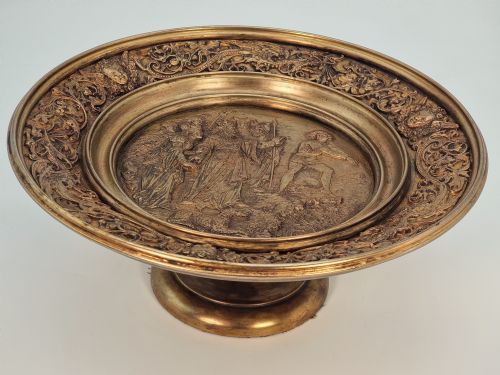


Gold Bronze Decorative Bowl
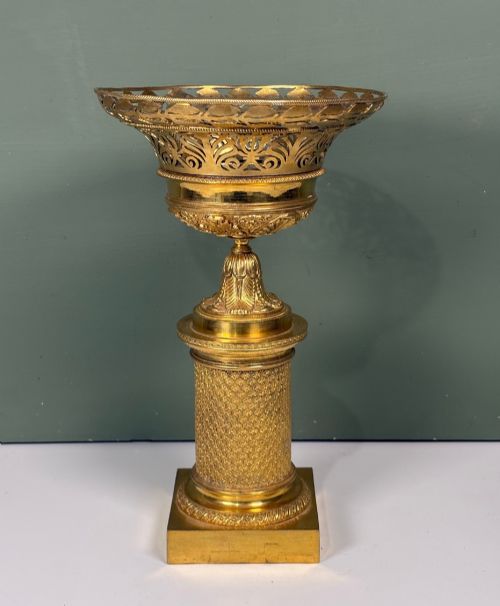
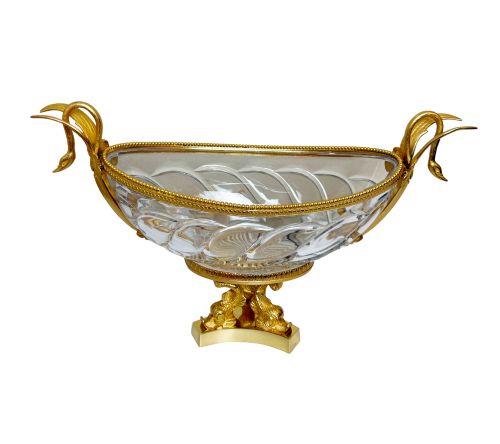
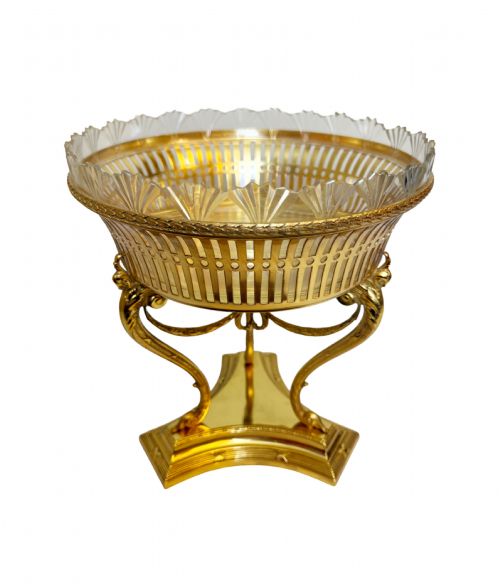
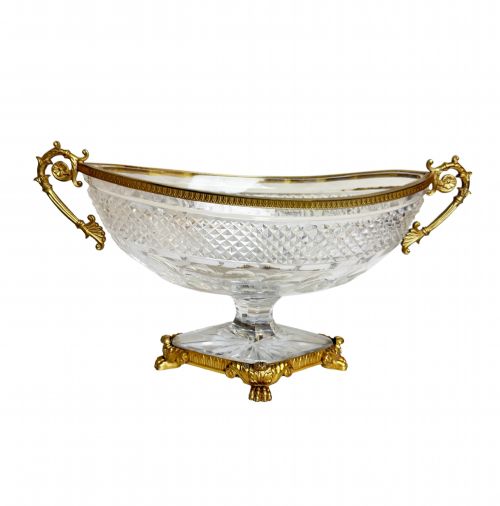
A gold bronze decorative bowl brings heavy neoclassical presence to a room, uniting gilt metalwork with cut crystal or painted porcelain.
Gold Bronze Decorative Bowl
When you search for a gold bronze decorative bowl, you encounter centrepieces, tazzas, and comports designed for display on dining tables or sideboards. These pieces function primarily as ornamental table centrepieces rather than simple vessels, often combining gilt bronze or ormolu mounts with glass inserts, porcelain bowls, or stone plaques.
The versions most commonly met on this page originate from nineteenth-century France, spanning the Regency, Empire, and Rococo Revival styles alongside Aesthetic Movement interpretations. You also find Chinese bronzes from the early twentieth century alongside European works featuring Champlevé enamel, Limoges enamel, and Sevres porcelain.
Makers and makers' circles recorded in these pieces include Samson porcelain and the French designer Louis Pierre Malpass. Forms range from tazzas supported by cherubs or mermen to large decorative dishes and compotes resting on distinct stands.
How they were made
The manufacture of these decorative bowls relies heavily on casting bronze, which is then fire-gilded to produce ormolu or left as patinated bronze. Artisans combine this metalwork with blown or cut crystal, cut glass, and various ceramic bodies including porcelain and earthenware.
Decorative surface techniques include Champlevé enamel, Limoges enamel plaques, and hand-painted porcelain panels set securely within the metal mounts. Assembly involves precise fitting of gilt bronze mounts around fragile inserts like Malachite, Blue John, and porcelain.
Gold Bronze Decorative Bowl Retail Price Guide 2026
Typical asking prices for gold bronze decorative bowl among the pieces listed under this phrase on Sellingantiques today, from the lower quarter to the upper quarter. They describe what is for sale here now, not the wider market.
Materials paired with gilt bronze across these listings include porcelain, crystal, enamel, malachite, and Blue John.
What varies in quality
Quality in these decorative bowls depends on the crispness of the bronze casting and the depth of the gilding. Superior examples display sharply defined details in figures such as cherubs or mermen, while lesser pieces show softer, shallower relief work.
The integration of materials dictates the standing of a piece, with finer items uniting high-grade ormolu with genuine cut crystal, hardstones like Blue John, or named porcelain factories and makers. The weight and stability of the supporting stand or base also indicate the original ambition of the workshop.
Samson Porcelain·Louis Pierre Malpass
The Gold Bronze Decorative Bowl Glossary
- Ormolu
- Gilded bronze, where a layer of gold amalgam is applied to a bronze base and heated to drive off the mercury. This technique creates a durable, golden surface typical of nineteenth-century French decorative arts.
- Tazza
- A shallow bowl or cup mounted on a stem and foot, used historically for serving fruit or sweets. In nineteenth-century decorative metalwork, it serves primarily as an ornamental centrepiece.
- Champlevé
- An enamelling technique where troughs or cells are carved into the surface of the bronze and filled with enamel powder before firing. The metal partitions remain visible between the coloured enamel areas.
- Japonesque
- A nineteenth-century design style reflecting European fascination with Japanese art and aesthetics. It influences the painted decoration and form of porcelain dishes from the period.
Gold Bronze Decorative Bowl: Frequently Asked Questions
What is an ormolu centrepiece?
An ormolu centrepiece is a large decorative table ornament made from gilded bronze, frequently holding a crystal bowl, porcelain dish, or enamel plaque.
These pieces sat in the middle of formal dining tables during the nineteenth century to display fruit or simply to catch the light.
How do I clean a gilt bronze bowl?
Dust gilt bronze gently with a soft, dry brush to protect the delicate gold surface. Avoid chemical polishes, as they strip the original ormolu finish from the metal.
For glass or porcelain inserts, lift them out of the metal mounts before washing them separately in warm, soapy water.
What is the difference between bronze and ormolu?
Bronze is an alloy of copper and tin, possessing a dark metallic brown appearance unless patinated or polished. Ormolu refers specifically to bronze that has been coated in real gold.
In nineteenth-century decorative pieces, the metal is cast in sections and fire-gilded to achieve a bright, reflective golden sheen.
Where should I place a tazza in my home?
A tazza works well on a deep mantelpiece, a side table, or a central hall chest where its height and raised bowl remain visible. Because these pieces are often heavy and feature delicate inserts, place them on stable, level surfaces away from heavy traffic areas.
Keeping them out of direct sunlight protects painted porcelain panels and enamel work from fading over time.