


Gold Brass Picture Frame
A gold brass picture frame brings warmth and substance to a desk or mantel, framing a treasured portrait with metalwork that has aged gracefully over generations.
Gold Brass Picture Frame
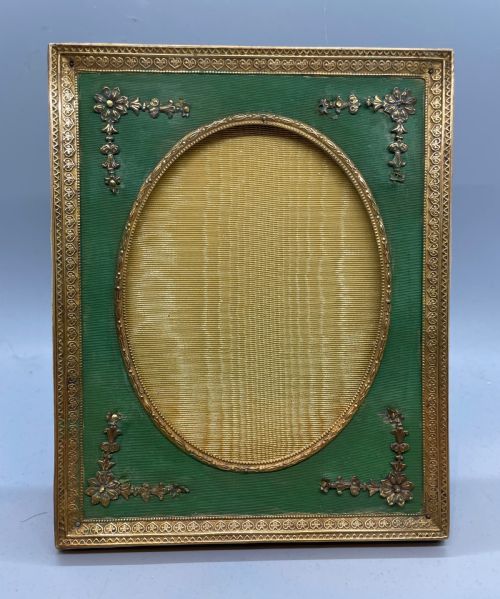
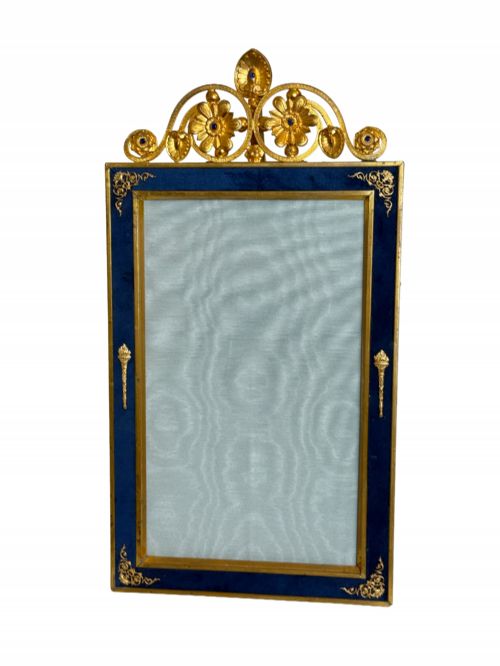
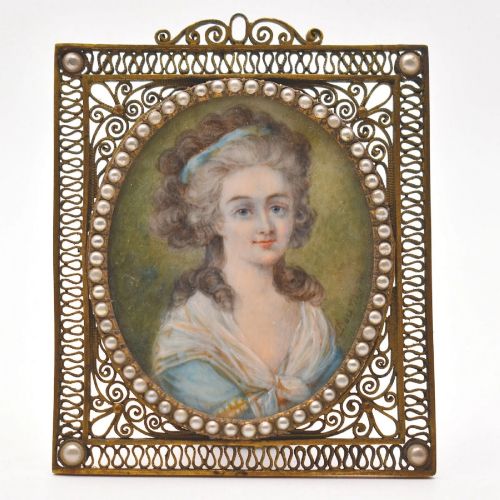
A gold brass picture frame encompasses heavy cast metal housings designed to hold portrait miniatures, photographs, and small works on paper from the eighteenth century through the Edwardian period. You will frequently encounter nineteenth-century French and English examples employing gilt bronze, ormolu, and brass to create ornate borders.
The objects take many forms beyond standard rectangles, appearing as oval frames, double-hinged folding pieces, and easel-backed table frames adorned with decorative motifs. Many of these pieces integrate glass panels, silk linings, and velvet backs to support their contents.
Makers often drew upon historical design revivals, producing items styled in French Rococo, Louis XVI Revival, and Victorian aesthetics. These frames served both practical and decorative roles in period interiors, frequently sitting alongside matching table mirrors and desk clocks.
Materials and construction
Makers cast these frames using brass, bronze, and base metals, frequently applying a layer of mercury gilding or ormolu to achieve a bright golden surface. This metalwork was often chased by hand to sharpen details like floral scrolls, ribbons, and Napoleonic bees.
Supporting elements utilised secondary materials such as wood, velvet, and silk to back the aperture, whilst glass protected the delicate miniatures and photographs within. Easel stands and hinges were engineered directly into the cast bronze backs to allow secure table placement.
Listings feature items spanning the eighteenth to the early twentieth century, incorporating materials like glass, silk, velvet, enamel, and gilt metal.
Assessing quality and execution
Quality reveals itself in the crispness of the chasing and the weight of the cast metal, where superior examples display deep, sharp relief rather than soft or blurred ornamentation. The depth and durability of the original gilding or ormolu finish also separate finer workshop output from simpler commercial production.
The integrity of the structural fixings, including the original easel backs, hinges, and bezel closures, dictates the desirability of the piece. Finer frames often incorporate specialised decorative mounts such as paste stones, agate, or enamel trim that demand superior craftsmanship to set.
Boin Taburet
The Gold Brass Picture Frame Glossary
- Ormolu
- Finely ground high-carat gold applied to a bronze base using a mercury amalgamation process. This technique created a rich, durable golden surface characteristic of fine nineteenth-century French metalwork.
- Gilt Bronze
- Bronze metal that has been coated with a thin layer of gold leaf or wash. It provided makers with a robust structural material that imitated solid gold.
- Portrait Miniature
- A small, highly detailed painting, often executed on ivory, vellum, or card. These works were typically housed in custom gilt metal frames designed for desk or pocket display.
- Easel Frame
- A picture frame fitted with a hinged rear leg for standing upright on a flat surface. This form became popular during the Victorian period for displaying family photographs.
- Paste Stone
- Faceted lead glass cut and polished to imitate gemstones. Makers set these stones into metal frames to add sparkle and colour.
Gold Brass Picture Frame: Frequently Asked Questions
How do I date a brass picture frame?
Dating relies on stylistic clues, fixing methods, and the type of backboard used in the construction. Earlier nineteenth-century examples often feature heavy cast bronze with hand-chased details, while Edwardian pieces lean towards lighter ormolu designs.
Examining the screws, hinge types, and the material of the inner backing helps narrow the decade of manufacture. Consulting the design motifs, such as French Rococo scrolls or Empire bees, connects the frame to its specific historical revival period.
What is the difference between brass and ormolu?
Brass is an alloy of copper and zinc, offering a natural golden hue that can be polished or left to age into a darker patina. Ormolu refers specifically to gilded bronze where a layer of gold amalgam is fired onto the metal base.
Ormolu exhibits a deeper, more luminous golden quality that resists tarnishing differently than plain brass. Frames described as ormolu typically indicate higher-end French manufacture from the nineteenth century.
Can I clean a tarnished brass frame?
Light dusting with a soft, dry cloth is usually sufficient to maintain the surface of antique metalwork. Avoid harsh commercial polishes, as they can strip away original gilt or ormolu finishes.
If cleaning is necessary, use a mild solution and a soft brush, taking care not to touch fragile glass, silk, or velvet components. Preserving the natural aged patina generally enhances the character and historical value of the piece.
How were table frames displayed historically?
These frames were designed to sit on dressing tables, writing desks, and mantelpieces in affluent homes. Double and triple folding frames allowed owners to display multiple family portraits in a single portable unit.
They were frequently paired with matching table mirrors and desk clocks to create a cohesive decorative scheme. The easel back ensured the portraits faced at an optimal angle for viewers standing or sitting nearby.