



Louis XVI Style Frame
These pieces built around a louis xvi style frame bring neoclassical symmetry and carved proportion into a room.
Louis XVI Style Frame
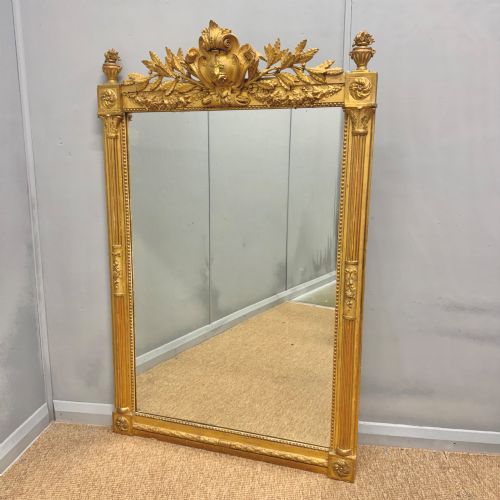
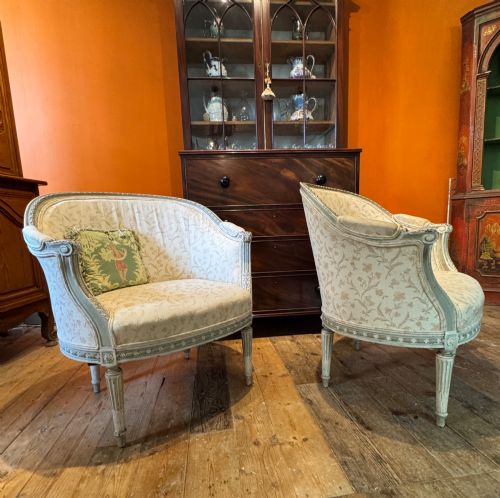
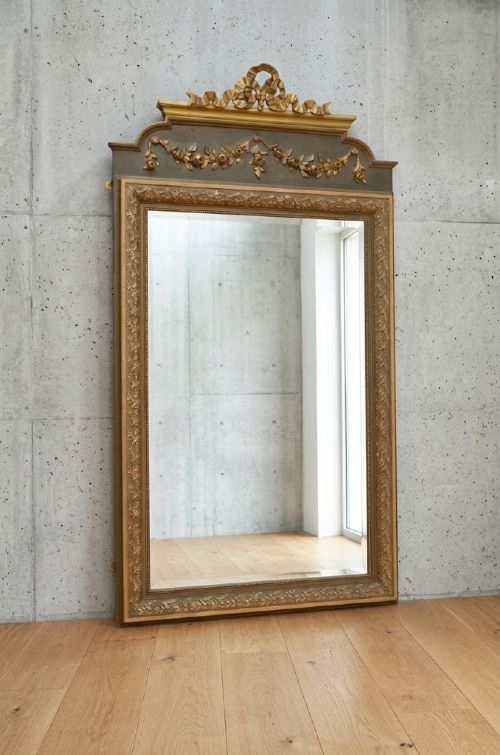
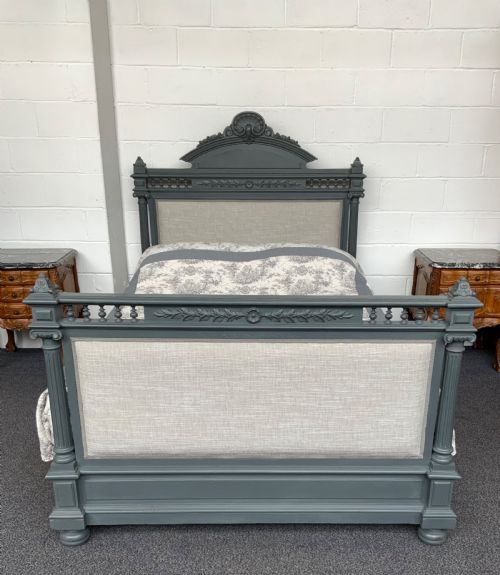
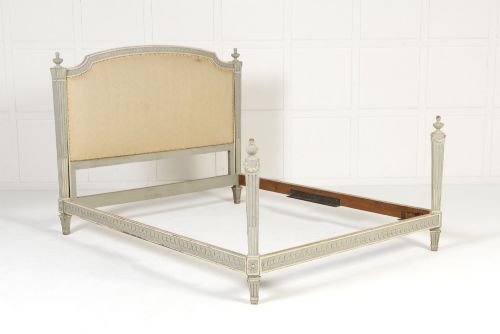
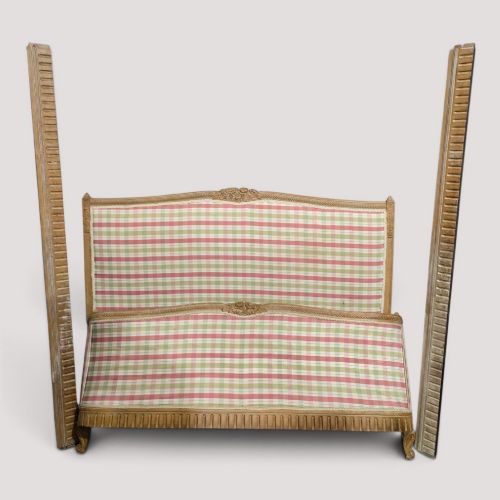
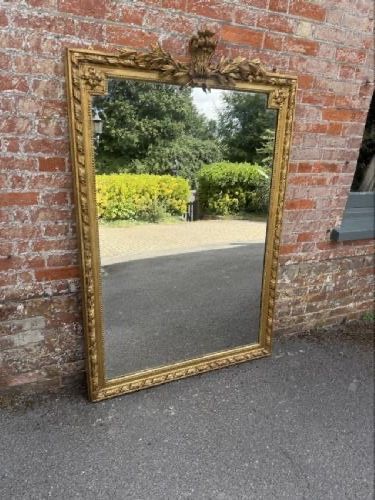
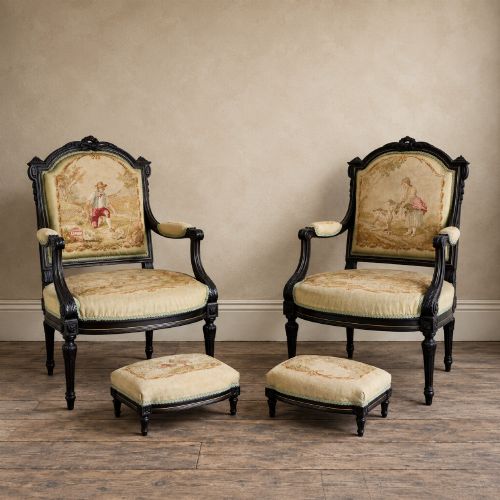
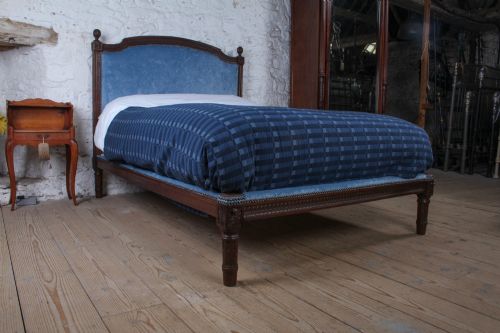
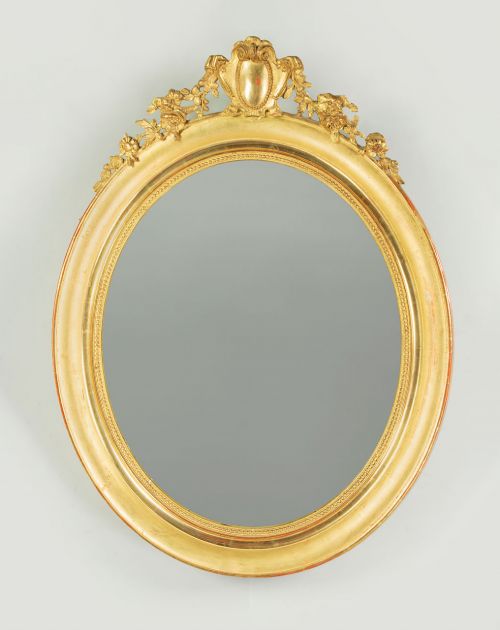
A louis xvi style frame most commonly takes the form of a wall mirror, a bedstead or a seating structure such as an armchair or sofa. The listings show a strong presence of nineteenth century and early twentieth century French workshops turning out giltwood mirrors and painted wooden bed frames.
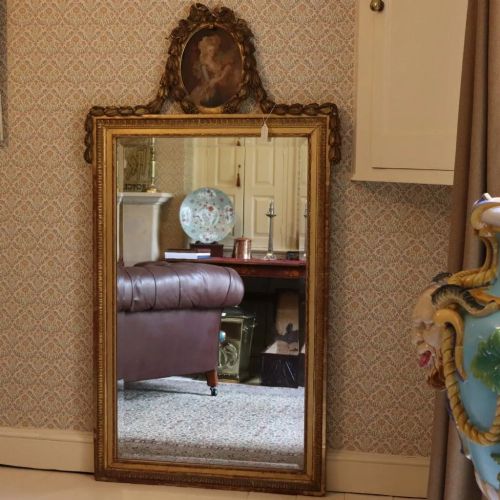
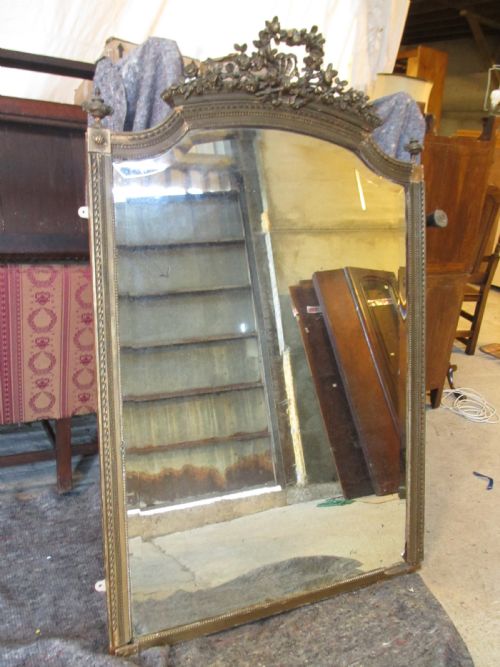
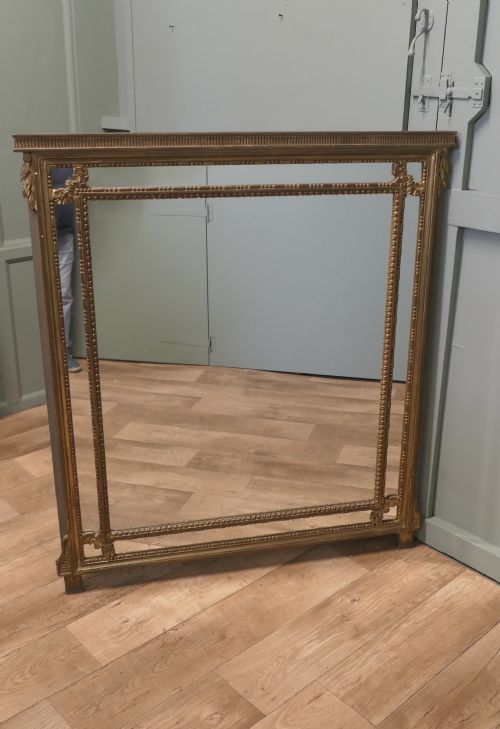
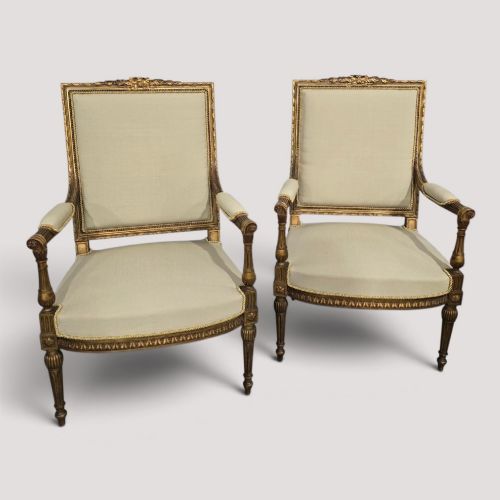
Mirrors dominate the selection, ranging from small oval wall glasses to large trumeau pieces with ribbon crests and mercury glass plates. Seating options include giltwood salon suites upholstered in velvet, painted bergere tub chairs and caned double beds.
Buyers seeking this aesthetic find substantial carved woodwork paired with classical restraint. The proportion relies on straight lines and architectural motifs rather than the exuberant curves of earlier periods.
How they were made
Makers built these frames using seasoned timbers such as beech, oak, walnut and satin wood, often applying a layer of gesso to accept intricate carved detail. Woodcarvers worked directly into the surface to create foliate scrolls, fluting and classical ribbon motifs.
Finishing involved laying gold leaf over bole on giltwood pieces, or applying oil paint and polychrome decoration directly to the wood. Mercury glass plates with foxed patination appear frequently in the mirror frames from the eighteenth and nineteenth centuries.
Louis XVI Style Frame Retail Price Guide 2026
Typical asking prices for louis xvi style frame among the pieces listed under this phrase on Sellingantiques today, from the lower quarter to the upper quarter. They describe what is for sale here now, not the wider market.
The listings span from the eighteenth century through to the Edwardian era, featuring wood, gesso, paint, fabric and velvet.
What varies in quality
The crispness of the woodcarving defines the upper tier of these pieces, separating deeply undercut foliate details from soft, flattened moulding. Hand painted portrait panels and original polychrome surfaces elevate the status of a frame above standard commercial production.
The integrity of the underlying joinery and the survival of original gilding or paint layers determine the long term character of the piece. Subtle details such as mercury glass plates and fine brass mounts indicate superior workshop origin.
The Louis XVI Style Frame Glossary
- Giltwood
- Wood that has been coated with thin sheets of gold leaf over a prepared gesso ground. This finish provides a warm, reflective surface that ages with a soft patina.
- Trumeau
- An architectural mirror or panel designed to fit into the wall space between windows or above a fireplace. These often feature painted or carved decorative scenes above the glass plate.
- Mercury glass
- A double walled glass blown piece with a silvering mixture inserted between the layers, creating a reflective surface that often develops dark spots over time.
- Gesso
- A plaster mixture applied to wood frames to create a smooth surface for carving and gilding. It allows for sharp detail work in the finished ornament.
- Fauteuil
- An open framed armchair with upholstered seat, back and arm pads, originating in French seating design. The exposed wooden frame often carries neoclassical carving.
Louis XVI Style Frame: Frequently Asked Questions
How do I clean a giltwood frame?
Dust the carved surfaces gently with a soft, dry brush to prevent the accumulation of dirt in the crevices. Avoid all liquid cleaners and abrasive cloths, which can lift the delicate gold leaf.
Check the surface regularly for loose gesso or flaking leaf. Professional conservation is required if the gilt layer begins to separate from the wood base.
Are these frames from the eighteenth century?
Most items bearing a louis xvi style frame date from the nineteenth and early twentieth centuries, drawing inspiration from the original neoclassical period. True eighteenth century pieces appear less frequently and carry specific signs of period construction.
Examine the wood backing, fixings and glass plates to help determine the actual age of the piece. Secondary woods and machine cut screws often point to a later revival date.
How do I hang a heavy trumeau mirror?
Secure the mirror directly into wall studs using heavy duty brackets designed to bear the substantial weight of wood and glass. Ensure the hanging wire or fixing rings attached to the frame are sound and stable.
Position the mirror at a height that reflects natural light into the room. Check the wall fixings periodically to ensure the weight remains securely supported.
What is foxed mercury glass?
Foxing refers to the dark spots and mottled patches that form on antique mercury glass as the silvering backing degrades. Collectors prize this natural oxidation for the authentic age it lends to the reflection.
Original foxed plates should be preserved rather than replaced, as they confirm the vintage of the mirror frame. Clean the glass carefully with a dry microfibre cloth to protect the fragile surface.