


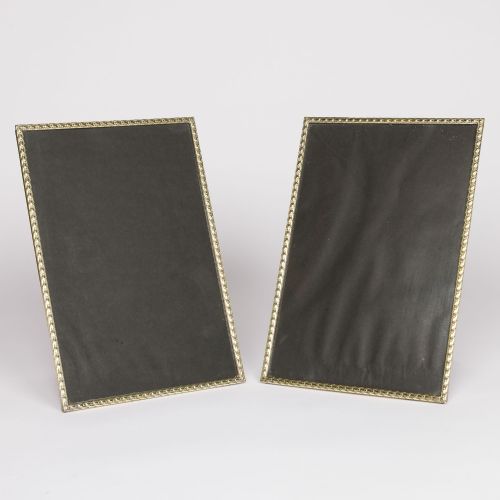



Gilded Brass Portrait Frame
These gilded brass portrait frames bring small-scale likenesses into domestic spaces with considerable presence.
Gilded Brass Portrait Frame
A gilded brass portrait frame houses painted miniatures, silhouettes, and photographs behind glass within protective metal surrounds. These pieces range from early nineteenth-century silhouettes to French table mirrors and photograph frames of the twentieth century.
The version most commonly met on this page is the French or English table frame in gilt brass, bronze, or ormolu, often designed to display a portrait miniature or photograph. Makers incorporated materials such as ebonised wood, porcelain plaques, and paste stones to complement the central image.
How they were made
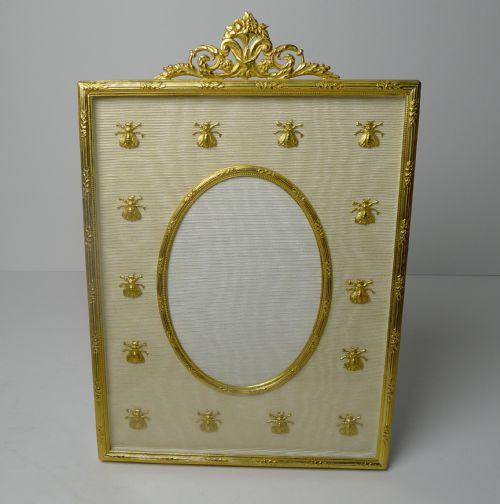
Metalworkers utilised brass, ormolu, and gilt bronze, often casting the frames in decorative patterns that included Napoleonic bees and revival motifs. Gilding applied to the base metal provided a bright surface finish designed to catch the light of a room.
Makers integrated glass to protect the delicate surfaces of silhouettes, watercolours, and photographs housed within. Support structures frequently included backings of ebonised wood and pivoting struts to allow two-way display on tables.
Young E. Sutton was only nine years old in 1816 when captured in profile, forever nine inside a Regency brass circle.
What varies in quality
The crispness of the cast ornamentation dictates the standard of the metalwork, distinguishing sharply chased leaves and bees from soft, repetitive moulding. Heavier gauges of brass and bronze provide a solidity that lighter stampings lack.
The integration of secondary materials such as Limoges enamel, porcelain plaques, and paste stones marks the distinction between standard production and finer studio pieces. Original glass and secure easel backs indicate an intact survival.
George Atkinson·J. Deacon·Susie Lassam·Boin Taburet·Moseley·F.Bienvue
The Gilded Brass Portrait Frame Glossary
- Ormolu
- Gilt bronze applied to decorative arts, providing a bright golden finish through the amalgamation of gold and mercury or modern electroplating. This technique was widely utilised in French frames of the nineteenth century.
- Silhouette
- A portrait profile filled in with a solid dark colour, typically cut from paper or painted. These were frequently housed within small metal frames during the Georgian and Regency periods.
- Paste stone
- Faceted glass cut and polished to imitate gemstones, set into metal frames for decorative effect. They catch the light in a manner similar to real diamonds.
- Miniature portrait
- A small-scale painting executed on ivory, vellum, or porcelain, designed for intimate viewing. They require protective glass housings.
- Ebonised wood
- Timber treated to resemble ebony, providing a dark contrast to the bright metal of the frame. It appears frequently on the reverse or inner borders of nineteenth-century pieces.
Gilded Brass Portrait Frame: Frequently Asked Questions
How do I date a gilded brass portrait frame?
Dating relies on the stylistic clues of the metalwork, the fixing methods on the reverse, and the nature of the portrait inside. Regency and Georgian examples tend to feature simpler, sharper profiles, whereas later nineteenth-century pieces often embrace French revival styles and heavier cast decoration.
Changes in photography and portraiture also guide the timeline, moving from cut-paper silhouettes and painted miniatures to early photographic prints behind glass. Examining the hinge mechanisms and backing materials provides further context for the period of manufacture.
Were these frames meant for walls or tables?
Most pieces of this type were designed to stand on tables, desks, or mantelpieces rather than hang on walls. They typically incorporate hinged struts or two-way folding stands on the reverse to support them upright.
Some smaller frames and portrait miniatures include loops or rings for hanging, but the larger ormolu and gilt brass examples function primarily as desk furniture.
Can I replace the portrait inside the frame?
While the backs of many frames open to allow access, changing the contents requires caution due to the fragile nature of antique glass, paper, and painted surfaces. Original silhouettes and watercolours are best left undisturbed to preserve their condition.
If the frame houses an interchangeable photograph or modern insert, opening the rear latches is straightforward, provided the old seals and backing boards are handled gently.
What is the difference between brass and ormolu?
Brass is an alloy of copper and zinc, used structurally and decoratively for its bright finish and workability. Ormolu specifically refers to gilt bronze, where a layer of gold is applied to a bronze base, yielding a warmer and deeper tone.
French frames often utilise ormolu for finer cast details, while standard brass appears across a broader range of domestic photograph frames.