


Gold Metal Portrait Frame
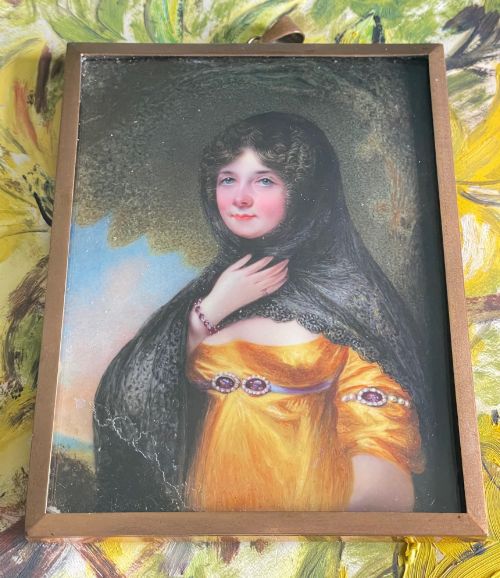
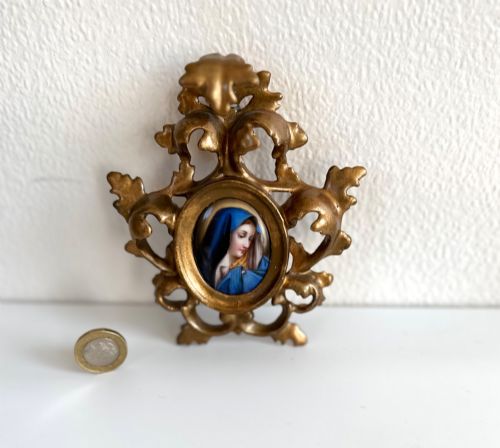
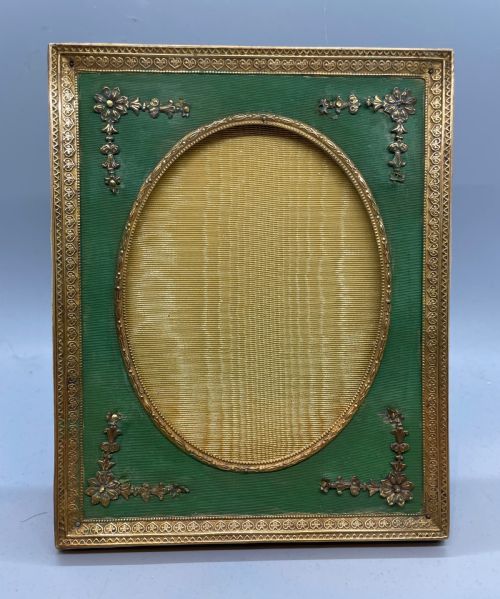
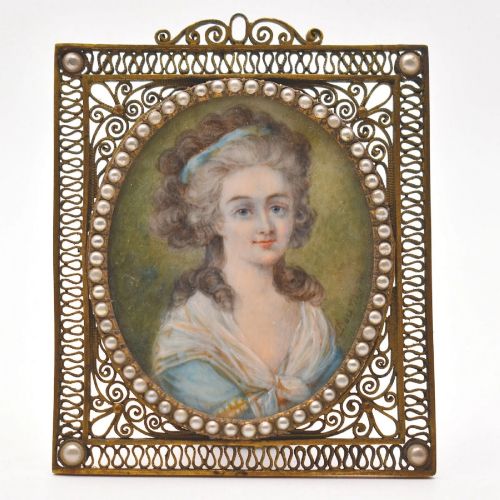
A gold metal portrait frame holds miniature paintings and photographs within gleaming borders of gilt bronze, brass, and ormolu.
Gold Metal Portrait Frame
A gold metal portrait frame protects and displays intimate likenesses painted on ivory, paper, or porcelain, alongside delicate early photographs. These items span periods from the eighteenth century through the Edwardian era, showing influences of French Rococo and Regency styles.
The objects take several forms on this page, appearing as single standing desk frames, double hinged folding frames, and ornate wall picture frames. Many enclose original portrait miniatures of ladies, naval officers, and historical figures.
Materials extend beyond simple gilded surfaces to incorporate paste stones, seed pearls, silk, and enamel. The metalwork acts as a stage for small works of art that capture personal history across the Georgian and Victorian eras.
Materials and construction
Foundry workers cast brass and bronze components using moulds that created elaborate floral scrolls, bead borders, and crests. These metal mounts received applications of gold leaf, mercurial gilding, or ormolu finish to achieve a lasting golden sheen.
Makers integrated glass sheets to shield delicate watercolours, gouache paintings, and enamel portraits from dust and handling. Backings often consisted of wood or card covered in silk, paper, or velvet, held in place by small metal turn-pins.
Specialised decorative elements required manual setting, such as paste stones pinned into bezels and seed pearls stitched onto fabric backing behind glass. Frames designed for desks frequently featured hinged metal struts allowing them to stand upright.
Listings feature items spanning the eighteenth century to the Edwardian period, utilising glass, gilt metal, watercolour, brass, paper, silk, enamel, and ormolu.
Judging quality and craftsmanship
The refinement of the metal chasing dictates the visual success of the piece, separating crisp hand-tooled leafwork from soft, indistinct cast patterns. Heavier gauge brass and bronze provide structural integrity that lighter stamped metal frames lack.
Original glass and intact backing materials preserve the integrity of the object, whereas modern replacements alter the historic balance. The integration of decorative gems, seed pearls, and hand-applied enamel distinguishes standard production pieces from masterwork examples.
Horace Hone·William Naish·Henry Jacob Burch·Emma Kendrick·Diana Hill
The Gold Metal Portrait Frame Glossary
- Ormolu
- Finely chopped gold amalgamated with mercury and applied to bronze or brass through heat, creating a deep golden surface finish. This technique flourished in eighteenth and nineteenth-century French and English metalwork.
- Portrait Miniature
- A small, highly detailed painting on ivory, vellum, or card, designed to be held in the hand or worn and displayed within a small frame. These works captured likenesses with microscopic precision using watercolour, gouache, or enamel.
- Gilt Bronze
- An alloy of copper and tin treated with a gold coating to resemble solid gold objects. It provides durability and intricate detail capture in decorative metalwork.
- Paste Stone
- Faceted lead glass cut and polished to imitate gemstones such as diamonds, rubies, or emeralds within metal settings. It added sparkle and perceived value to Georgian and Victorian frames.
Gold Metal Portrait Frame: Frequently Asked Questions
How do I date a gold metal portrait frame?
Dating relies upon the style of the metal casting, the type of backboard materials, and the fastening methods used on the reverse. Georgian and Regency examples often show hand-beaten mounts, while Victorian and Edwardian pieces utilise machine-stamped brass and complex hinge mechanisms.
Examining the portrait contained within can also narrow the timeframe through costume, wig styles, and painting techniques. Comparing the construction to known periods ensures an accurate assessment of age.
Were these frames meant for desks or walls?
Both formats exist within the evidence, reflecting diverse domestic habits of the eighteenth and nineteenth centuries. Desk frames feature integral folding struts or sturdy metal stands to display likenesses in private studies or boudoirs.
Wall-hanging variants incorporate suspension rings or loops at the top of the metal mount. These allowed owners to cluster miniature portraits together in decorative arrangements across drawing-room walls.
What is the difference between brass and ormolu?
Brass is a base alloy of copper and zinc, valued for its warm tone and malleability in stamped and cast decorative objects. Ormolu refers specifically to a high-status mercury gilt finish applied over a bronze substrate.
While plain brass shows a bright metallic yellow that patinates over time, ormolu retains a rich, buttery golden lustre. Ormolu components typically exhibit superior chasing and sharper detail due to the bronze casting process.
How should I clean an antique gilt metal frame?
Cleaning requires extreme caution to avoid stripping away the delicate gold leaf, ormolu layer, or aged patina. A soft, dry brush removes surface dust from crevices without disturbing fragile materials.
Liquid polishes and abrasive cloths must be avoided entirely, as they damage historic metal surfaces and remove gilding. Professional conservation advice is recommended if tarnish obscures the decorative detail.