



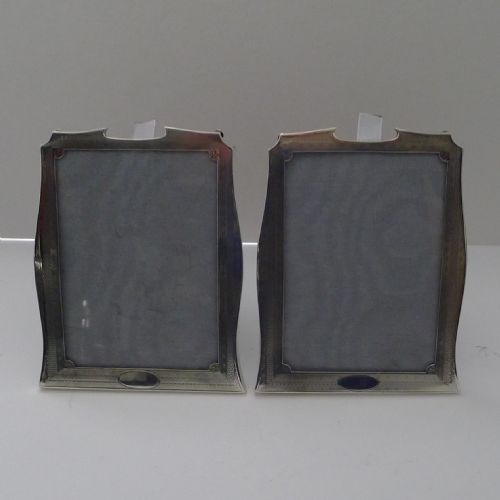

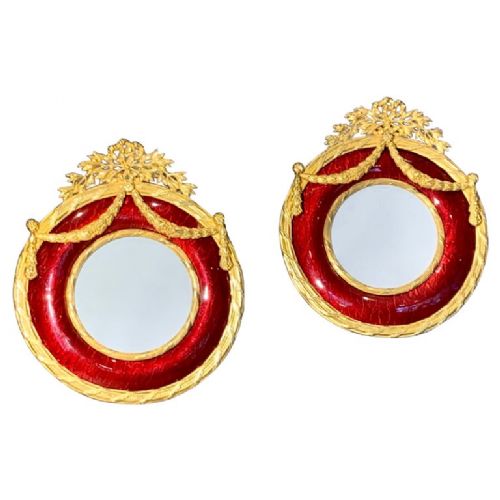
Pair of Photo Frames
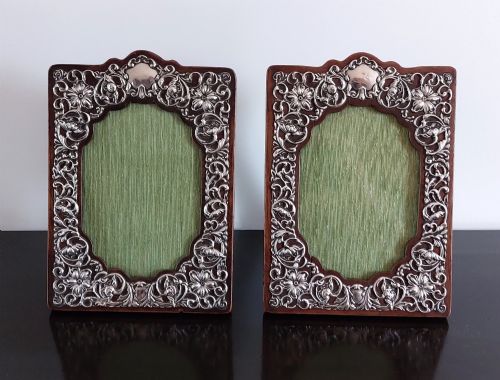
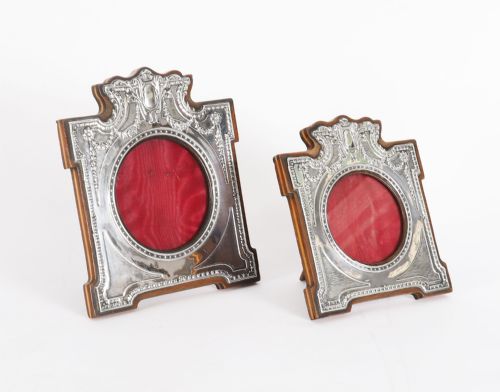
A pair of photo frames holds matched portraits side by side, bringing symmetry to a mantelpiece or desk using silver, wood, brass and leather.
Pair of Photo Frames
A pair of photo frames comprises two matching or companion apertures designed to display portraits or miniature artworks in tandem. When searching for a pair of photo frames, buyers encounter items produced across the Victorian, Edwardian and Art Deco periods, alongside earlier examples in Italian Baroque and French styles.
The materials span sterling silver, solid silver, gilt brass, hardwood, walnut, oak, leather, velvet and glass. Forms range from simple circular and oval shapes to heart-shaped silhouettes and hinged miniatures intended for desks and dressing tables.
Materials and construction
Silver frames utilise stamped, chased or engine-turned sterling silver mounted over wooden backs, often supported by easel stands lined with velvet or leather. Silversmiths construct these items using fine gauge sheet metal shaped around core structures.
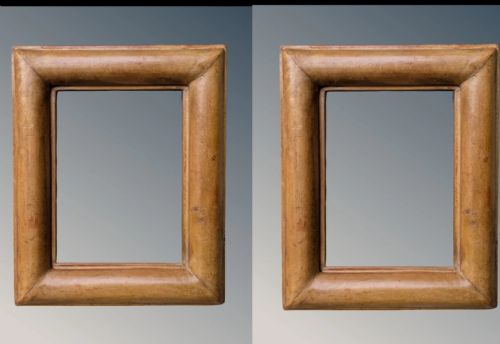
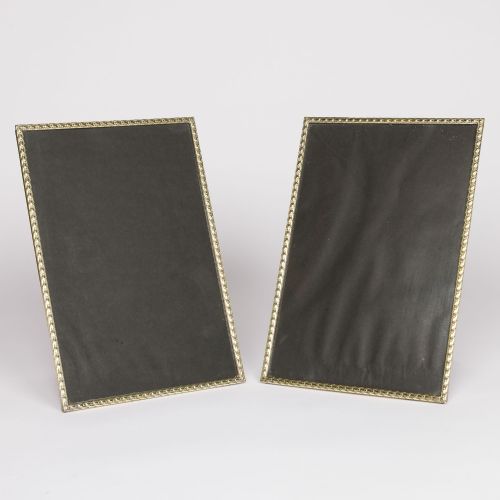
Wooden examples involve hand-carved hardwood, walnut or oak, sometimes incorporating Black Forest techniques or inlaid details. Gilt brass, bronze and gilt metal frames employ cast mounts fitted with glass panes to protect the photographs within.
The documented forms range from miniature heart-shaped silhouettes to large circular and oval display frames.
Distinctions in quality
Quality rests upon the crispness of the detail in cast or chased metalwork and the depth of hand-carving in wooden variants. Superior pieces exhibit well-preserved hallmarks, intact structural joints and original backing materials such as plush velvet or grained leather.
Matching symmetry between the two items determines desirability, as does the complexity of decorative elements like engine-turning, micro-mosaic work or gilt bronze mounts. Maker attribution to notable silversmiths elevates the standing of silver examples.
Mappin Bros·Moseley·Sampson Morden·William Comyns·Elkington and Co·A.W. Pennington
The Pair of Photo Frames Glossary
- Engine-turned
- A decorative technique involving precise geometric patterns engraved into metal using a specialised lathe. This method appears on metal frames from the Edwardian and Art Deco eras.
- Gilt bronze
- An alloy of copper and zinc treated with a gold wash to impart a rich metallic sheen. This material appears frequently in French decorative objects.
- Crystoleom
- A Victorian method of applying oil paint to the back of a photograph mounted on glass. The original paper backing is rubbed away, leaving a translucent coloured image.
- Hallmark
- An official stamp indicating the metal purity, assay office and year of manufacture for precious items. These marks help date silver frames accurately.
- Micro-mosaic
- Tiny coloured glass tesserae assembled into intricate pictorial motifs. This Italian technique adorns specialty miniature frames.
Pair of Photo Frames: Frequently Asked Questions
How do I date an antique silver frame?
Examine the silver hallmarks stamped on the bezel or border, which reveal the assay office, standard mark and date letter corresponding to the year of assay. Comparing stylistic traits such as Edwardian garland motifs or Art Deco geometric lines helps confirm the production era.
Check the construction of the backing board and easel stand, as original wooden struts and velvet linings match the period of the metalwork.
What glass is correct for old frames?
Older frames typically contain cylinder glass or early plate glass, which displays subtle surface ripples, tiny air bubbles and minor thickness variations. This historic glass differs noticeably from modern float glass through its unique light refraction.
Retaining the original glass pane preserves the integrity of the piece, though replacements are common in items that saw heavy use.
How should I clean antique metal frames?
Dust metal surfaces gently with a soft, dry microfiber cloth to remove surface grime without abrading chased or engraved details. Avoid aggressive chemical dips on silver or gilt brass, as these treatments strip away patination accumulated over decades.
Protect surrounding velvet or leather backings from moisture by applying cleaning products with a cotton bud directly to the metal.
Can I replace the backing boards?
Original wooden or cardboard backing boards and easel struts maintain the historic value of the piece, so keeping them intact is standard practice. If structural failure makes support impossible, custom conservation-grade acid-free replacements provide safe structural support.
Retain any original hardware, such as brass turn-buttons and hinge pins, even when upgrading interior elements.