

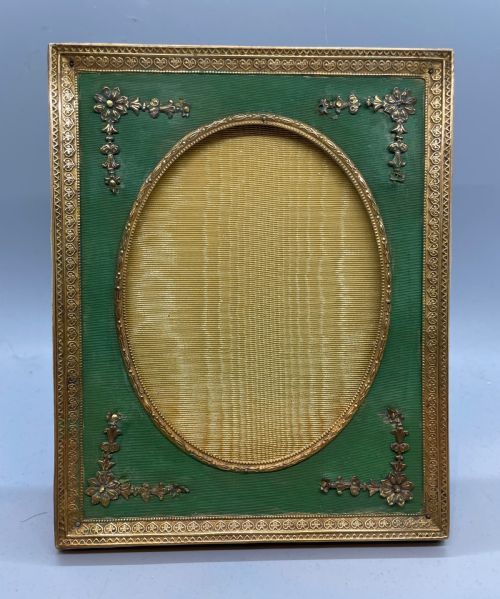


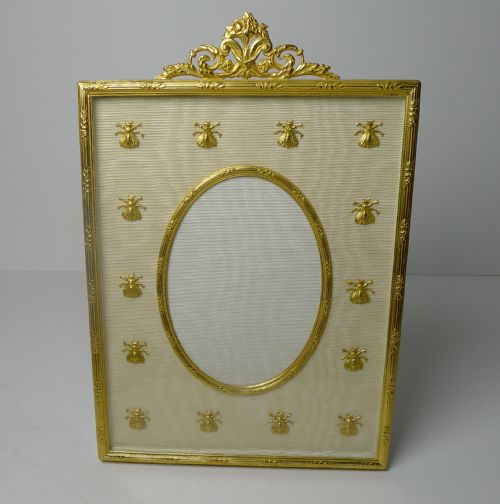


Gilt Brass Photo Frame
These gilt brass photo frame pieces combine heavy metal casting with domestic portraiture, offering a bright touch of period display.
Gilt Brass Photo Frame
A gilt brass photo frame is a decorative metal mount designed to display family portraits and domestic photographs on tables or mantelpieces. You are most likely to meet French examples from the late nineteenth century and Edwardian pieces, often styled with Louis XVI revival motifs or French Empire details.
The selection ranges from single oval apertures to double and triple frames, alongside easel-backed variants and occasional table mirrors. Many pieces incorporate decorative panels, silk linings, or fabric trims behind glass to frame the portrait.
Makers and workshops produced these items across the nineteenth and early twentieth centuries, drawing on Victorian Gothic revival styles as well as continental chateau aesthetics. The common thread is a cast metal housing finished in gilt, ormolu, or gilded bronze.
How they were made
These frames rely on brass, bronze, and ormolu castings shaped into intricate floral garlands, ribbons, and architectural borders. Artisans finished the metal surfaces with a gold-coloured gilt layer to create a bright, reflective sheen that mimics solid gold.
Glazing protects the photograph, held in place by backing boards covered in silk, velvet, or damask fabric. Support comes from sturdy brass easel stands fixed to the reverse, allowing the frame to rest securely on flat surfaces.
Gilt Brass Photo Frame Retail Price Guide 2026
Typical asking prices for gilt brass photo frame among the pieces listed under this phrase on Sellingantiques today, from the lower quarter to the upper quarter. They describe what is for sale here now, not the wider market.
Little brass bees march across the bronze borders, quietly guarding family portraits since the late nineteenth century.
What varies in quality
The refinement of the metal casting dictates the sharpness of ornamental details like acanthus leaves, Napoleonic bees, and beaded borders. Finer examples display crisp hand-chasing on the ormolu surface rather than soft, mass-produced contours.
Materials integrated into the frame structure also separate standard pieces from high-end commissions. The inclusion of genuine agate mounts, Limoges enamel plaques, or paste stones indicates a more ambitious workshop production.
Boin Taburet·JOHN JOSEPH MECHI·F.Bienvue
The Gilt Brass Photo Frame Glossary
- Ormolu
- A gilded bronze or brass finish applied to decorative metalwork using a mercury amalgam technique or electroplating. This coating provides the bright golden lustre seen on nineteenth-century frames.
- Easel back
- A hinged metal support attached to the rear of the frame. It allows the object to stand upright on furniture.
- Limoges enamel
- Painted vitreous enamel panels produced in the French city of Limoges. These colourful inserts occasionally decorate the crests of high-end frames and table mirrors.
- Paste stone
- Faceted lead glass cut and polished to resemble gemstones. They are often handset into the metal borders of French picture frames.
- Damask
- A reversible figured fabric used for the backing panels and interior trims of period frames. It adds a textured tactile element behind the glass aperture.
Gilt Brass Photo Frame: Frequently Asked Questions
How do I clean a gilt brass photo frame?
Dust the metal gently with a soft, dry brush to protect the delicate gilt or ormolu surface from abrasion.
Avoid using liquid metal polishes or chemical cleaners, as these substances strip away the historic gold finish entirely.
Can I change the photograph inside?
Most frames feature a removable rear backing board held by small metal tabs or pins that lift easily.
Slide out the original silk or velvet backing to insert your own portrait behind the glass without forcing the antique hinges.
How do I date a brass frame?
Examine the style of the casting, such as Victorian Gothic revival motifs or Louis XVI ribbons, alongside the construction of the easel back.
Reference marks or signatures on the bronze surface can also point towards specific French or English workshops active around eighteen-ninety.
Where should I display these frames?
Place them on stable wooden mantelpieces, dressing tables, or sideboards where the gilded metal catches natural light.
Keep them away from damp environments like bathrooms to protect the delicate silk, velvet, or fabric backings.