
Gold and Platinum Ring
Choosing a gold and platinum ring brings together bright old-cut diamonds and durable precious metals from the Edwardian, Art Deco, and mid-century eras.
Gold and Platinum Ring
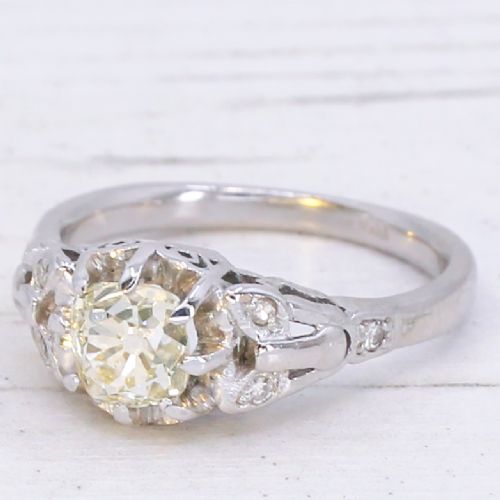
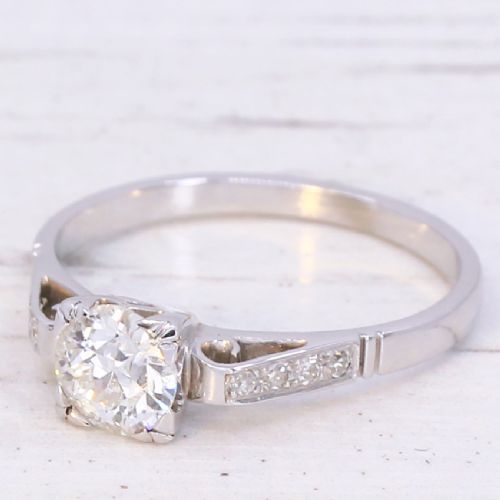
A gold and platinum ring combines the warmth of yellow or white gold with the brilliant, strong white setting of platinum. Buyers browsing this selection typically encounter cluster, solitaire, and multi-stone engagement or dress rings spanning the late Victorian period through to the mid-twentieth century.
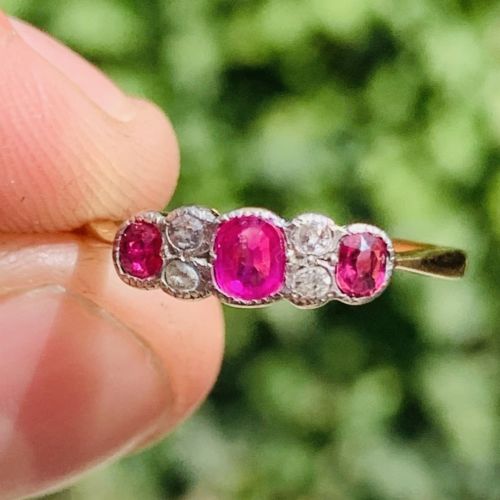
Beyond standard finger adornments, the selection occasionally extends to related forms such as gold and platinum chains with dog clips. Most pieces, however, focus squarely on finger jewellery showcasing diamonds alongside occasional sapphires, rubies, and emeralds.
How they were made
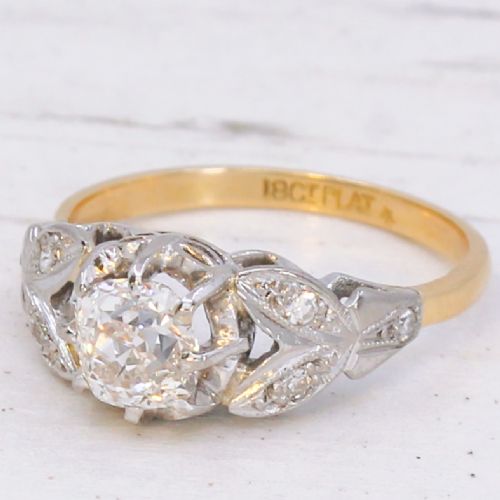
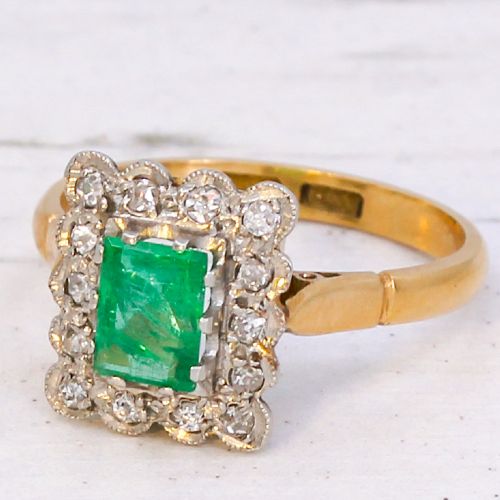
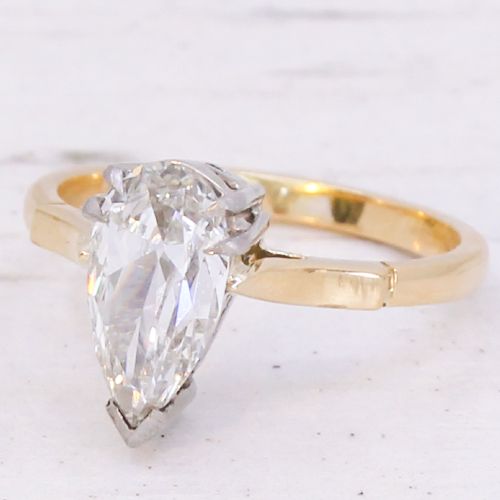
Jewellers of the early and mid-twentieth century frequently combined 18ct yellow or white gold shanks with platinum heads. Platinum was utilised to securely hold stones in delicate claw or bezel settings while maintaining a bright white backdrop that enhanced diamond sparkle.
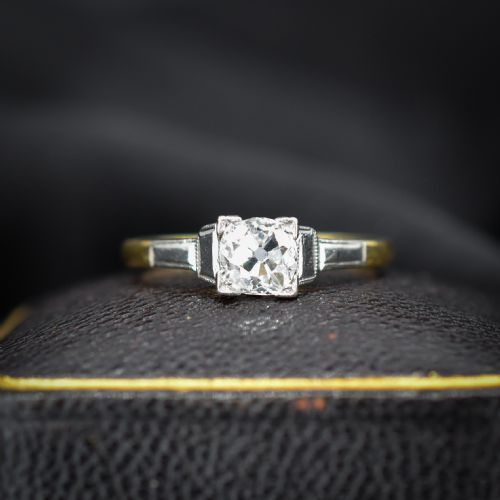
Diamonds found in these pieces are predominantly old European cuts, old cushion cuts, and old mine cuts shaped by hand rather than modern laser machinery. This dual-metal technique capitalised on the structural rigidity of platinum combined with the traditional malleability of gold.
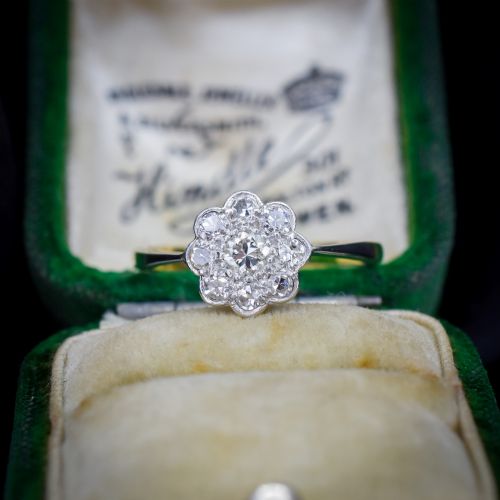
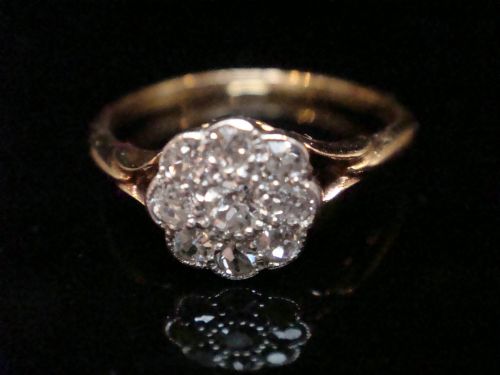
Several rings feature charming daisy clusters that permanently capture a summer garden on the wearer's hand.
What varies in quality
The distinction between tiers rests upon the harmony of the gemstone selection and the finesse of the metalwork. Superior examples display well-matched old-cut diamonds with clean facets, securely mounted within crisp platinum settings that show minimal wear.
The overall artistry of the mounting elevates a piece, particularly in intricate Art Deco geometric patterns or delicate Edwardian pierced galleries. Heavier shank construction and well-preserved hallmarks further separate standard dress rings from high-end examples.
The Gold and Platinum Ring Glossary
- Old cut
- A diamond facet arrangement typical of antique jewellery, hand-polished with a smaller table and larger culet than modern brilliant stones.
- Toi et Moi
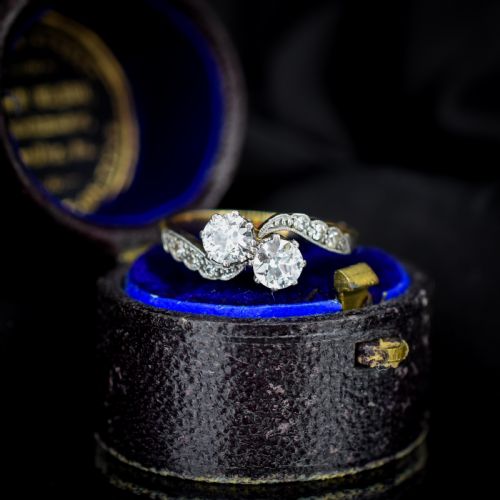
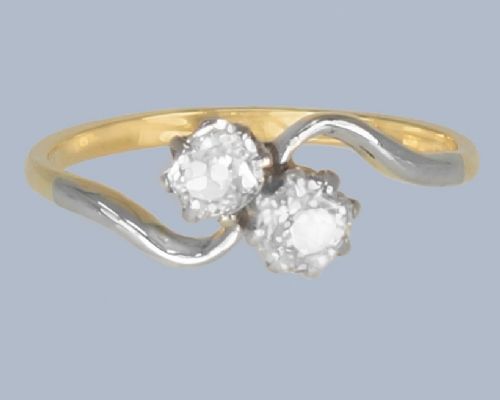
- A two-stone ring style featuring intertwined gems symbolising two souls joined together as one.
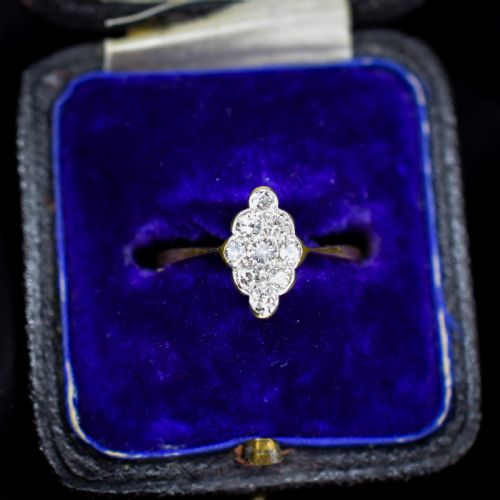
- Navette
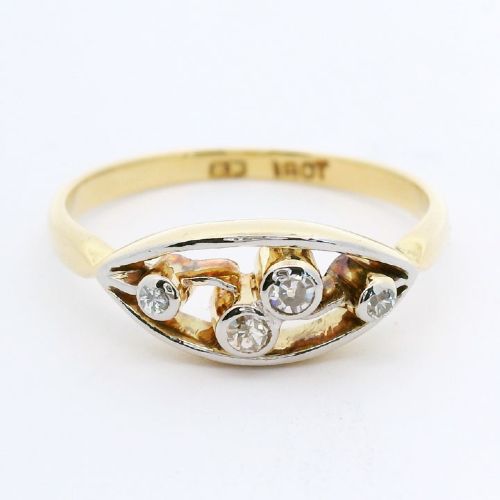
- A boat-shaped ring design featuring an elongated cluster tapering to sharp points at either end.
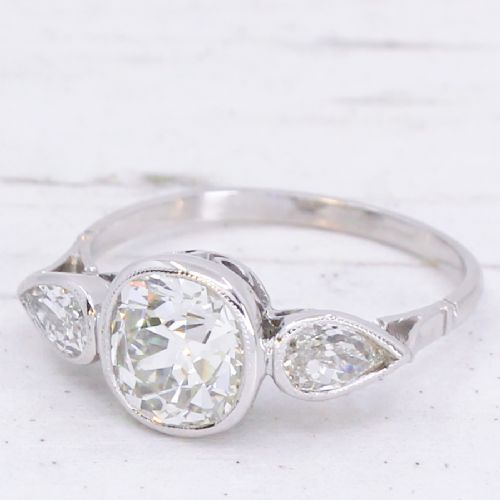
- Trilogy
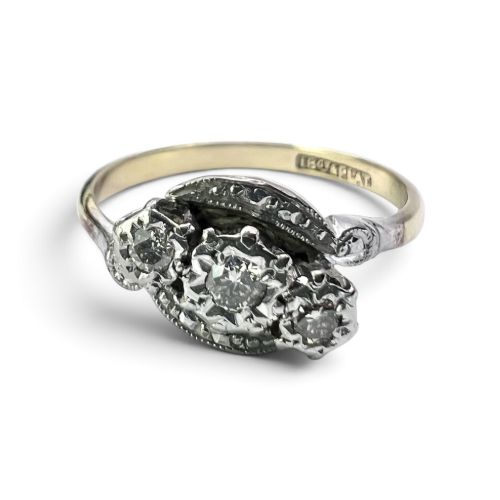
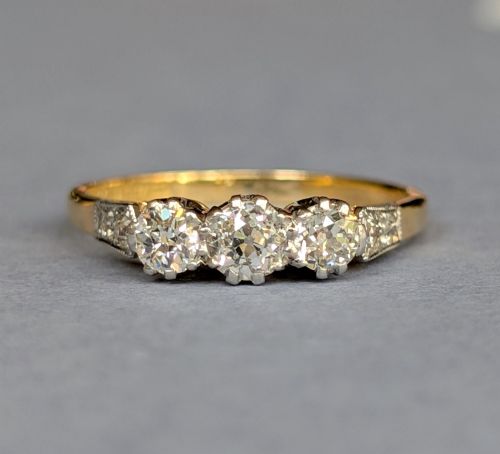
- A three-stone ring configuration often interpreted to represent past, present, and future.
- Cluster
- A central gemstone surrounded by a ring of smaller accent stones, frequently resembling a daisy flower.
Gold and Platinum Ring: Frequently Asked Questions
How do I care for my ring?
Clean your jewellery gently using warm soapy water and a soft brush to remove everyday oils from the gemstone settings. Avoid harsh chemical cleaners that might affect the integrity of vintage gold and platinum.
Have a professional jeweller inspect the claws periodically to ensure the old-cut diamonds remain secure in their original mountings.
Can antique rings be resized easily?
Most gold and platinum bands can be adjusted by a skilled jeweller who understands antique construction techniques. The dual-metal composition requires care to preserve any shoulders or gallery work during the process.
Consult a specialist before proceeding to ensure the structural proportions and hallmarks remain protected.
What is the difference between Edwardian and Art Deco styles?
Edwardian designs rely on lace-like platinum work, millegrain edges, and delicate floral motifs that project an airy elegance. They date from the early 1900s up to the First World War.
Art Deco pieces, emerging in the 1920s and 1930s, favour bold geometric lines, symmetrical patterns, and stark contrasts between the yellow gold shanks and platinum gemstone settings.