
Edwardian Diamond Cocktail Ring
An edwardian diamond cocktail ring brings together delicate platinum settings and fiery old-cut stones, offering a glimpse into early twentieth-century elegance.
Edwardian Diamond Cocktail Ring
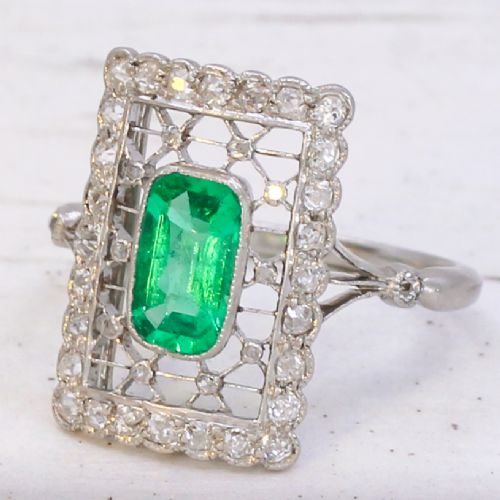
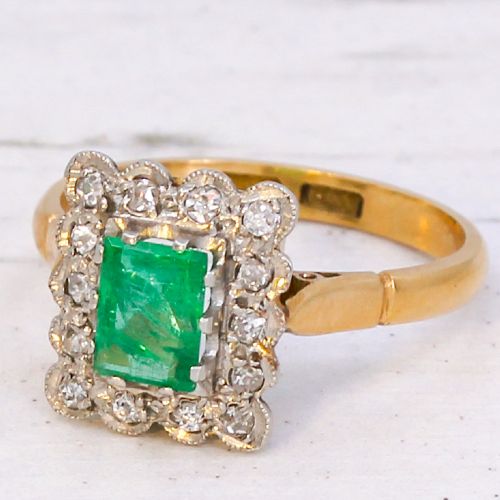
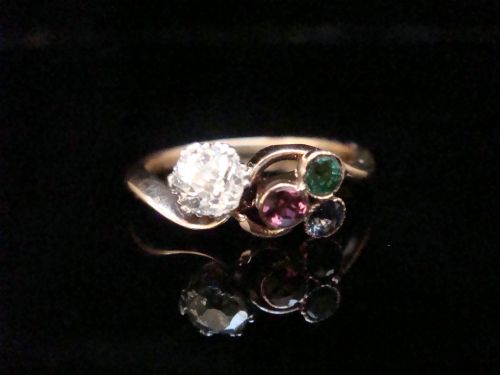
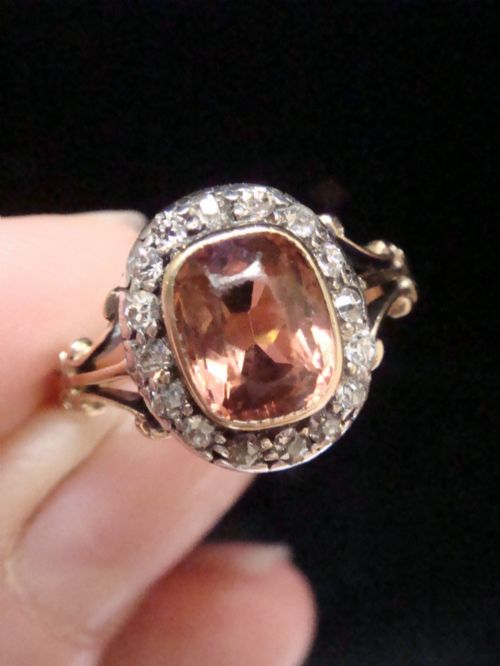
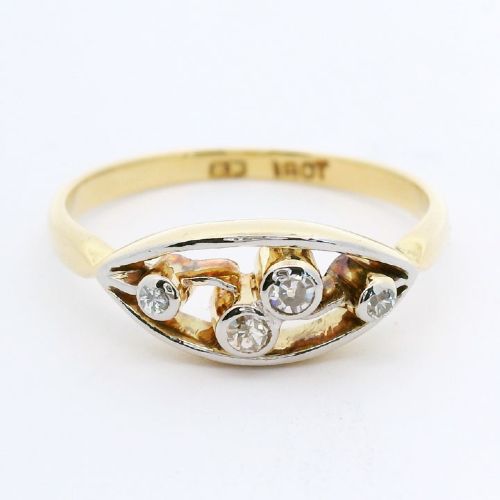
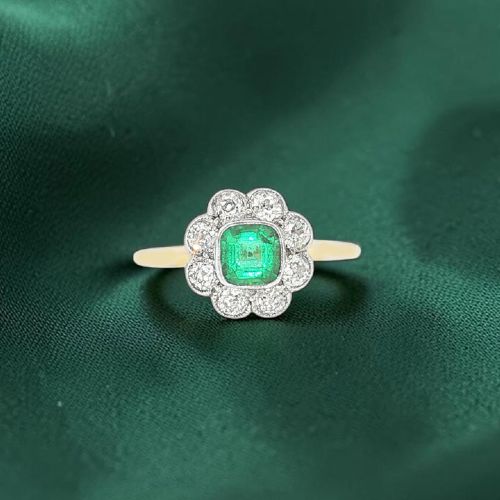
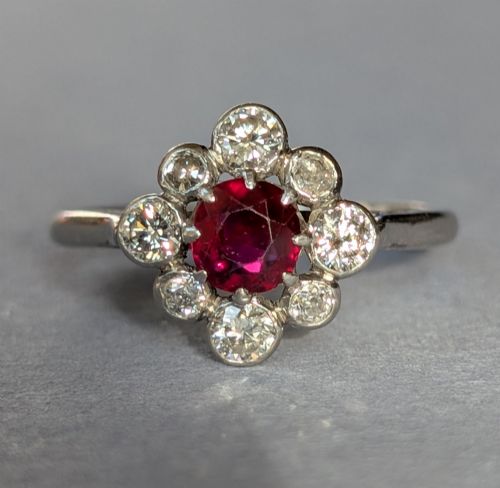
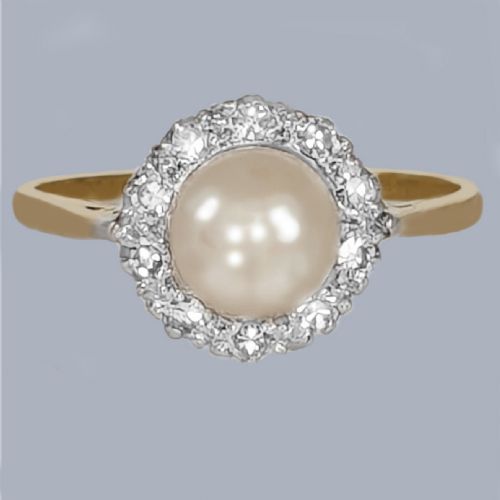
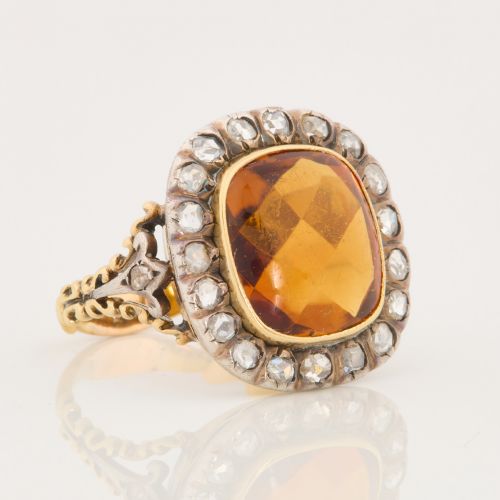
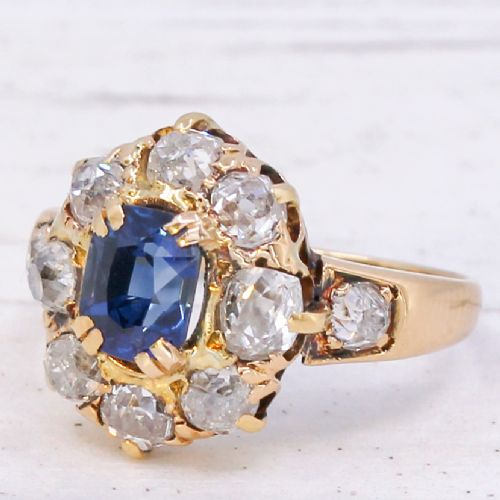
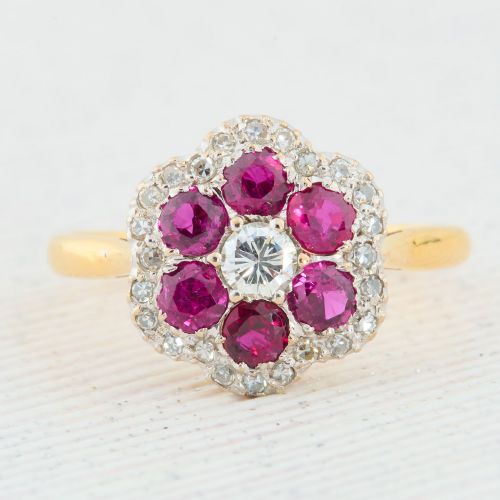
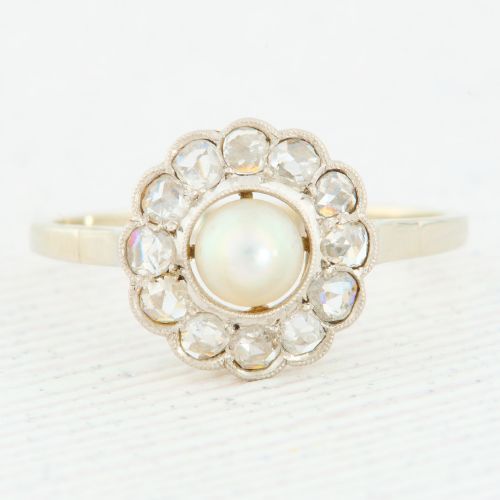
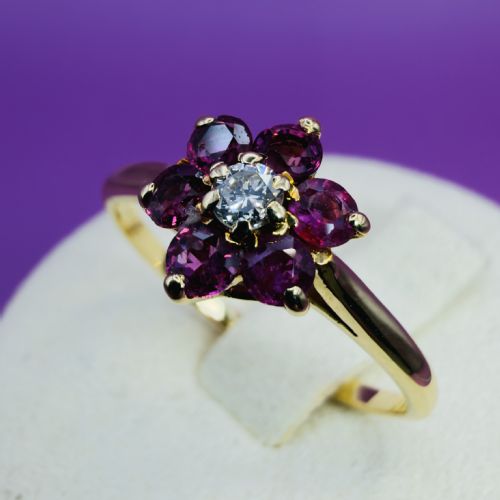
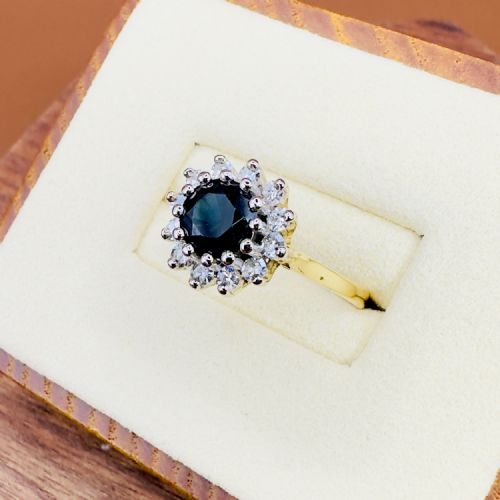
An edwardian diamond cocktail ring typically combines old-cut diamonds with central coloured gems like emeralds, sapphires or rubies. Most examples on this page span the early decades of the twentieth century, bridging the late Victorian, Edwardian and Art Deco periods.
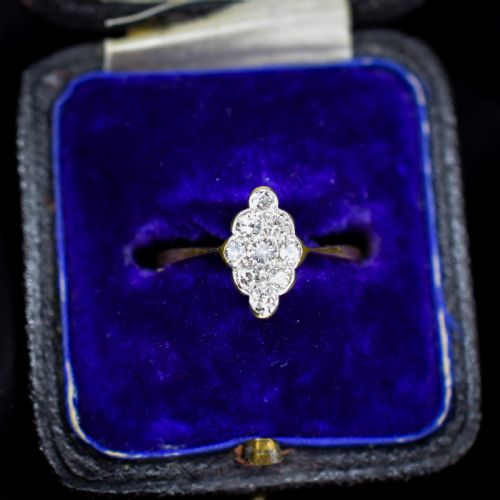
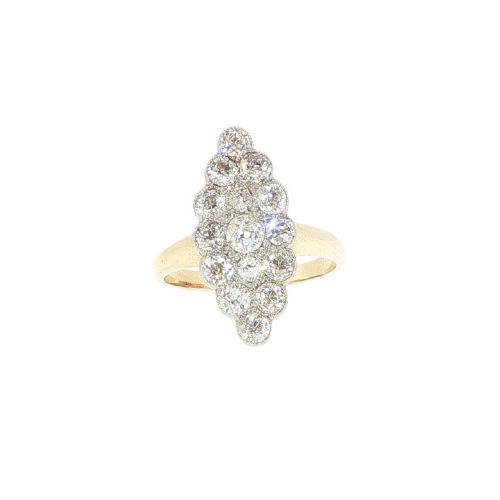
The prevailing forms take shape as navette clusters, elongated marquise outlines and symmetrical floral arrangements. These designs sit low on the hand, mounted in combinations of yellow gold, white gold and platinum.
While the name points specifically to Edwardian craftsmanship, the selection frequently incorporates pieces from subsequent decades that share a similar decorative ambition and gem-set complexity.
How they were made
The construction relies heavily on platinum and 18ct gold, often paired together to provide both strength and a bright reflective surface for the stones. Platinum allowed goldsmiths to form intricate openwork galleries and delicate millegrain borders without adding excessive weight.
Gems such as old cut diamonds, sapphires and emeralds are secured using claw, bezel or calibre settings tailored to the individual stone shapes. Hand-cut facets on older diamonds give a softer, deeper sparkle compared to modern brilliant cuts.
Materials paired with diamonds across these pieces include platinum, 18ct white gold, 18ct yellow gold, and occasional 14ct gold.
What varies in quality
Quality rests on the crispness of the metalwork and the integration of the central gemstones within the design. Superior examples display fine, even millegrain edges and well-matched stone proportions that do not crowd the setting.
The provenance and treatment status of the primary gems, such as unheated sapphires or emeralds with minimal oil, elevate the standing of a piece. Hand-finished details in the gallery signal a higher tier of goldsmithing than mass-produced mounts.
The Edwardian Diamond Cocktail Ring Glossary
- Navette
- A boat-shaped ring setting that tapers to points at either end. This elongated silhouette sits lengthways along the finger.
- Millegrain
- A decorative technique featuring a row of tiny raised metal beads along the edge of a setting. It frames the stones with a soft texture.
- Old Cut
- A diamond cut from the late nineteenth or early twentieth century featuring a smaller table and larger culet. These stones catch candlelight with a broad, chunky flash.
- Calibre Cut
- Gemstones precisely shaped to fit tightly next to one another in a geometric channel or pattern. This technique defines many Art Deco designs.
- Cluster
- A central stone surrounded by a ring of smaller accent stones. This layout maximises visual impact and light return.
Edwardian Diamond Cocktail Ring: Frequently Asked Questions
How do I care for my ring?
Clean your piece gently using warm soapy water and a soft brush to remove everyday oils from beneath the stones. Avoid harsh ultrasonic cleaners, particularly with emeralds or pearls.
Store the ring separately in a lined box to prevent the harder diamonds from scratching neighbouring gold or platinum mounts.
Can these rings be resized?
Most gold and platinum settings can be adjusted by a skilled jeweller who understands antique construction. Complex shoulder details or calibre-cut channels require careful handling to avoid disturbing adjacent stones.
Consult a specialist before any work is undertaken to preserve the structural integrity of the gallery.
Are the centre stones certified?
Certain pieces include gemmological reports detailing stone origin, weight and treatment history. Listings will explicitly note if independent laboratory documentation accompanies the item.
For pieces without certificates, visual assessment and historical context guide the description of the gems.
How do I distinguish Edwardian from Art Deco?
Edwardian designs favour flowing floral motifs, lacy platinum openwork and soft curves. They emphasise romantic lightness and intricate millegrain detailing.
Art Deco rings introduce strict geometric symmetry, sharp lines and contrasting dark stones like onyx alongside bright white metals.