



Gold Diamond Navette Ring
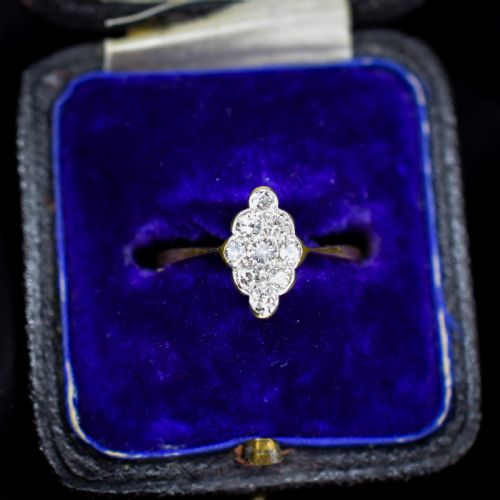
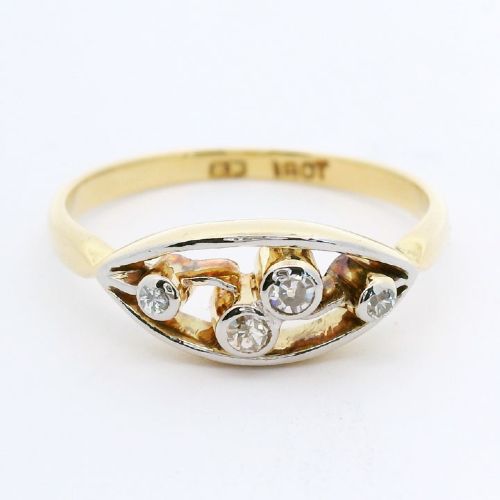
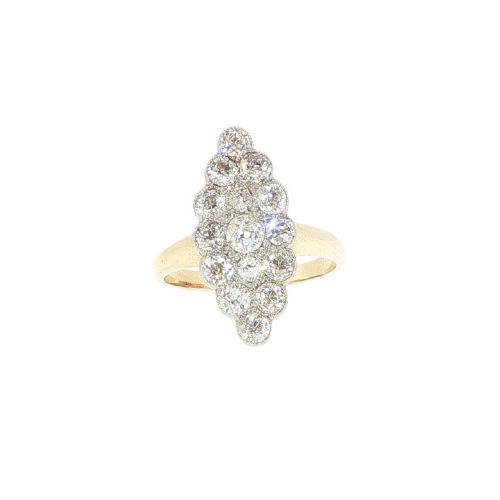
A gold diamond navette ring brings together elongated boat-shaped silhouettes and sparkling stones from the Victorian, Edwardian, and Art Deco periods.
Gold Diamond Navette Ring
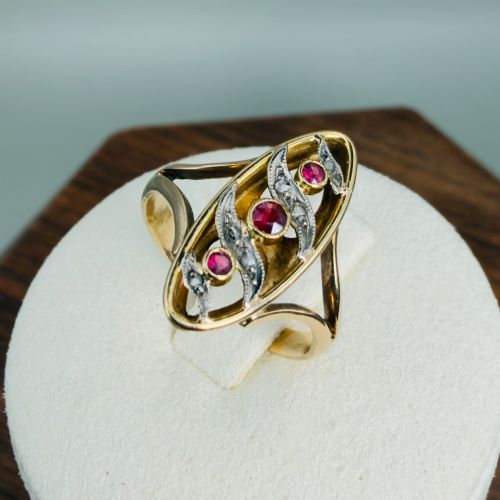
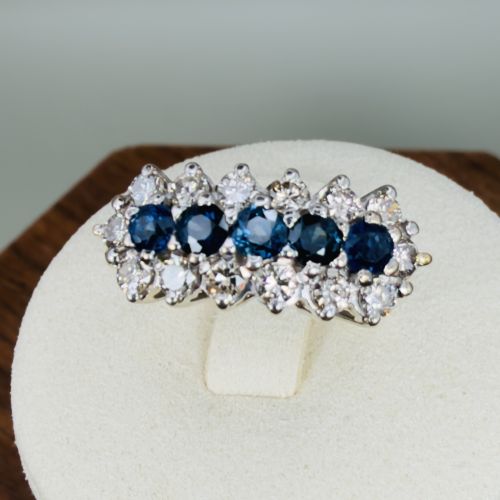
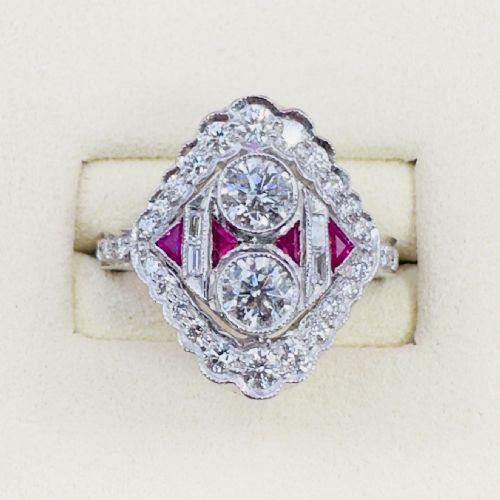
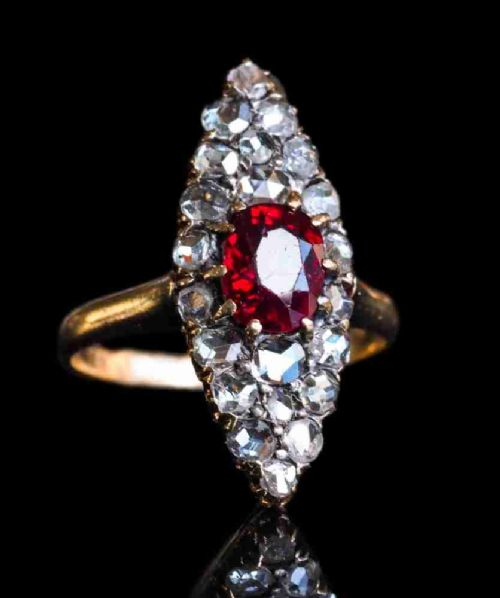
When searching for a gold diamond navette ring, collectors encounter elongated, boat-shaped cluster settings designed to sit horizontally across the finger. Victorian and Edwardian examples dominate the selection, accompanied by later Art Deco interpretations.
Materials and construction
Goldsmiths utilised eighteen carat yellow gold and white gold for the foundational bands and settings, frequently combining platinum on the face to showcase old cut and rose cut diamonds. Gemstones including rubies and sapphires were secured in close-set cluster arrangements.
Techniques such as hand-setting stones into platinum-topped gold allowed artisans to maximise light reflection while maintaining structural integrity across the elongated boat outline.
These pointed boat shapes ensured Victorian wearers made a sharp point across the room before shaking hands.
Judging quality and proportion
Quality rests in the harmony of the cluster proportions and the precision of the metalwork shaping the marquise outline. Finer examples display balanced gemstone grading and minimal wear to the delicate claw or bezel settings.
The integrity of the original gold shank and the crispness of the facet work on old mine or transitional cut diamonds separate standard production from superior pieces.
The Gold Diamond Navette Ring Glossary
- Navette
- French for little ship, describing an elongated, pointed-oval cluster ring shape.
- Marquise
- An alternative term for a boat-shaped or pointed-oval gemstone or ring setting.
- Old cut
- A diamond facet style hand-polished before modern symmetrical standards developed.
- Rose cut
- A vintage diamond cutting style featuring a flat base and a domed, faceted top.
Gold Diamond Navette Ring: Frequently Asked Questions
How do I wear a navette ring safely?
The elongated shape sits horizontally across the finger, requiring care against knocks on doorframes or hard surfaces. Pairing the piece with low-profile bands prevents friction against the pointed ends.
Removal during manual tasks preserves the delicate claws holding the central diamonds and surrounding coloured stones.
What periods do these rings come from?
The listings encompass Victorian, Edwardian, and Art Deco eras, spanning the late nineteenth century through the mid twentieth century. Each era brings distinct shifts in gold colour and gemstone pairing.
Victorian pieces often feature yellow gold and deep rubies, whilst Edwardian and Art Deco examples frequently introduce platinum-topped white metal.
Can I resize an antique gold ring?
Most eighteen carat gold shanks accommodate resizing by a skilled jeweller without disturbing the face of the ring. The structural work requires caution to preserve hallmarks situated on the inner band.
Consulting a specialist ensures the elongated navette setting remains balanced on the finger after adjustment.
How do I clean old cut diamonds?
Warm soapy water and a soft brush remove everyday oils gathered beneath the stones in closed-back or cluster settings. Harsh ultrasonic cleaners risk dislodging pearls or softer gems found in nineteenth-century designs.
Gentle drying with a lint-free cloth restores the sparkle of old mine and rose cut stones.