


1890s Diamond Ring
An 1890s diamond ring brings genuine Late Victorian character to the hand through old cut stones and warm 18ct gold settings.
1890s Diamond Ring
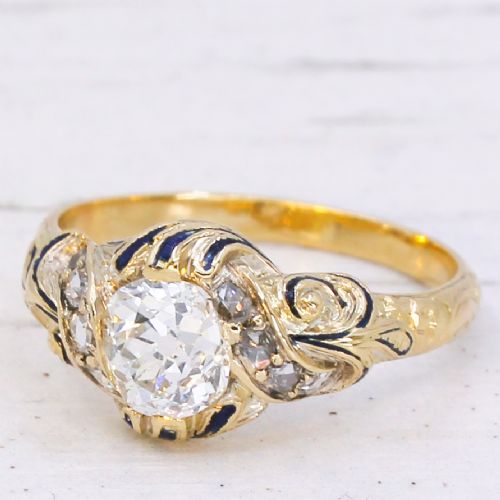
When someone searches for an 1890s diamond ring, they are looking at authentic Victorian jewellery created around the final decade of the nineteenth century. These pieces reflect the distinctive aesthetic of the Late Victorian era, combining hand-cut diamonds with substantial precious metal settings. Buyers encounter various configurations, from simple solitaire stones to intricate multi-stone arrangements.
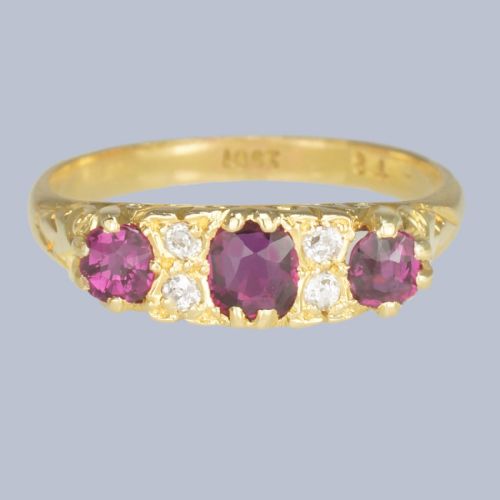
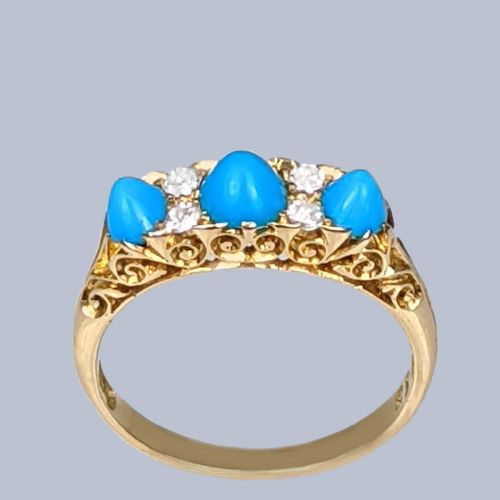
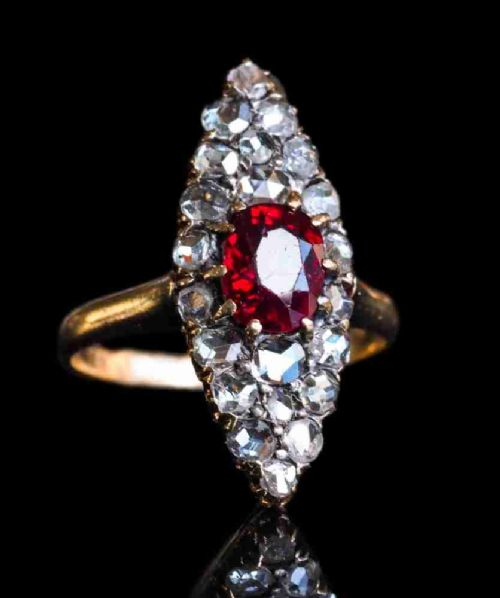
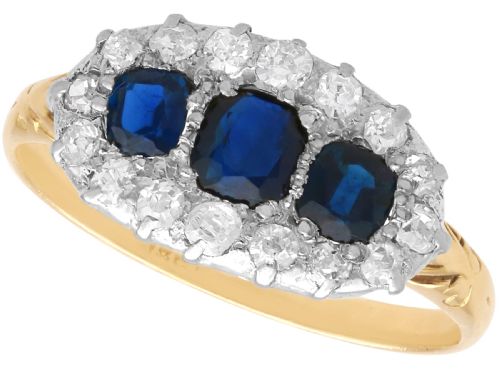
The most common formats on this page include traditional trilogy rings, boat shapes, and navette designs. Many examples integrate diamonds alongside coloured gemstones such as rubies, sapphires, turquoise, and opal. These rings originate from British and French workshops, utilising the characteristic styles of the period.
Materials and Construction
Goldsmiths of this period predominantly worked in 18ct yellow gold, shaping robust bands and detailed settings by hand. Diamonds used in these pieces feature old cuts, which display distinctive facets and softer light reflection compared to modern brilliant cuts. These stones are securely held in claw or flush settings designed to highlight their individual character.
Makers frequently combined diamonds with natural gemstones like rubies, sapphires, turquoise, and enamel to create contrasting colour palettes. Navette and boat ring designs required precise metalwork to accommodate curved rows of stones within elongated or tapered frames.
Listings here feature 18ct yellow gold alongside diamond, ruby, sapphire, turquoise, enamel, and opal across Victorian ring forms.
Assessing Quality and Execution
The distinction between tiers of work rests upon the precision of the gemstone setting and the weight of the gold. Finer examples display meticulous claw work that secures old cut diamonds firmly while maintaining delicate proportions. The integration of secondary stones, such as Burmese rubies or sapphires, also influences the overall caliber of the piece.
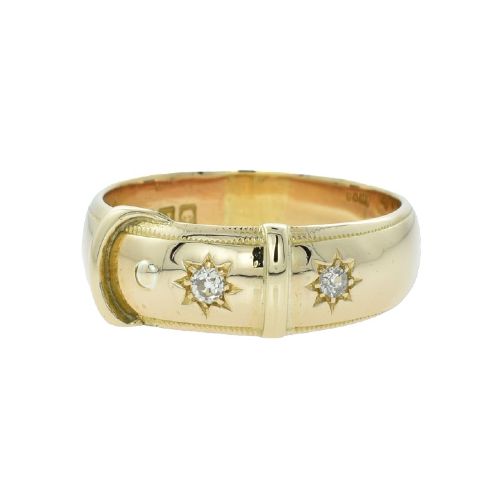
Construction integrity matters immensely in rings of this age, particularly around shoulders and galleries where wear occurs. Superior items retain crisp detail in engraved or shaped bands, such as buckle motifs or navette bezels, without thinning of the gold structure.
The 1890s Diamond Ring Glossary
- Navette
- A boat-shaped ring design featuring an elongated, pointed silhouette that sits lengthwise along the finger. This style often showcases a cluster of diamonds and coloured stones.
- Trilogy ring
- A ring set with three principal gemstones, usually representing the past, present, and future. In this period, they often pair a central diamond with flanking rubies or sapphires.
- Boat ring
- A curved mounting style where the central stones are elevated in a boat-like formation across the finger. It is a classic Victorian configuration.
- 18ct gold
- An alloy consisting of seventy-five percent pure gold, providing a rich yellow hue and durability suitable for daily wear in antique jewellery.
1890s Diamond Ring: Frequently Asked Questions
How do I care for an 1890s diamond ring?
Clean your ring gently using warm soapy water and a soft brush, avoiding harsh chemical dips that can harm softer gemstones like turquoise or opal. Remove the ring during heavy physical tasks to protect the old gold settings.
Have a professional jeweller inspect the claws periodically to ensure the old cut diamonds remain secure in their original mountings.
Can I wear an antique diamond ring daily?
These rings were built for everyday adornment using durable 18ct gold, but their age requires mindful handling. Take care to avoid impacts against hard surfaces.
With sensible precautions and regular maintenance, an antique ring handles daily wear just as it did in the Victorian era.
What defines Late Victorian style?
The Late Victorian period embraces varied design influences, moving from sentimental multi-stone arrangements to geometric navette shapes. Jewellery from this era often highlights the natural beauty of coloured gemstones alongside diamonds.
Craftsmen balanced structural robustness with refined detailing, producing distinctive silhouettes like boat rings and buckle bands.
How are old cut diamonds different?
Old cut diamonds are shaped by hand rather than precise modern machinery, resulting in smaller tables and deeper pavilions. They emit a softer, broader flash of light compared to contemporary brilliant cuts.
This traditional cutting method gives each stone an individual personality and confirms its period authenticity.