

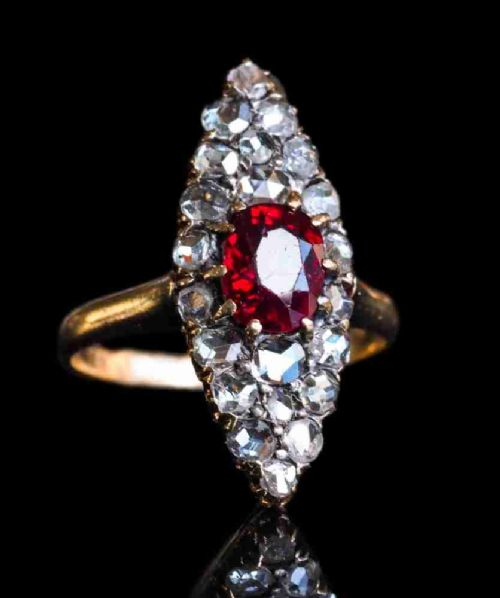


Gold Navette Cluster Ring
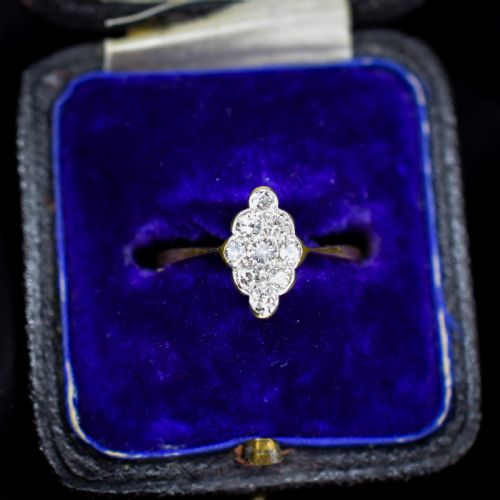
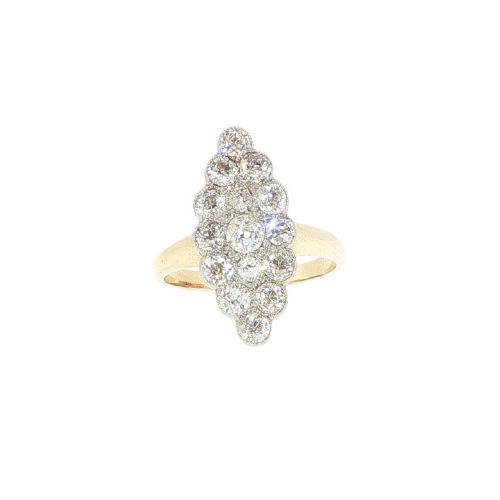
A gold navette cluster ring draws the eye with an elongated boat-shaped profile that sits flat along the finger.
Gold Navette Cluster Ring
A gold navette cluster ring presents a distinctive boat or marquise silhouette created by an arrangement of smaller gemstones surrounding a central stone. This elongated outline dominates the selection, featuring prominently across Victorian, Edwardian, and Art Deco periods.
The profile stretches horizontally along the finger, utilising the length of the hand to maximum visual effect. Most examples combine yellow gold shanks with platinum settings to enhance the brilliance of the diamonds and coloured stones.
How They Were Made
Goldsmiths combined 18ct yellow gold and white gold or platinum to construct the basket and shoulders of the ring. Platinum topped settings became common in the Edwardian period to hold diamonds securely without heavy metal borders.
Old cut, rose cut, and transitional cut diamonds were set alongside rubies, emeralds, sapphires, turquoises, and pearls. Stones were closely clustered to form the signature boat shape characteristic of the design.
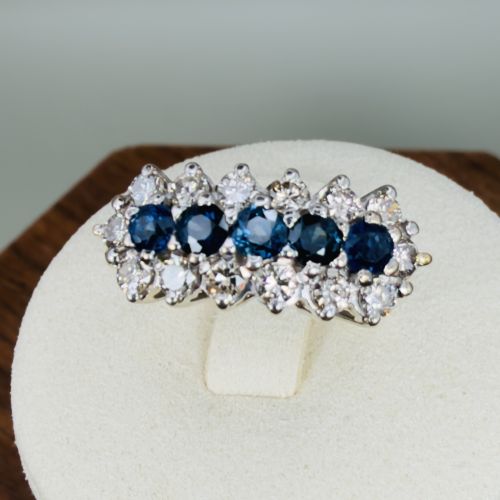
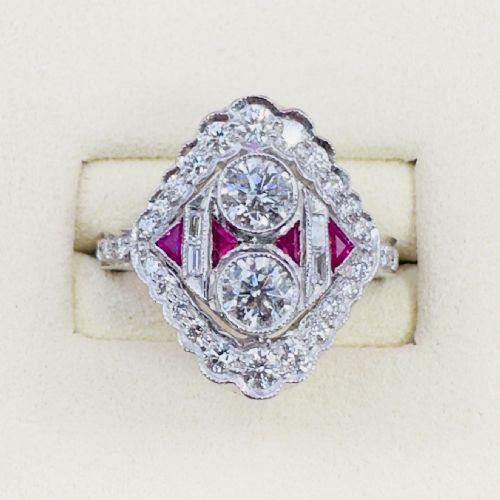
Listings feature 18ct gold, yellow gold, white gold, and platinum set with diamonds, rubies, emeralds, sapphires, pearls, and turquoise across multiple eras.
What Varies in Quality
The fineness of the cluster work dictates the overall standard of the piece, particularly how closely the surrounding stones meet the central gem. Well-executed examples maintain a balanced proportion between the gold shank and the gemstone face.
The integrity of the claw settings and the matching quality of the peripheral stones separate ordinary production from finer goldsmith work. Gemstone saturation, especially in rubies and emeralds, also determines the distinction between individual pieces.
The Gold Navette Cluster Ring Glossary
- Navette
- A boat-shaped gemstone setting that tapers to points at both ends. It is synonymous with the marquise form.
- Marquise
- An oval stone or cluster shape featuring pointed ends. The term is often used interchangeably with navette.
- Old cut
- A diamond cut from the late nineteenth or early twentieth century featuring a small table and high crown. These stones produce a distinctive broad flash under candlelight.
- Rose cut
- A historic diamond cut with a flat base and a domed crown of triangular facets. It resembles an unopened rosebud.
- Cluster ring
- A design where a central stone is surrounded by a group of smaller gems. This layout maximises surface presence on the hand.
Gold Navette Cluster Ring: Frequently Asked Questions
How do I wear a navette ring daily?
The elongated shape sits flat along the finger, making it comfortable for regular wear despite its considerable length. Care must be taken with softer stones like pearls or turquoise set within the cluster.
Pair the ring with simpler bands to allow the boat-shaped profile to remain the focal point on the hand.
What periods do these rings come from?
The inventory spans Victorian, Edwardian, and Art Deco eras, alongside mid-century pieces. Victorian examples often incorporate rubies or emeralds with old cut diamonds in yellow gold.
Edwardian and Art Deco pieces frequently introduce platinum toppings to contrast with the yellow gold shanks and brighten the diamond clusters.
What stones are found in these clusters?
Diamonds form the primary stone in many examples, paired with rubies, sapphires, emeralds, pearls, and turquoise. Combinations of diamonds and rubies or emeralds are particularly common.
Coloured gemstones provide the vibrant centre or contrasting halo within the elongated navette outline.
How do I tell Victorian from Edwardian pieces?
Victorian rings typically utilise heavier yellow gold settings and warmer old mine cut diamonds. Emeralds and Burmese rubies frequently appear in these nineteenth-century designs.
Edwardian and later pieces lean towards platinum-topped gold, creating a whiter visual field that frames the diamond cluster with lighter metalwork.