


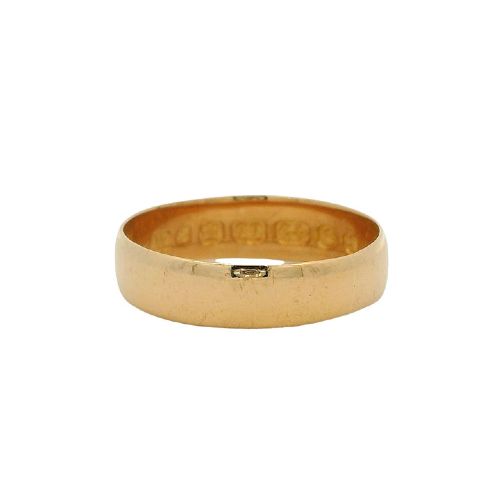
Victorian Yellow Gold Ring
A victorian yellow gold ring brings together rich metalwork and old-cut stones, offering tangible history for daily wear.
Victorian Yellow Gold Ring
Most surviving examples demonstrate substantial metal craftsmanship, often bearing hallmarks from British assay offices. These rings bridge the gap between ornamental artistry and durable everyday jewellery.
Materials and Construction
Goldsmiths of the period primarily utilised yellow gold in nine, fifteen, and eighteen-carat standards, providing a warm foundation for gemstones. Metal components were cast, hand-hammered, or chased to create detailed bands and bezels.
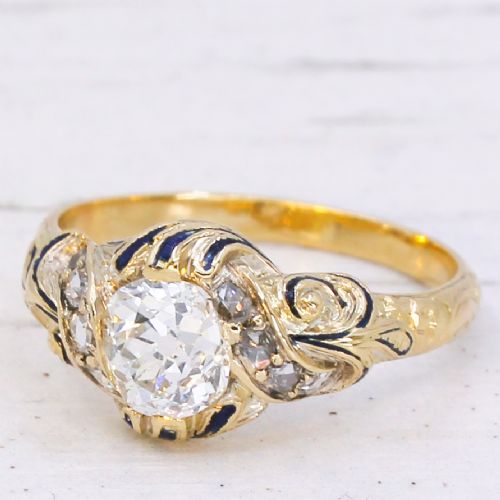
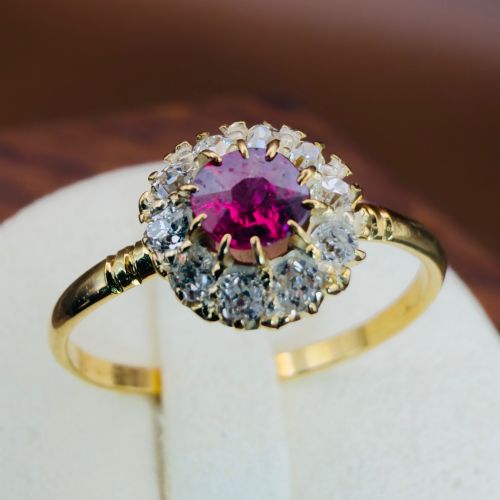
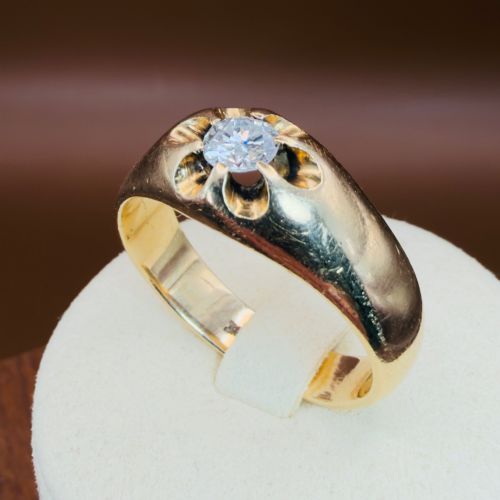
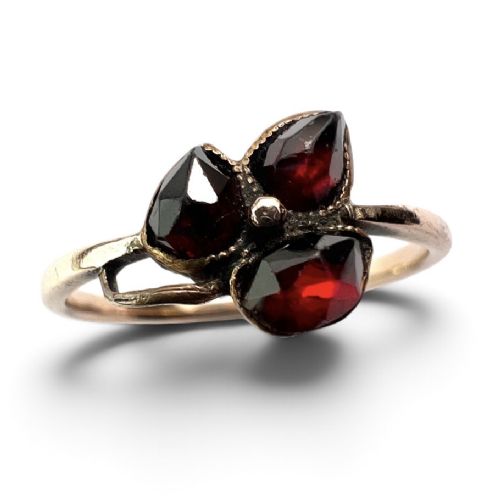
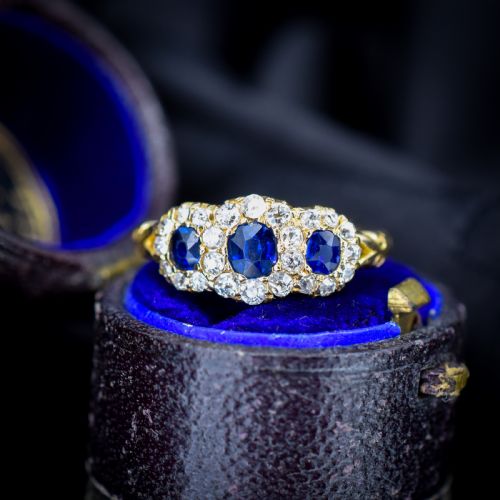
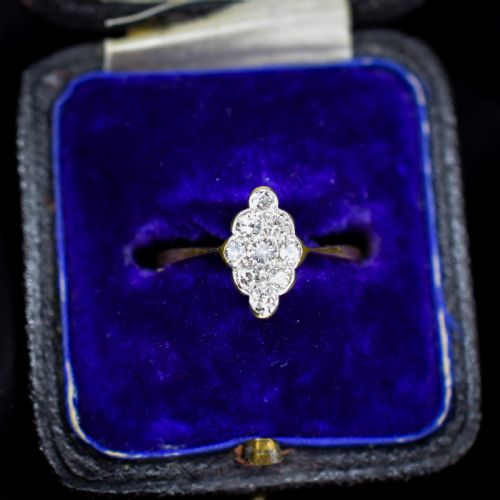
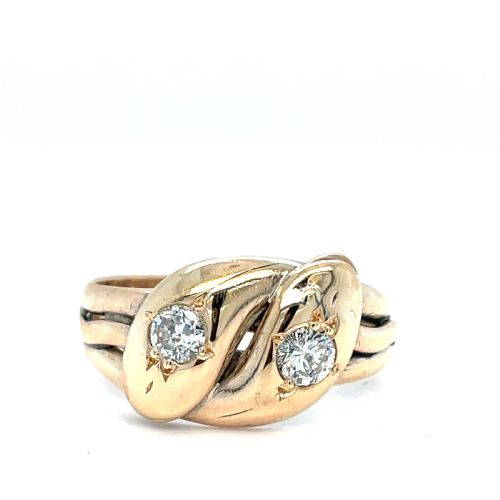
Gemstones such as old-cut diamonds, rubies, and pearls were secured using starburst settings, flush gypsy mountings, or delicate claw configurations. These traditional bench techniques ensured stones remained stable within active handwear.
Listings feature yellow gold standards ranging from nine to twenty-two carats, alongside platinum accents.
Distinctions in Quality
Superior examples exhibit heavier metal weight, crisp chasing, and well-matched natural gemstones with minimal inclusions. Maker marks and clear assay stamps often denote higher workshop standards.
Lesser pieces show thin shanks, worn engravings, or replacement stones that disrupt the original aesthetic harmony. The integrity of structural settings largely dictates the enduring value of each band.
The Victorian Yellow Gold Ring Glossary
- Gypsy setting
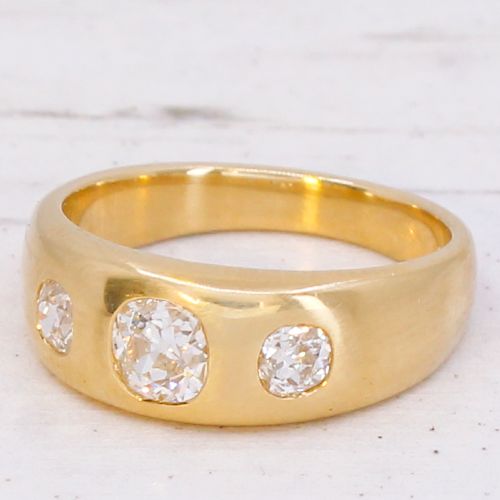
- A mounting style where the gemstone is flush-set directly into the thick metal band, creating a smooth exterior surface. This technique protected the stone during daily physical tasks.
- Old-cut diamond
- A hand-faceted diamond cut before modern machinery, characterised by a smaller table, higher crown, and open culet. These stones catch candlelight with a softer, broader twinkle.
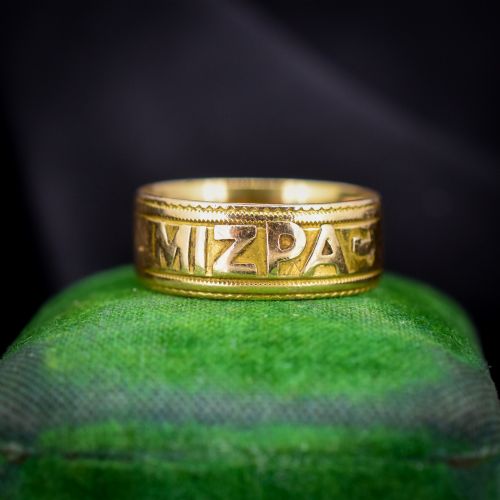
- Mizpah ring
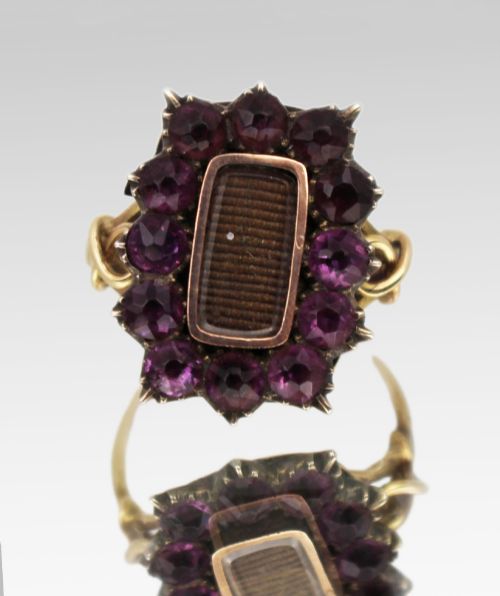
- A sentimental piece inscribed with a Hebrew term signifying an emotional bond between people who are separated. They served as tokens of affection or remembrance.
- Navette ring
- A boat-shaped ring design featuring an elongated pointed silhouette that flatters the finger. This style often houses clusters of diamonds and coloured gemstones.
- Trilogy ring
- A three-stone ring arrangement traditionally representing the past, present, and future. Common Victorian variations pair central diamonds with flanking rubies or sapphires.
Victorian Yellow Gold Ring: Frequently Asked Questions
Can I wear an antique ring every day?
These pieces were built for daily use, utilising durable gold alloys and secure flush or bezel mountings that withstand regular motion.
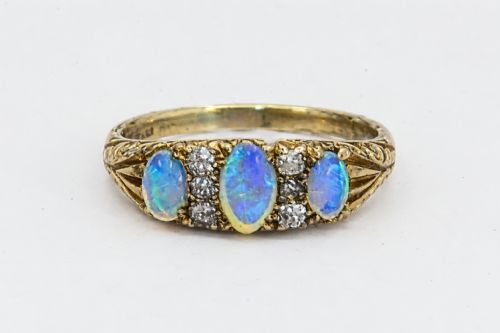
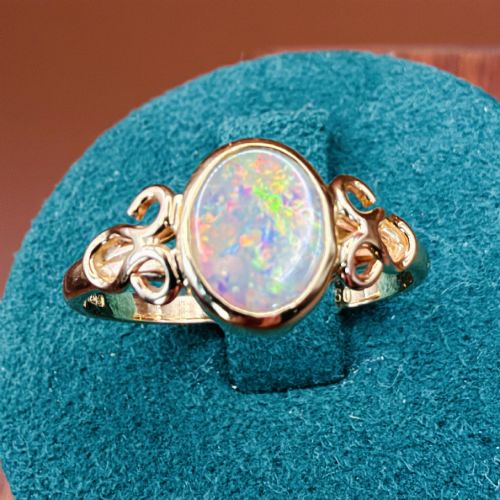
However, delicate gem types like opals or pearls require mindful care and should be removed during heavy physical tasks to prevent surface damage.
How do I know my ring size?
Historical rings frequently arrive in specific nineteenth-century sizes that may differ from contemporary standards. Professional jewellers can measure your finger accurately using standard sizing rods.
Many solid gold bands permit gentle resizing by a skilled bench jeweller, though intricate shank engravings require careful handling.
What do the different gold purities mean?
Victorian jewellery incorporates nine, fifteen, and eighteen-carat gold standards, each offering a distinct hue and durability level. Higher carat values provide a richer yellow colour and greater resistance to tarnishing.
Assay office stamps and date letters stamped inside the band reveal the exact year and location of testing.
How should I clean my antique jewellery?
Warm water, mild soap, and a soft-bristled brush safely remove daily oils from metal surfaces and gemstone pavilions.
Harsh chemical dips and ultrasonic cleaners risk damaging organic materials like pearls or fragile gemstone treatments.