
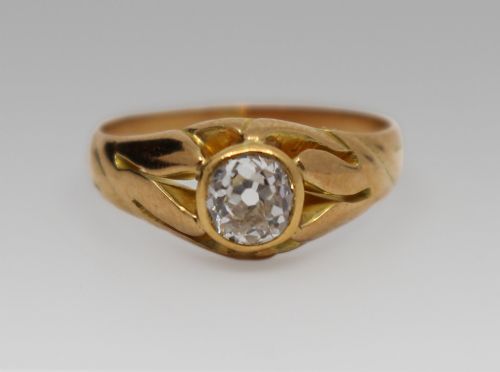
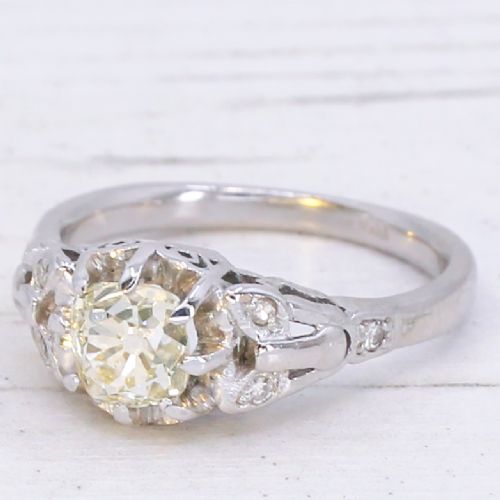
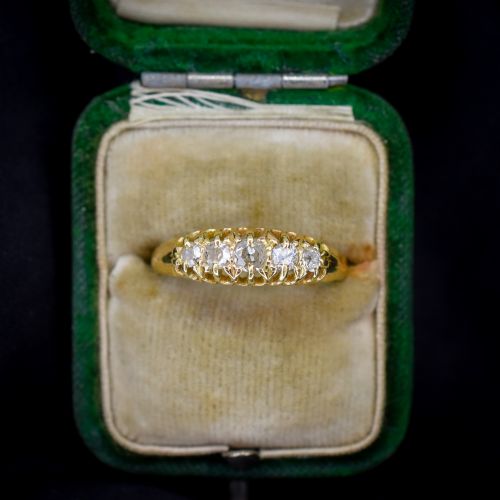
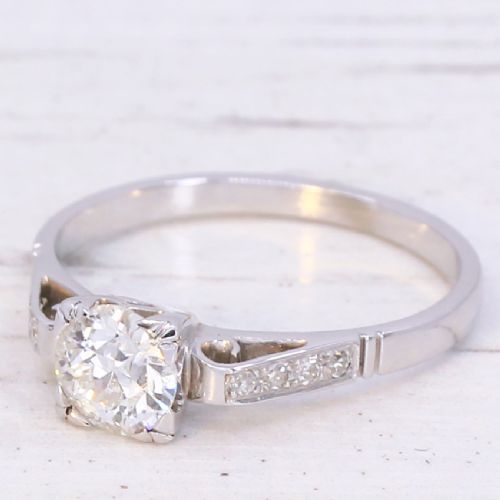

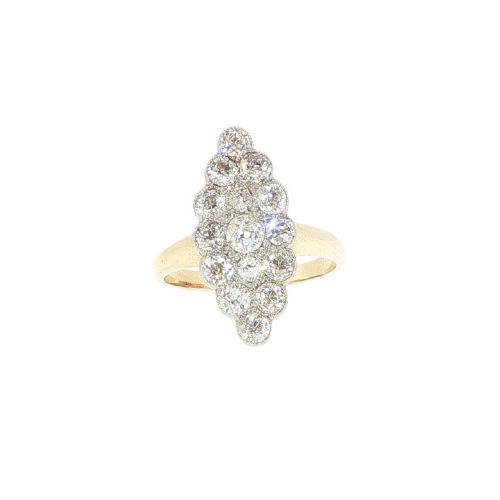
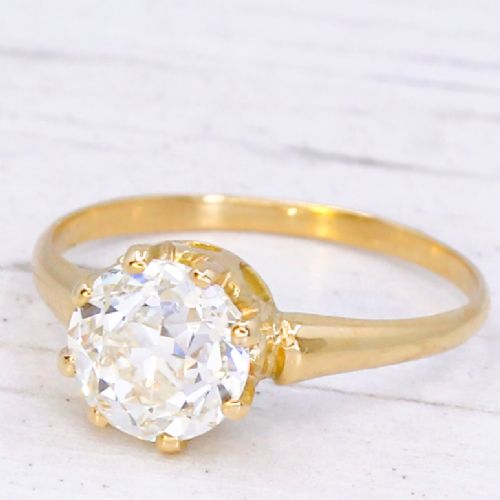

Old European Cut Diamond Ring
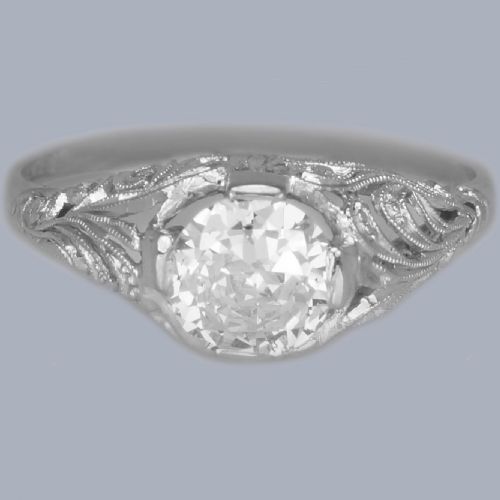
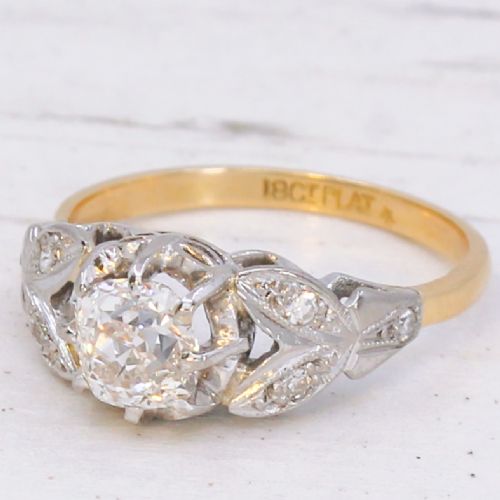
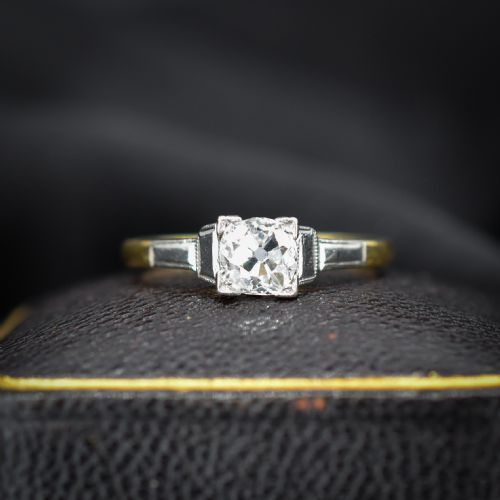
An old european cut diamond ring brings together hand-cut stones and early twentieth-century metalwork, prized for distinct facet patterns and enduring charm.
Old European Cut Diamond Ring
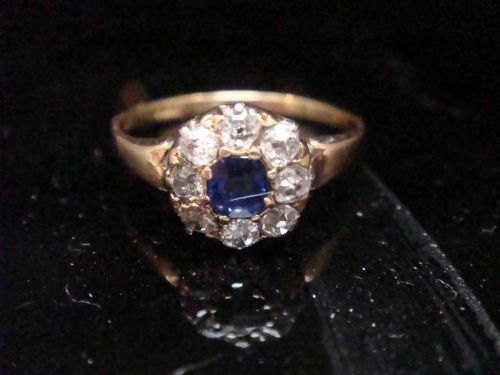
An old european cut diamond ring encompasses styles spanning the Victorian, Edwardian, Art Deco, and mid-century periods, capturing decades of changing design. Pieces frequently emerge as engagement rings, solitaire mounts, or multi-stone arrangements set in precious metals.
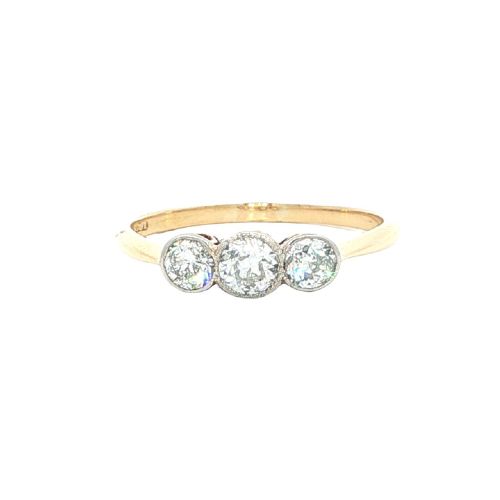
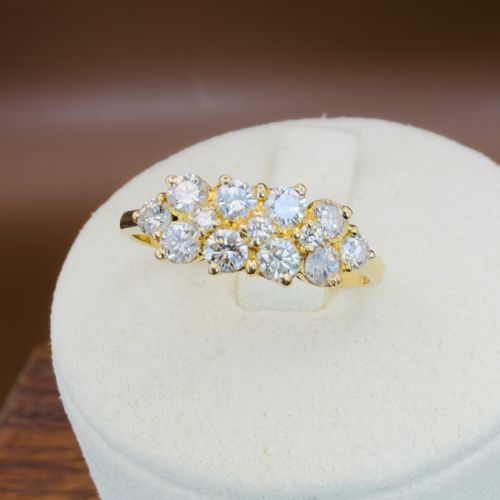
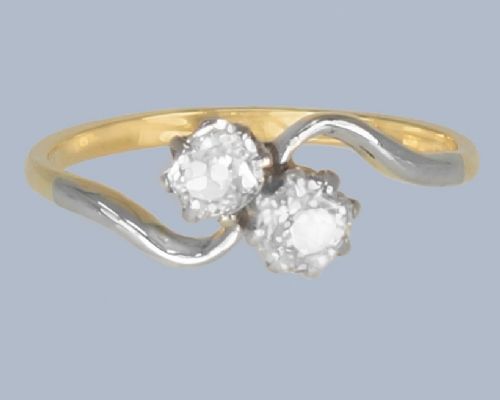
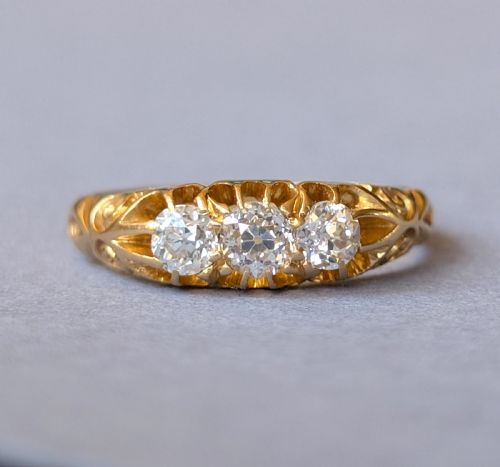
Buyers browsing this selection will frequently encounter Edwardian and Art Deco examples featuring intricate platinum settings alongside eighteen-carat yellow or white gold bands. Configuration types range from simple single-stone rings to complex clusters, five-stone rows, and toi et moi designs.
The stones themselves reflect hand-cutting methods distinct from modern brilliant cuts, exhibiting smaller tables and higher crowns. These rings survive as tangible examples of early twentieth-century jewellery craftsmanship.
How They Were Made
Goldsmiths constructed these mounts predominantly in platinum or eighteen-carat gold, utilising yellow, white, and occasionally twenty-two-carat variations. Platinum gained popularity during the Edwardian and Art Deco eras for its strength, allowing delicate millegrain edges and openwork galleries.
Diamonds were hand-cut with small tables, deep pavilions, and open culets, creating broad facet patterns that catch candlelight effectively. Stones were secured using claw settings, rub-over mounts, or flush gypsy settings depending on the period style.
What Varies in Quality
Quality in these rings rests upon the symmetry and proportions of the hand-cut diamond, alongside the integrity of the surrounding metalwork. Stones possessing balanced facet arrangements and clear material stand apart from simpler examples.
The preservation of original settings, including crisp millegrain detail and unthinned band shanks, determines the overall standard of the piece. Craftsmanship evident in supportive galleries and secure stone seating separates finer workshop output from standard production.
The Old European Cut Diamond Ring Glossary
- Old European Cut
- A round diamond cut prevalent from the late nineteenth century through the mid-twentieth century, characterised by a small table, steep crown, and open culet.
- Millegrain
- A decorative technique featuring a line of tiny raised beads along the edges of a metal setting, common in Edwardian and Art Deco jewellery.
- Gypsy Ring
- A ring style where stones are flush-set directly into a heavy, tapering band of gold or platinum, popular during the late Victorian and Edwardian periods.
- Toi et Moi
- A ring design featuring two main stones positioned side by side, translating from French as you and me.
- Culet
- The small facet or point at the absolute bottom of a gemstone, which is notably open and visible in older hand-cut diamonds.
Old European Cut Diamond Ring: Frequently Asked Questions
How do I care for my ring?
Clean the piece gently using warm soapy water and a soft brush to remove everyday debris from beneath the stone setting.
Avoid wearing the ring during heavy manual work to protect the delicate platinum or gold prongs and older diamond facets from impact.
Can these rings be resized?
Most gold and platinum bands can be adjusted by a skilled jeweller experienced in handling antique settings.
Care must be taken during resizing to preserve original hallmarks and intricate shoulder details unique to the period.
What periods do these rings come from?
The selection includes pieces spanning from the Victorian era through the Edwardian period, Art Deco years, and mid-century designs.
Each era contributes distinct design motifs, ranging from floral clusters to geometric platinum mountings.
What is an open culet?
An open culet is the flat facet at the base of an old european cut diamond, left intentionally by early cutters.
This feature distinguishes vintage stones from modern brilliant cuts, which bring facets to a sharp point at the bottom.