





Victorian Ruby Diamond Ring
A victorian ruby diamond ring combines deep crimson stones with antique cut diamonds in gold or platinum settings.
Victorian Ruby Diamond Ring
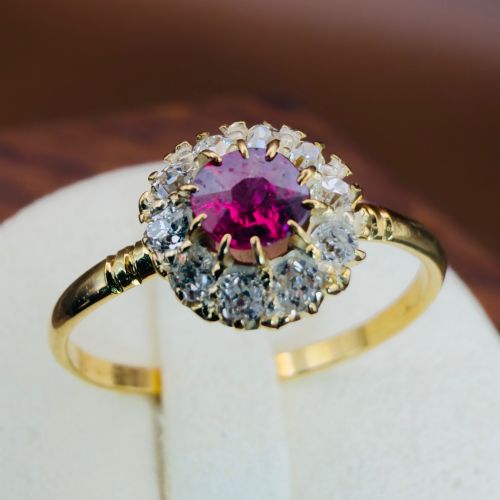
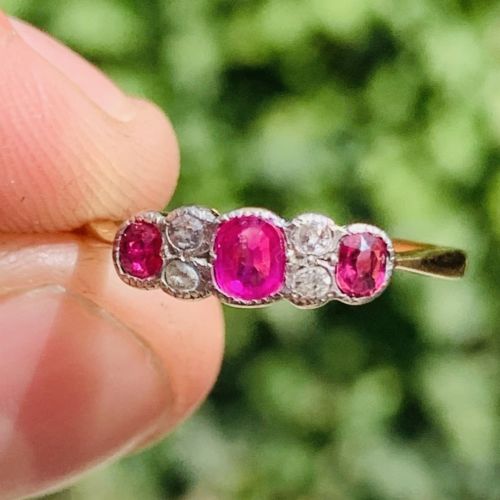
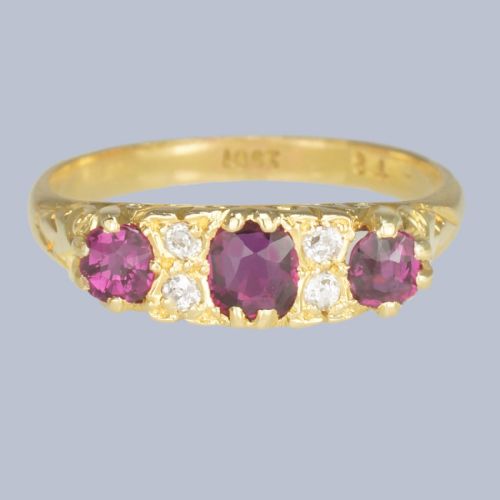
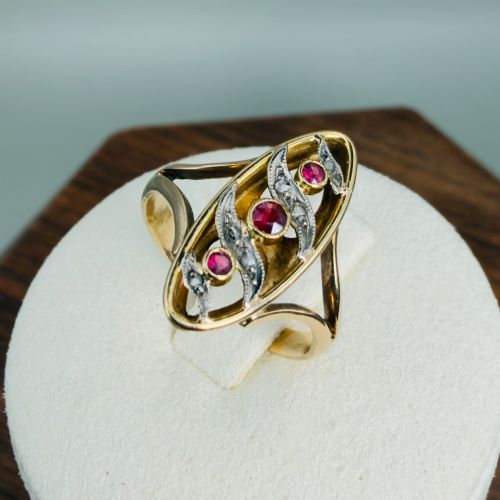
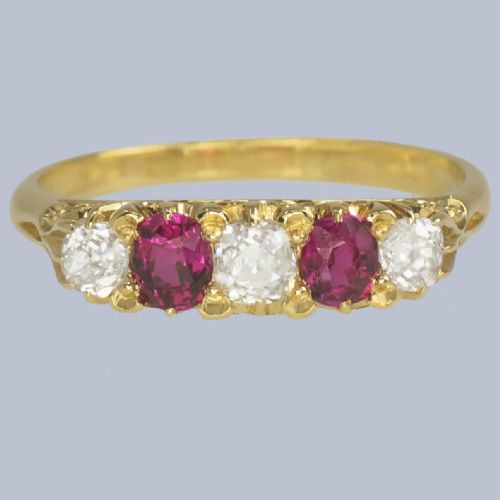
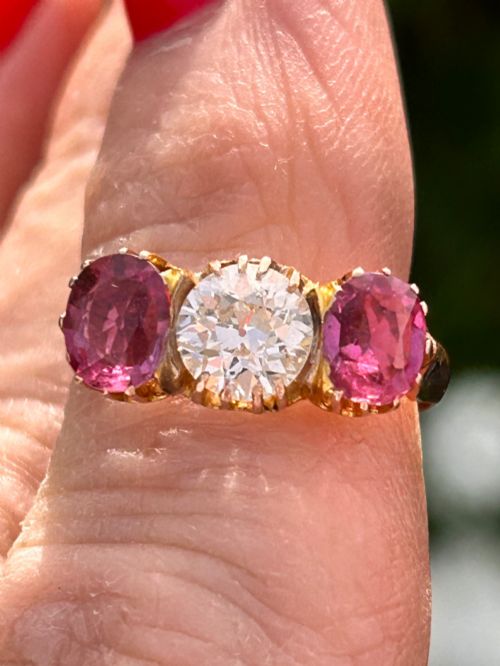
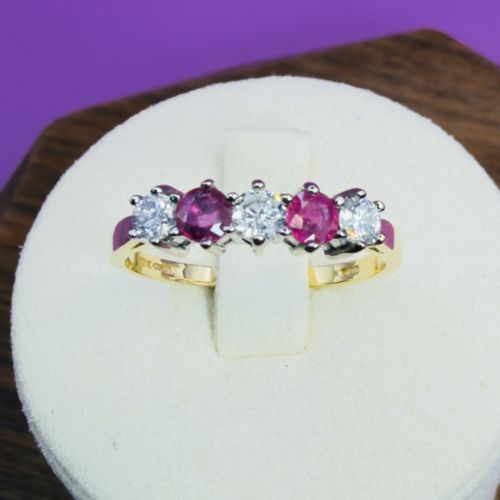
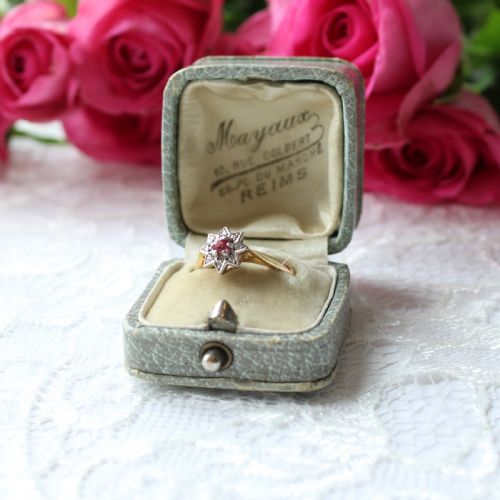
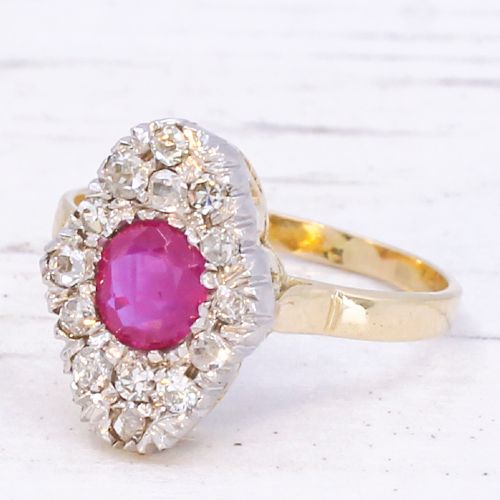
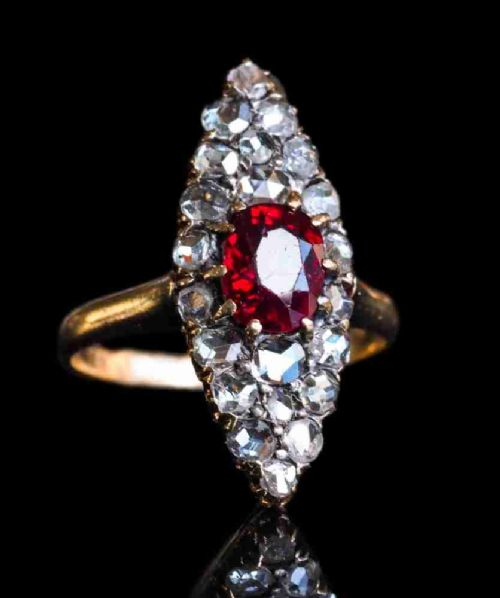
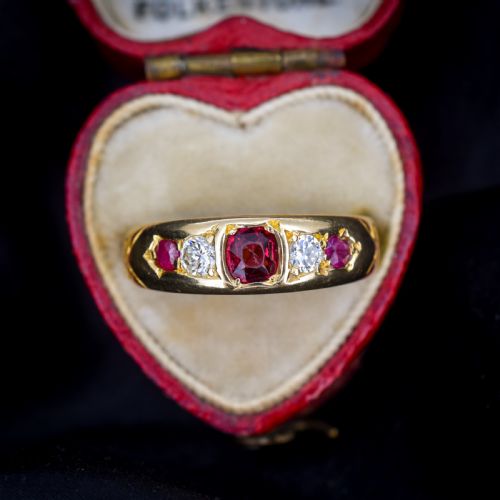
A victorian ruby diamond ring is a piece of fine jewellery created during the nineteenth century or early twentieth century, combining red corundum with diamonds. These rings appear in various forms, including cluster designs, five stone arrangements, gypsy settings, and navette shapes.
The selections span traditional Victorian periods, late Victorian eras, and Edwardian styles, alongside occasional twentieth century examples. Cluster and trilogy configurations dominate the available items, often presenting old mine cut or old rose cut diamonds alongside natural rubies.
Makers and goldsmiths utilised yellow gold, rose gold, and platinum, frequently incorporating hallmarks from Birmingham, Chester, and London. Buyers encounter both delicate stacking bands and substantial dress rings featuring significant carat weights.
Materials and Construction
Goldsmiths worked primarily in eighteen carat yellow gold, fifteen carat gold, and occasionally nine carat gold or platinum to mount the gemstones. Stones were hand-set into claw settings, flush gypsy mountings, or intricate boat shaped clusters.
Diamonds cut during these periods typically display old mine cuts, old rose cuts, or early brilliant cuts with distinctive open culets. Rubies range from unheated Burmese stones to treated varieties, secured alongside diamonds in hand-finished metalwork.
Victorian Ruby Diamond Ring Retail Price Guide 2026
Typical asking prices for victorian ruby diamond ring among the pieces listed under this phrase on Sellingantiques today, from the lower quarter to the upper quarter. They describe what is for sale here now, not the wider market.
Listings feature yellow gold, rose gold, platinum, and silver across Victorian, Edwardian, and twentieth century periods.
Factors of Quality
Quality depends on the origin and treatment of the ruby, with natural unheated stones commanding higher regard than synthetic alternatives. Diamond cut and clarity also influence the piece, particularly the hand-faceting quality of old cut stones.
The integrity of the metalwork, clarity of British hallmarks, and originality of the setting dictate overall value. Retaining original claws and secure band thickness without excessive wear separates superior examples from heavily altered pieces.
The Victorian Ruby Diamond Ring Glossary
- Navette
- A boat-shaped ring setting that tapers to points at either end. This elongated design sits horizontally across the finger.
- Gypsy setting
- A mounting style where the gemstone is flush-set directly into the thick gold band. The metal is burnished around the girdle of the stone.
- Old mine cut
- An early diamond cut characterised by a cushion shape, high crown, small table, and large open culet. These stones were cut by hand before modern machinery.
- Trilogy
- A ring featuring three principal gemstones, often representing the past, present and future. These stones are typically graduated in size or matched equally.
- Halo cluster
- A central gemstone surrounded by a ring of smaller accent stones. In these pieces, a ruby centre is frequently encircled by diamonds.
Victorian Ruby Diamond Ring: Frequently Asked Questions
How do I care for my ring?
Clean your jewellery gently using warm soapy water and a soft brush, avoiding harsh ultrasonic cleaners that might damage antique settings.
Store the piece separately in a fabric-lined box to prevent scratches between the harder diamond and softer ruby stones.
Are the rubies natural?
Many listings specify natural or unheated stones originating from regions like Burma or Ceylon, though synthetic varieties also exist in period pieces.
Examining the internal inclusions under magnification helps determine the natural origin of these crimson gemstones.
How can I date the ring?
British hallmarking stamped inside the shank often provides specific assay office symbols and date letters for Birmingham, Chester, or London.
Stylistic elements like old mine cuts and navette shapes also help narrow down the manufacturing period to the Victorian or Edwardian eras.