


Edwardian Navette Ring
An edwardian navette ring offers an elongated boat shape set with diamonds and gems, prized for sitting long along the finger.
Edwardian Navette Ring
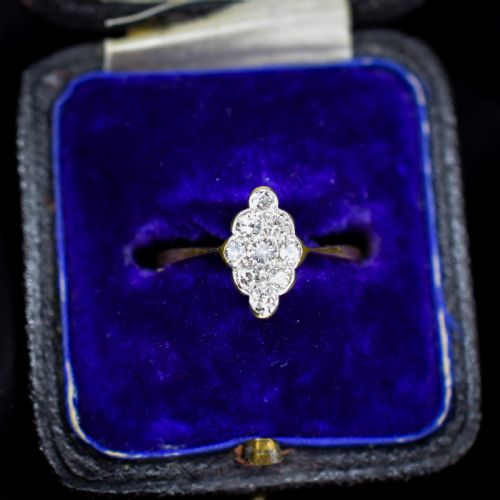
An edwardian navette ring is defined by its characteristic boat or marquise shape, stretching lengthwise along the finger to create a striking profile. These pieces emerge predominantly from the Edwardian era, alongside related examples spanning the Victorian and Art Deco periods.
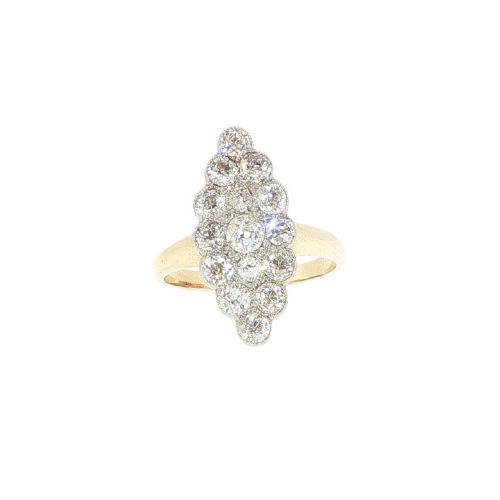
The most common form found here pairs a cluster of old cut diamonds with a platinum top mounted on an 18ct yellow or white gold shank. Gems such as emerald, sapphire, ruby, pearl and turquoise also appear as central stones or accent clusters within the elongated framework.
Materials and construction
Goldsmiths of the period combined 18ct gold, sometimes 9ct or 15ct, with the rising popularity of platinum to fabricate these intricate frames. Platinum allowed workshops to form delicate millegrain edges and secure stones closely without heavy metal bulk.
Diamonds cut as old mine, old European, rose or single cuts are set alongside calibrated sapphires, emeralds and rubies. The stones are arranged in cluster formations that follow the curved, pointed contours of the navette outline.
Edwardian Navette Ring Retail Price Guide 2026
Typical asking prices for edwardian navette ring among the pieces listed under this phrase on Sellingantiques today, from the lower quarter to the upper quarter. They describe what is for sale here now, not the wider market.
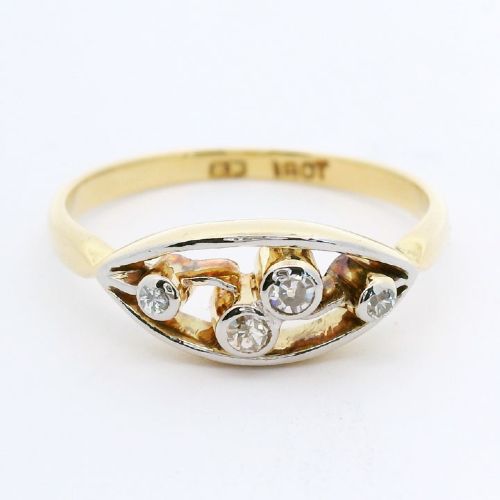
Several pieces combine unexpected materials like pearls and turquoise into the elongated boat silhouette.
What separates the best from the rest
Quality rests on the precision of the piercing and the fineness of the metalwork, particularly where platinum meets gold in the gallery. Crisp millegrain work and well-matched, lively old cut diamonds elevate an example above standard production.
The integrity of the elongated navette setting dictates long-term wearability, as finer points require robust construction to avoid distortion. Original stone retention and minimal thinning to the shank separate well-preserved specimens from heavily altered pieces.
The Edwardian Navette Ring Glossary
- Navette
- A boat-shaped or marquise gemstone setting that tapers to points at both ends. It creates an elongated silhouette across the hand.
- Millegrain
- A decorative technique featuring a row of tiny raised metal beads along the edges of a setting. This finish is typical of Edwardian and Art Deco jewellery.
- Old Cut Diamond
- A hand-faceted diamond cut before modern machine precision, featuring a smaller table and higher crown. These stones exhibit a distinctive soft scintillation under candlelight.
- Cluster Ring
- A ring design where a central stone is surrounded by a group of smaller gems. In these pieces, the cluster follows the boat-shaped outline.
Edwardian Navette Ring: Frequently Asked Questions
How do I wear an edwardian navette ring daily?
Because of the elongated shape, consider ring placement alongside other bands to prevent the tapered ends from catching on clothing.
Regular checks by a jeweller ensure the platinum prongs and millegrain edges hold the old cut diamonds securely during routine wear.
What is the difference between navette and marquise?
Both terms describe the same boat-shaped profile tapering to two points, though navette is frequently used for cluster designs set with multiple small stones.
Single-stone elongated gems are often called marquise, while multi-stone boat configurations carry the navette description.
Can I date these rings by their metal?
The presence of platinum combined with yellow gold often points toward the Edwardian era when platinum mounting techniques gained widespread favour.
Earlier pieces rely entirely on gold standards such as 18ct or 9ct, while later twentieth-century examples incorporate white gold.
What gemstones besides diamonds appear in these rings?
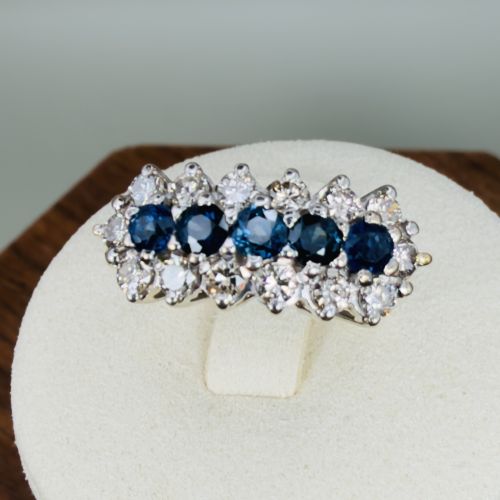
Sapphires, emeralds and rubies frequently serve as central accents or contrasting colour elements within the diamond cluster.
Examples also incorporate pearls, turquoise and opal set into the distinctive boat-shaped gold and platinum frames.