
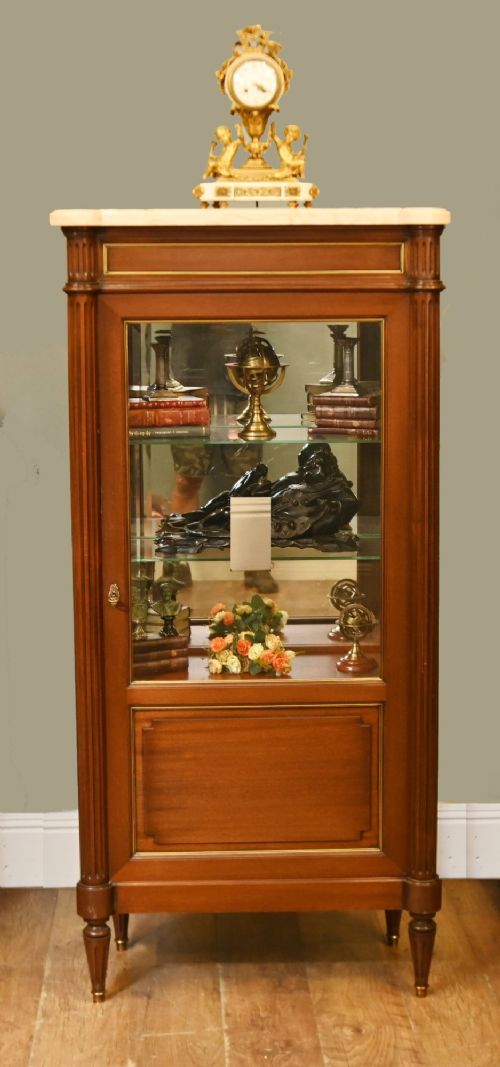
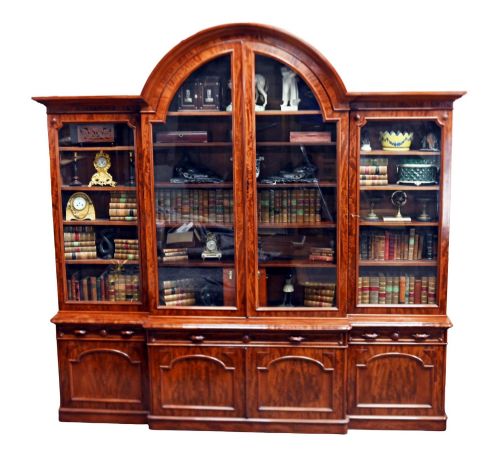
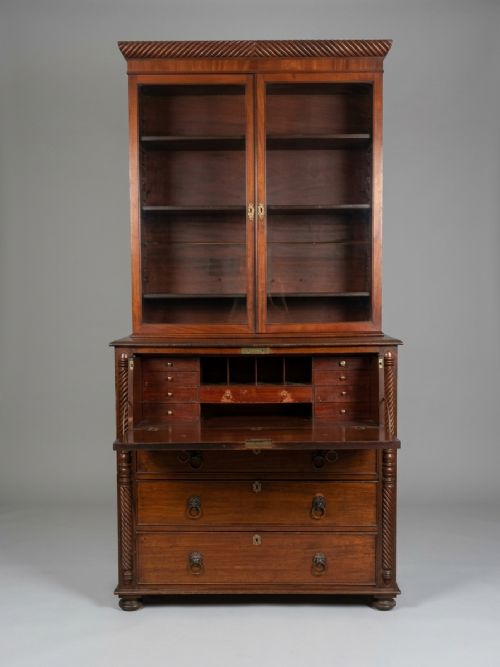
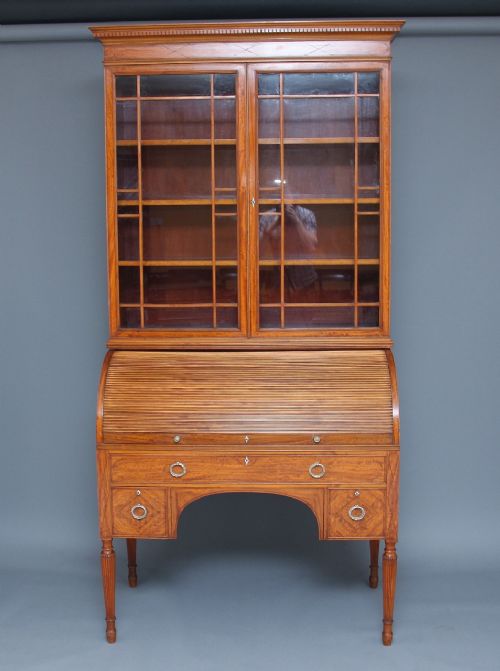
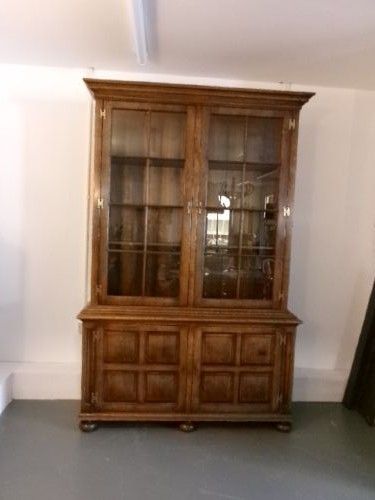
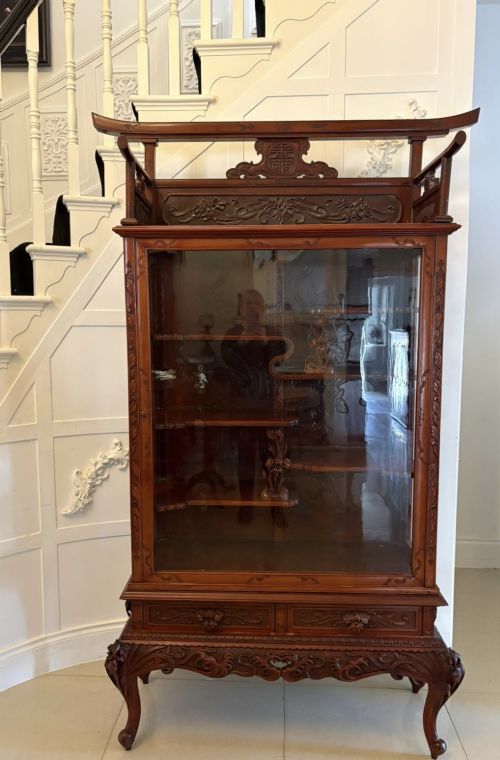
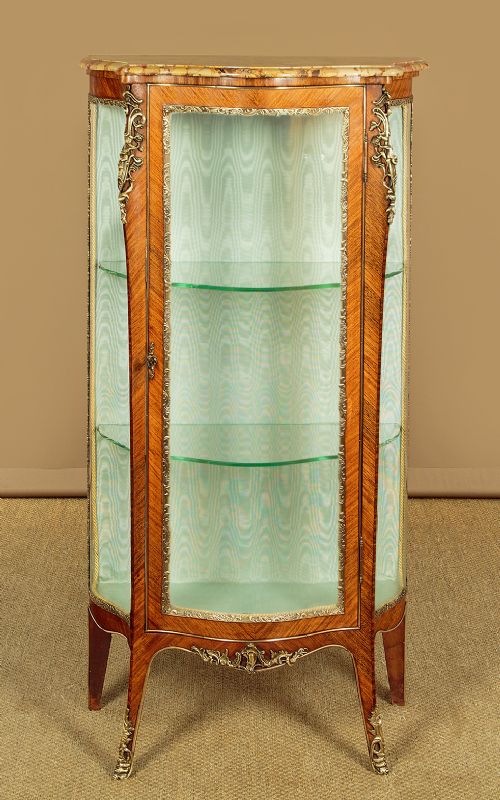
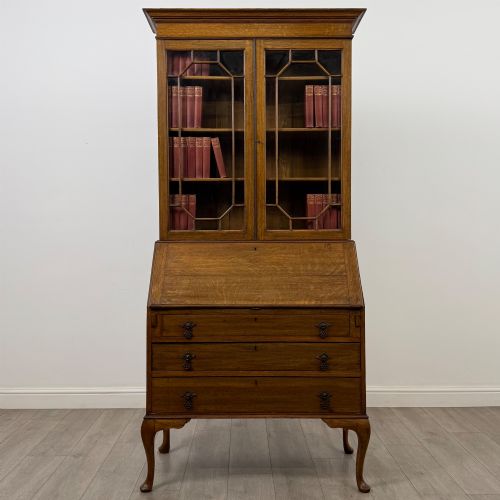

Glazed Top Bookcase
These pieces unite a functional bookcase with a glazed top cabinet to display volumes and protect fine bindings behind glass.
Glazed Top Bookcase
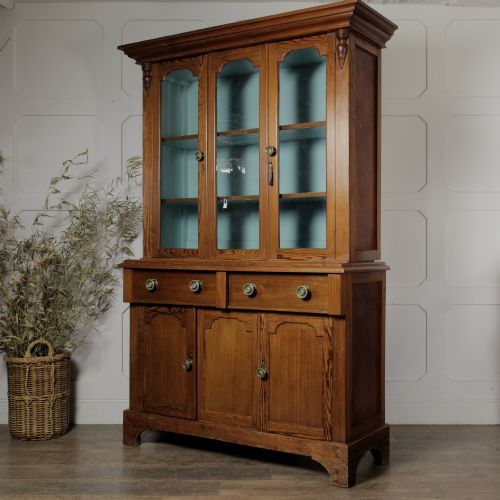
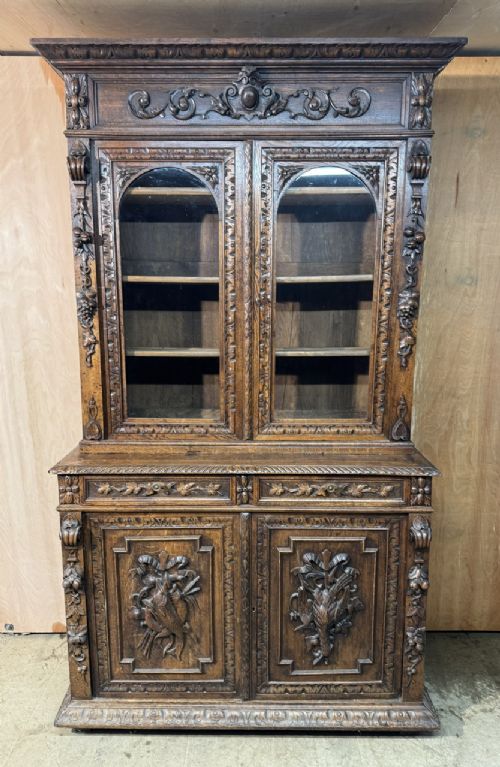
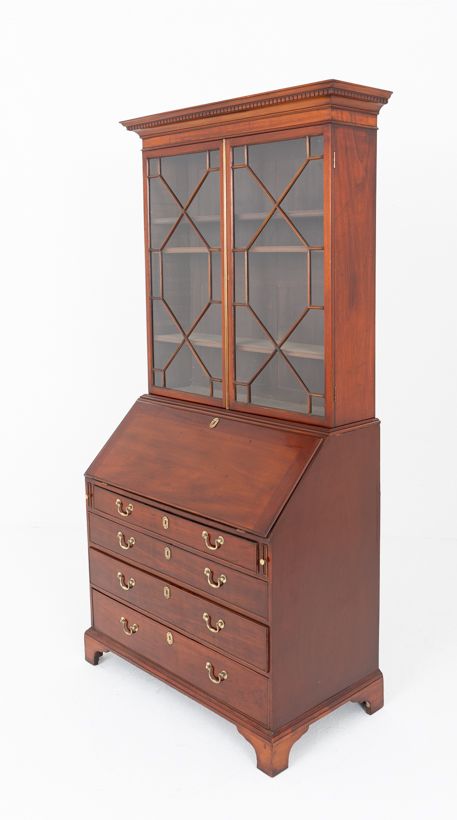
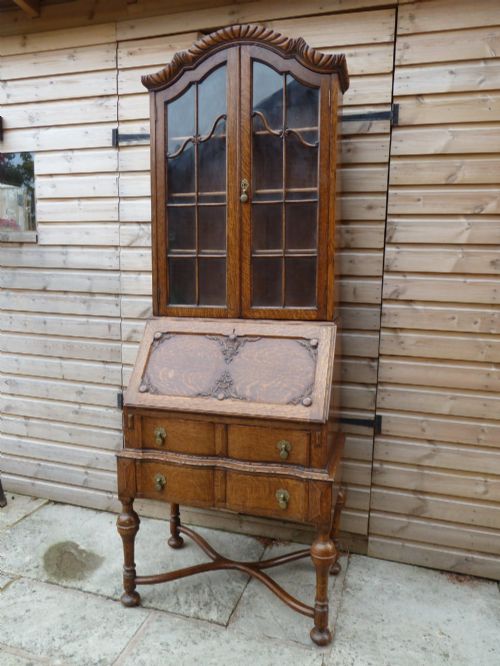
A glazed top bookcase combines upper shelving enclosed by glass doors with a lower section built for storage or writing. These hybrid cabinets evolved to keep valuable libraries clean from dust and soot while offering a clear view of the contents.
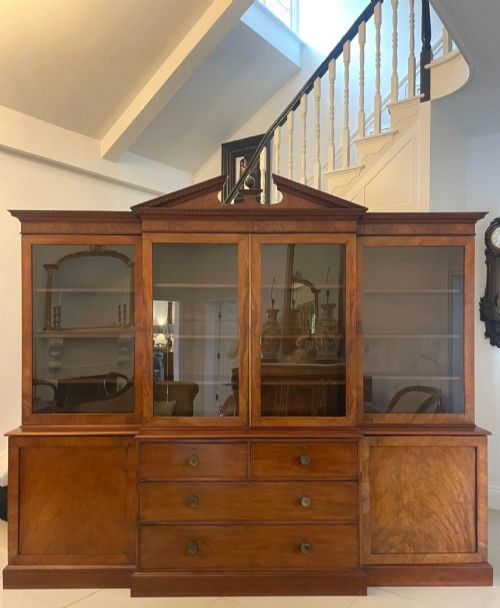
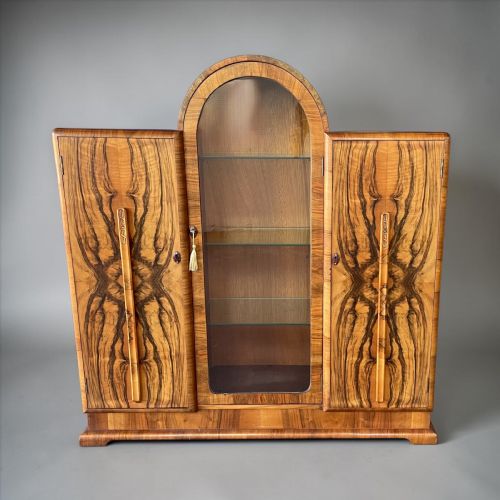
The pieces appearing most frequently range from Georgian and Victorian mahogany iterations to Edwardian and later oak variations. They cross multiple formats, including bureau bookcases with drop-down desks, two-piece library cupboards, and tall display cabinets.
How they were made
Cabinet makers relied primarily on mahogany, oak, and walnut, often employing satinwood and pine for secondary or decorative elements. Timber selection dictated the structural integrity, with dense hardwoods providing durable frames for heavy glass doors.
Glass production and framing required precise joinery, utilising individual timber glazing bars to create astragal patterns. Brass hardware, including hinges, handles, and candle slides, functioned alongside inlaid veneers and carved mouldings to finish the exterior surfaces.
What varies in quality
Construction standards depend on the choice of timber figurations and the precision of the cabinet maker's joinery. Superior examples display carefully matched veneers, original glass panes, and well-balanced proportions between the upper glazed cabinet and the base.
The refinement of the internal fittings, such as adjustable shelving, integrated candle slides, and fitted desk interiors, separates standard utility items from exceptional workshop commissions. Original hardware and intact keys further distinguish the better preserved specimens.
Tudor and Burrey·Edwards and Roberts·Robert West
The Glazed Top Bookcase Glossary
- Astragal
- Timber mouldings that divide a glass window into smaller panes within a glazed door. These fine strips shape the visual grid of the upper cabinet.
- Bureau bookcase
- A combination of a sloping writing desk and an upper shelving unit enclosed by glass. The fold-down flap reveals small drawers and pigeonholes.
- Cylinder bookcase
- A writing cabinet featuring a rolling curved wooden shutter that conceals a fitted interior. It merges desk functionality with a glazed upper bookcase.
- Vitrine
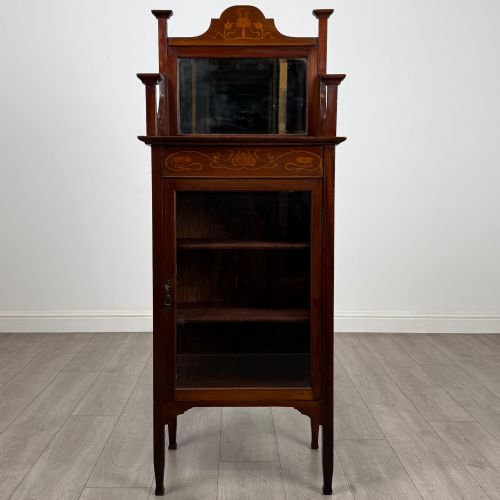
- A glass-sided display cabinet designed primarily for showing porcelain and objects rather than books. It frequently exhibits lighter proportions and delicate legs.
- Breakfront
- A large cabinet facade where the central section projects forward from the flanking wings. This architectural arrangement creates depth and structural presence.
Glazed Top Bookcase: Frequently Asked Questions
How were glazed top bookcases used?
Owners stored valuable libraries and sensitive volumes behind protective glass to prevent dust accumulation and moisture damage.
Many examples incorporated lower bureau desks or drawers, allowing the cabinet to function simultaneously as a writing station and a reading repository.
How do I live with one?
Position the piece away from direct sunlight and sudden temperature shifts to protect aged timber veneers and historic glass.
Ensure the room has stable humidity levels so the large wooden doors and drawers continue to open smoothly without binding.
How do I tell periods apart?
Georgian iterations often display refined astragal glazing bars and fine mahogany or satinwood veneers with bracket feet.
Victorian and Edwardian versions tend to feature heavier proportions, darker oak or walnut timbers, and more substantial carved ornamentation.
Are the shelves adjustable?
Many traditional library cabinets feature adjustable wooden shelving supported by rack-and-pinion systems or wooden fillets.
This adaptability allowed owners to alter the internal height clearances to accommodate varying book sizes.