


Biedermeier Secretaire Cabinet
These biedermeier secretaire cabinet examples offer practical writing spaces combined with concealed drawers, bringing clean continental lines into the study.
Biedermeier Secretaire Cabinet
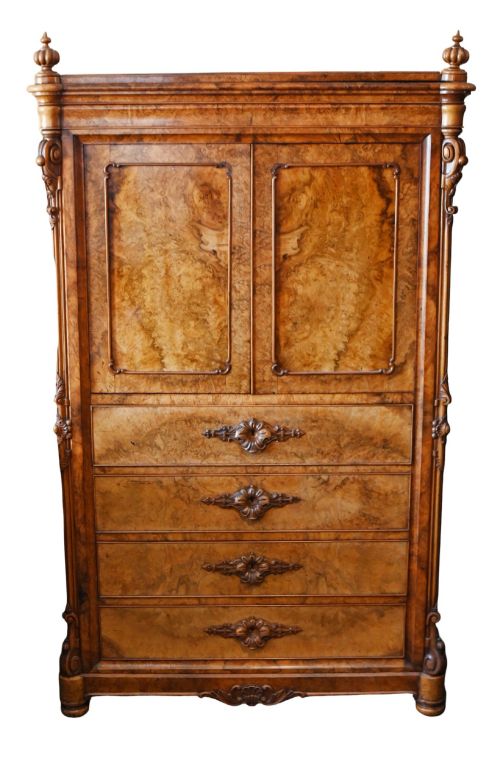
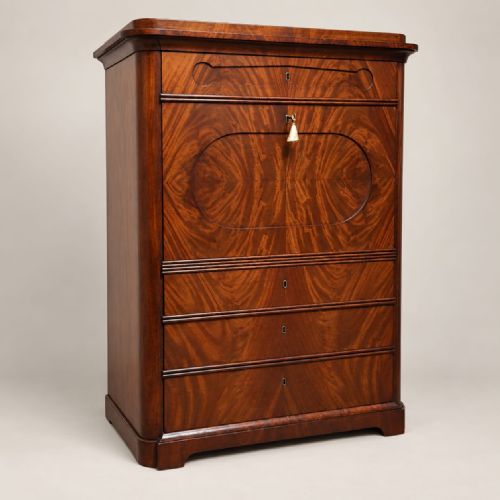
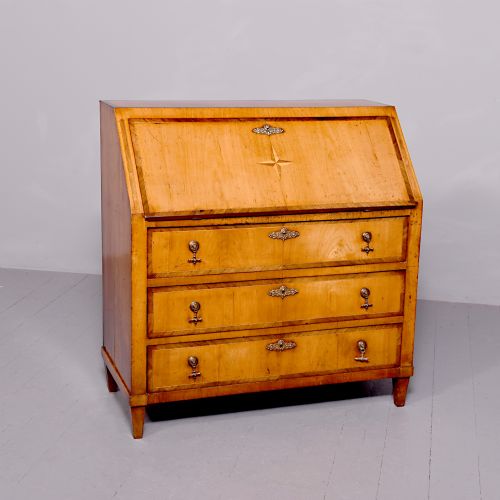
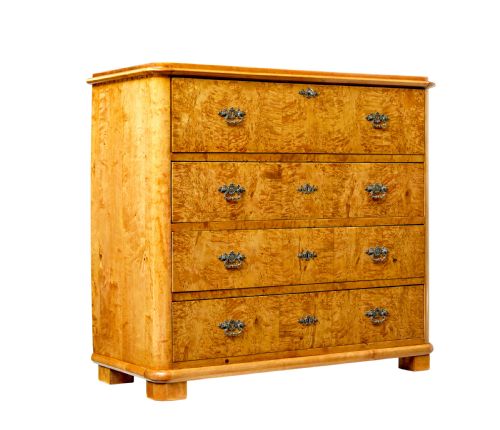
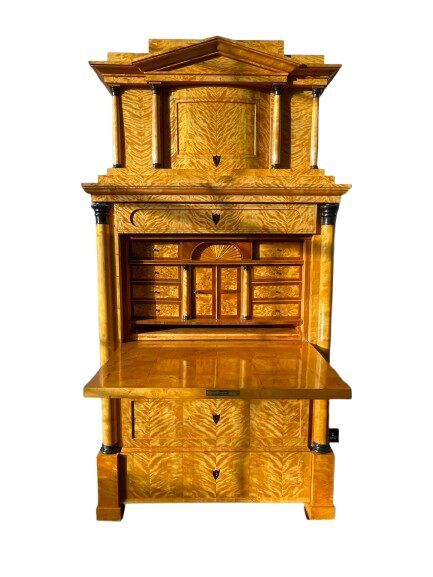
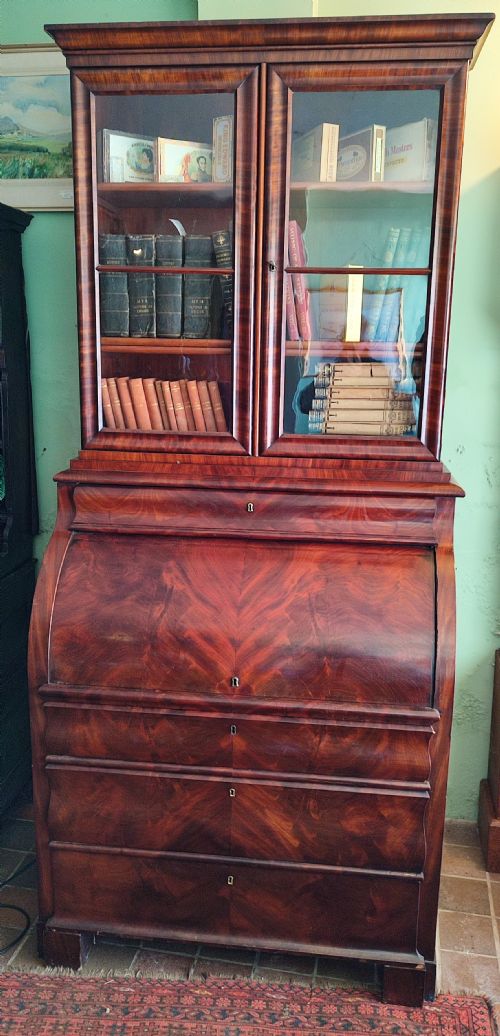
A biedermeier secretaire cabinet is a form of writing furniture emerging from nineteenth century continental Europe, combining drawer storage with a fall front or cylinder desk. The examples seen on this page span desks, bureaux, secretaire chests of drawers, and bureau bookcases.
Buyers will encounter various formats including the upright secretaire a abattant, cylinder bureau bookcases, and low commodes with fitted writing compartments. These pieces function primarily as working desks while keeping correspondence and papers neatly concealed behind closed doors.
Origins stretch across nineteenth century workshops, with specific pieces noting Swedish manufacture alongside broader continental styles. The form balances architectural presence with domestic utility, making it a focal point in a study or drawing room.
What varies in quality
Quality separates pieces through the selection and matching of veneers, where burr birch or figured mahogany displays intricate grain patterns across the front drawers and fall flap. Finer examples maintain crisp architectural proportions and well executed brass mounts or ebonised accents.
The interior fitments of the writing compartment dictate the grade of the piece, with complex small drawers and secret compartments showing higher craftsmanship. The integrity of the underlying construction and the preservation of the original surface finish separate standard utility desks from superior cabinet work.
Listings demonstrate wood selections spanning mahogany, walnut, rosewood, and birch veneer alongside pine structures.
The Biedermeier Secretaire Cabinet Glossary
- Secretaire a abattant
- A tall upright cabinet featuring a hinged writing flap that drops down to form a desk surface. This format conceals a fitted interior of small drawers and pigeonholes.
- Escritoire
- A writing cabinet or desk used for correspondence and paperwork. The term often describes upright biedermeier forms with fall front writing surfaces.
- Veneer
- A thin layer of decorative wood applied to a base timber such as pine. Cabinet makers selected burr birch and mahogany for their striking visual grain.
- Ebonised
- Wood treated to resemble ebony, creating dark contrasting borders or structural elements. This finish appears frequently on nineteenth century continental pieces.
- Bureau bookcase
- A combination of a writing desk base and upper shelving enclosed by doors. These taller pieces provide both display space and concealed working areas.
Biedermeier Secretaire Cabinet: Frequently Asked Questions
How do I use a secretaire cabinet today?
The drop down writing flap provides a functional surface for a laptop or notebook while keeping modern clutter hidden when closed. Internal compartments organise stationery and small items efficiently.
Position the cabinet in a study or living room where the depth of the piece allows the fall front to open fully without obstruction.
How do I care for nineteenth century veneer?
Keep the wood away from direct sunlight and radiators to prevent the birch or mahogany veneer from drying out and lifting. Regular dusting with a dry cloth maintains the surface.
Apply specialist wax sparingly when the wood appears dry, avoiding modern silicon polishes that damage antique finishes.
Where were these cabinets made?
Production centres across nineteenth century continental Europe, with Swedish workshops contributing distinct examples utilising masur and burr birch timbers. The style reflects a regional shift toward domestic comfort and restrained neoclassical lines.
Different areas favoured specific local hardwoods alongside imported mahogany, creating regional variations in tone and grain.