
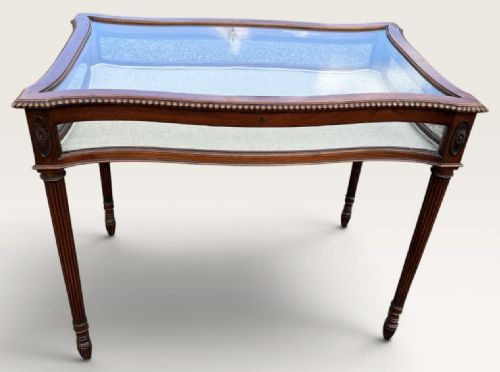
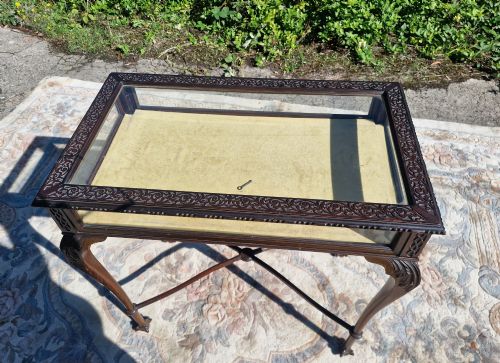
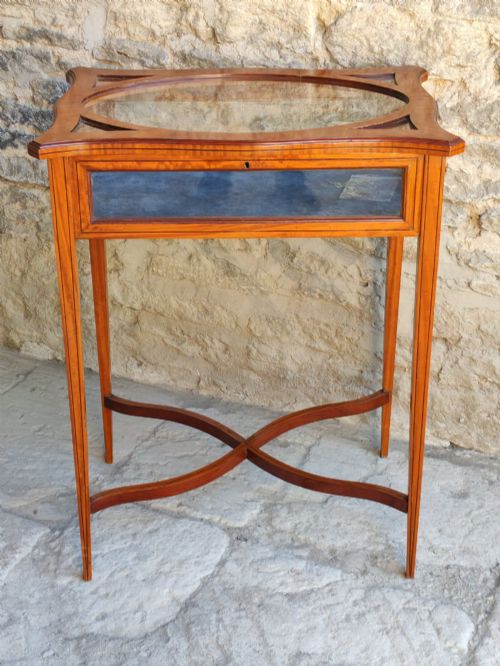
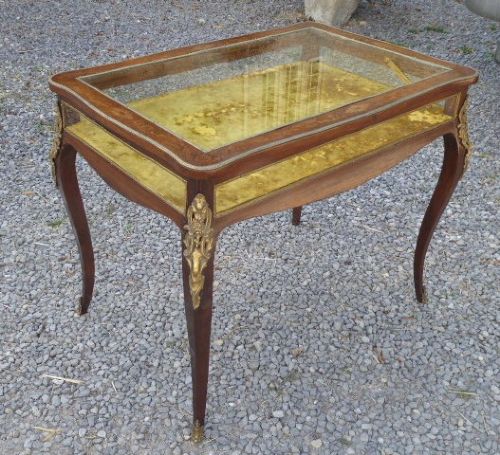
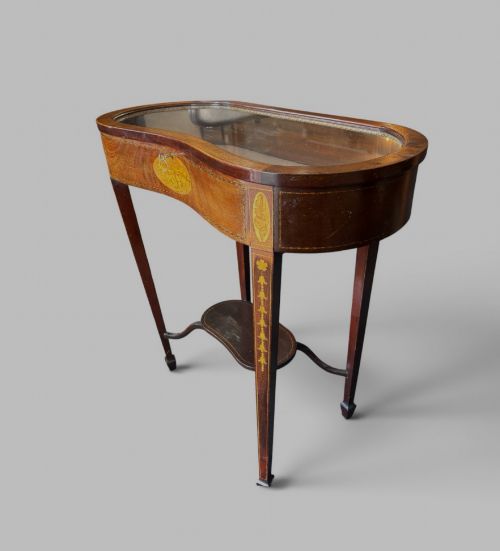


Glazed Shadow Box Table
A glazed shadow box table protects personal treasures under glass while lifting them into view.
Glazed Shadow Box Table
A glazed shadow box table serves as a vitrine and display surface combined, holding collections beneath a transparent lid. When searching for a glazed shadow box table, buyers encounter formats known historically as bijouterie tables or display cabinets.
The selection ranges across Victorian, Edwardian, and nineteenth-century periods, with Edwardian mahogany examples appearing most frequently. Makers shaped these pieces into rectangular, serpentine, kidney, and octagonal forms to suit formal drawing rooms.
Construction and materials
Carpenters constructed the frames primarily in mahogany, satinwood, and kingwood, often applying marquetry or inlay for decorative contrast. Glass panels form the glazed tops and sides, allowing light to illuminate the interior compartment.
Metal mounts in brass and ormolu edge the glazed sections, while interior beds frequently feature linings of fabric, velvet, or silk. French workshops and British cabinetmakers utilised these combined elements to create secure display furniture.
Listings span the Victorian and Edwardian periods, featuring display forms executed in mahogany, satinwood, kingwood, and rosewood.
Distinctions in quality
Finer examples distinguish themselves through the precision of their timber inlays, the complexity of shaped mouldings like serpentine curves, and the crispness of brass or ormolu mounts. The choice of cabinet woods, such as figured satinwood or rich kingwood, dictates the visual weight of the piece.
Superior construction ensures that glazed lids operate smoothly on their hinges and that internal velvet or fabric linings complement the interior framing. Less elaborate versions rely on plain mahogany frames without marquetry or metal ornamentation.
The Glazed Shadow Box Table Glossary
- Bijouterie table
- A glazed display table designed specifically for small ornaments, medals, and jewellery. These pieces elevate collections to eye level in a drawing room.
- Ormolu
- Gilded bronze mounts applied to furniture edges and legs. French cabinetmakers used ormolu to highlight the contours of nineteenth-century display tables.
- Marquetry
- Decorative wood veneers arranged in pictorial or geometric patterns. Craftsmen inlaid contrasting timbers like satinwood into mahogany bases.
- Serpentine shape
- A curved outline featuring a convex centre flanked by concave ends. This undulating form appears on advanced display table designs.
- Vitrine
- A glass-fronted or glass-topped cabinet for displaying objects. The term covers both upright cabinets and low shadow box tables.
Glazed Shadow Box Table: Frequently Asked Questions
What is a glazed shadow box table used for?
These tables provide a secure, dust-free enclosure under glass for exhibiting small collections such as pocket watches, coins, and miniatures.
At the same time, the solid top surface remains available for everyday use as a small occasional table in a reception room.
How do I identify an Edwardian display table?
Edwardian pieces, dating from roughly the start of the twentieth century, frequently employ lightweight mahogany frames with delicate satinwood stringing and inlay.
They often feature tapered legs and lighter proportions than their heavier Victorian predecessors.
Are French and British tables different?
French examples from the nineteenth century often incorporate flamboyant ormolu mounts, kidney shapes, and French Revival styles influenced by Louis XV and Louis XVI designs.
British versions tend to follow restrained Edwardian or Victorian lines, prioritising inlaid mahogany marquetry over cast metal decoration.
How do I care for the interior velvet lining?
Protect the fabric lining from direct sunlight to prevent fading of the original velvet, silk, or plush surfaces over time.
Gentle surface dusting with a soft brush helps maintain the interior without disturbing delicate items placed inside.