




Glazed Porcelain Lamps
Glazed porcelain lamps bring weight, colour and texture to a room, bridging centuries of craftsmanship from European kilns and Chinese export houses.
Glazed Porcelain Lamps
When searching for glazed porcelain lamps, a buyer encounters a diverse range of objects originating largely from nineteenth-century Europe and China.
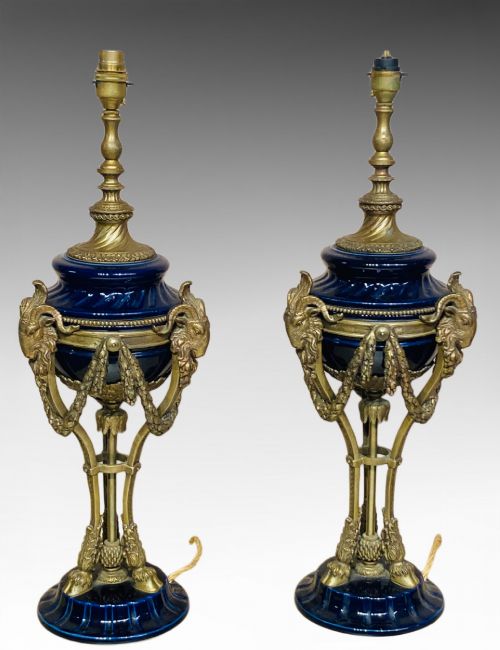
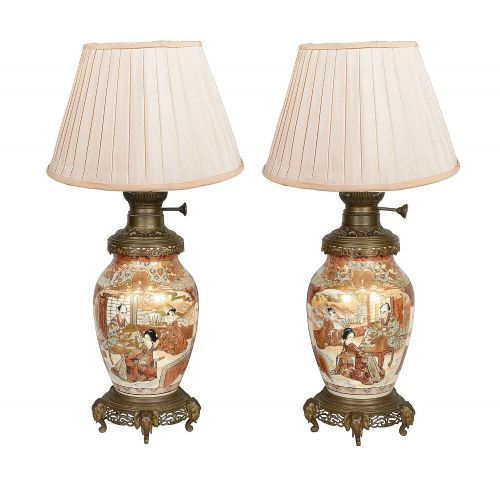
The inventory on this page consists predominantly of table lamps and oil lamps created from converted antique vessels, including ginger jars, baluster vases and lidded urns.
Pieces span several periods, from eighteenth-century examples to Edwardian and Art Deco creations, reflecting distinct stylistic shifts in ceramic decoration.
Materials and construction
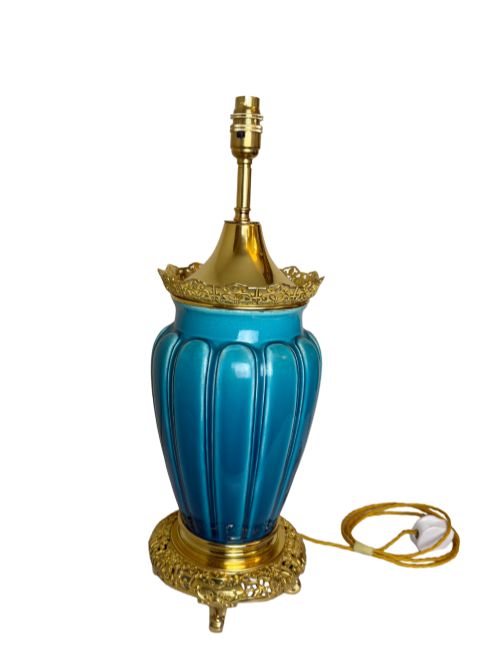
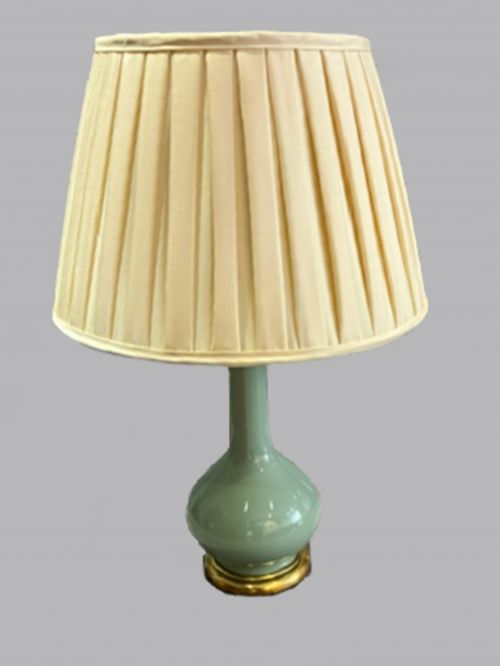
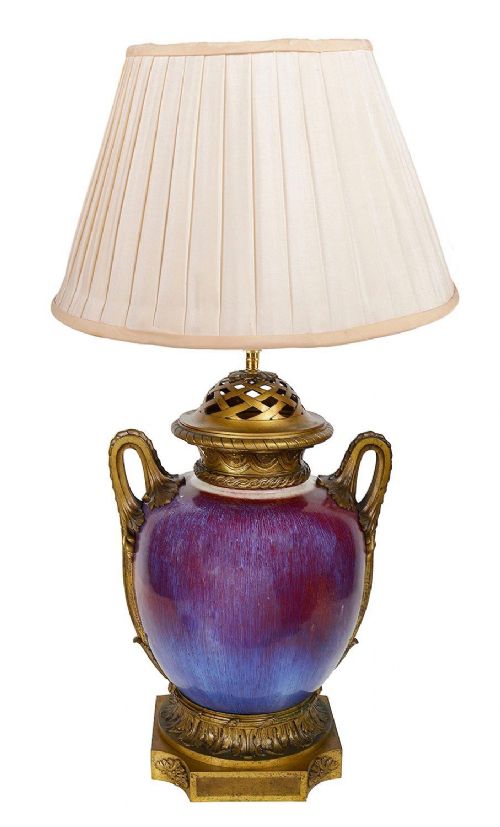
The primary bodies are formed from fired ceramic clay coated in coloured glazes such as celadon, turquoise, blue and white, and sang de boeuf.
Many of these porcelain bodies are mounted with brass, gilt bronze, or ormolu mounts that provide structural support and decorative framing.
Older vessels frequently show evidence of later conversion, where historical vases or oil lamps have been adapted to house modern electrical components.
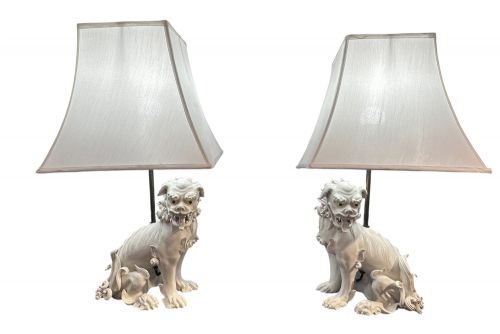
A German porcelain Spitz dog gazes out from the collection alongside grand Chinese vases and French perfume lamps.
Factors that distinguish quality
Quality rests significantly on the depth and richness of the ceramic glaze, alongside the crispness of hand-painted details and overall condition of the porcelain body.
The integration of metal mounts, whether gilt bronze or brass, determines the refinement of the piece; superior examples display cast detailing that complements the ceramic contours.
Purity of form and the historical integrity of the converted vessel heavily influence the standing of an individual lamp within the wider market.
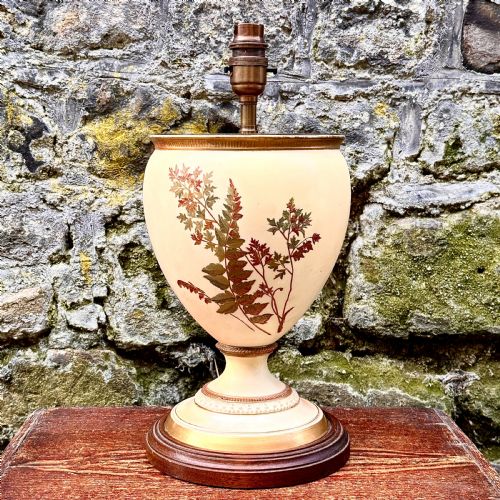
Royal Worcester·Argilor Paris
The Glazed Porcelain Lamps Glossary
- Sang de boeuf
- A rich copper-red oxblood glaze highly prized for its vibrant tone and mottled depth. It originates from traditional Chinese ceramic techniques.
- Ormolu
- Gilded bronze ornamentation applied to furniture and lighting. It provides a bright metallic contrast to the smooth porcelain body.
- Baluster
- A jar or vase form characterised by a bulbous lower portion tapering towards a narrow neck. This shape forms the body of many antique table lamps.
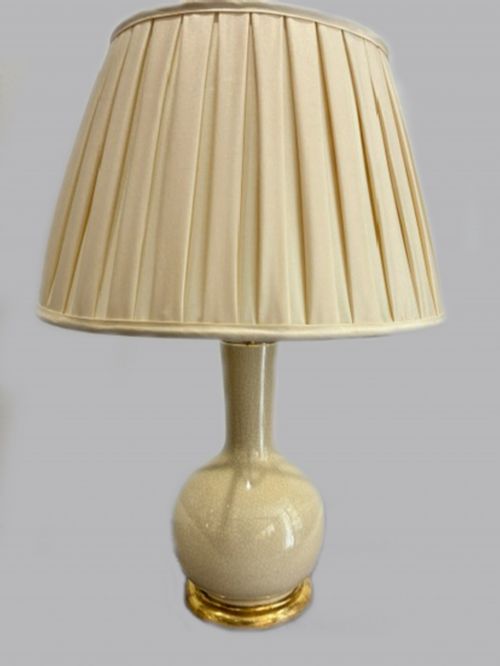
- Crackelware
- Pottery featuring a network of fine decorative cracks intentionally formed in the glaze during cooling. It appears frequently on nineteenth-century Chinese export pieces.
Glazed Porcelain Lamps: Frequently Asked Questions
What are glazed porcelain lamps?
These pieces are decorative lighting fixtures formed from ceramic vessels, frequently created by mounting historical vases or oil lamps onto stable bases.
They combine functional illumination with centuries of international ceramic design, ranging from monochrome Chinese glazes to European figural works.
How were these lamps used?
Historically, many of these bodies served as domestic oil lamps, ginger jars, or decorative vases before undergoing later conversion into electric table lamps.
Today, they function primarily as ambient lighting centrepieces designed to anchor interior schemes with distinct historic character and colour.
How do I live with them?
Integrating these lamps into a room relies on pairing their specific glaze tones and metal mounts with complementary textiles like silk or fabric shades.
Placement on sturdy side tables or desks protects their delicate porcelain bodies while allowing their decorative forms to catch natural light.
How do I tell periods apart?
Dating relies on observing stylistic markers such as the distinct geometric lines of Art Deco pieces versus the ornate floral motifs of Victorian or Edwardian designs.
Furthermore, the character of the glaze, the style of the metal mounts, and the nature of any vase conversions offer clear clues to a piece's era of manufacture.