

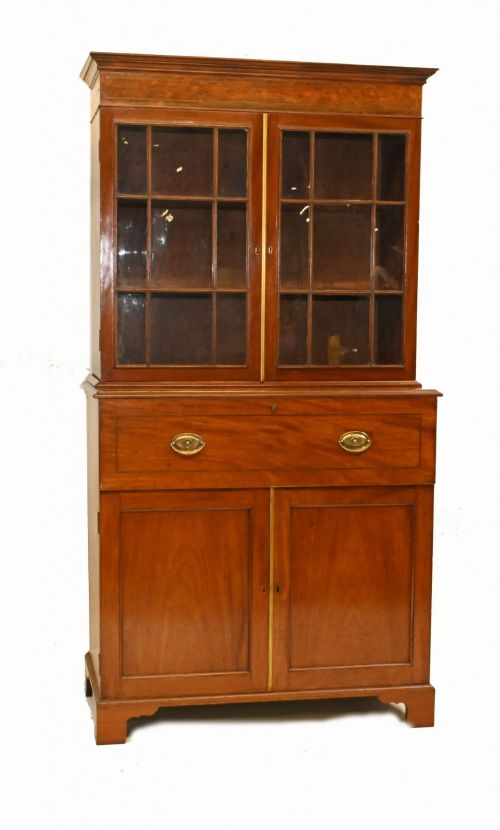
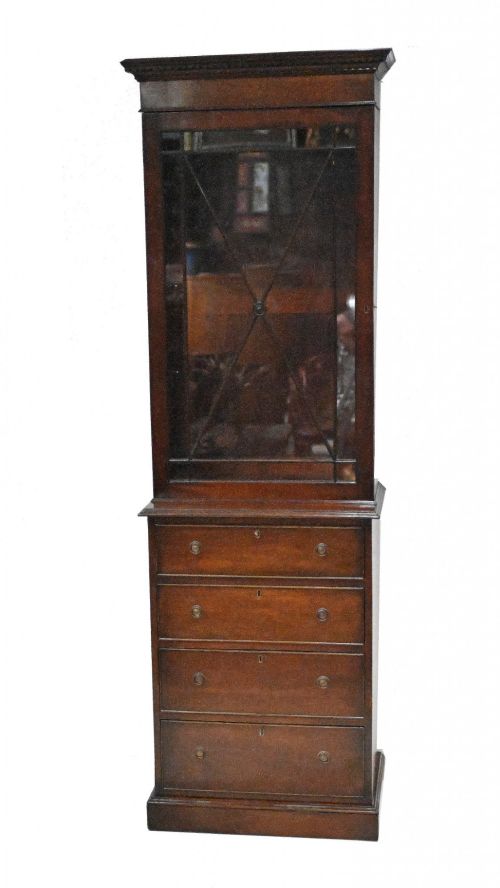
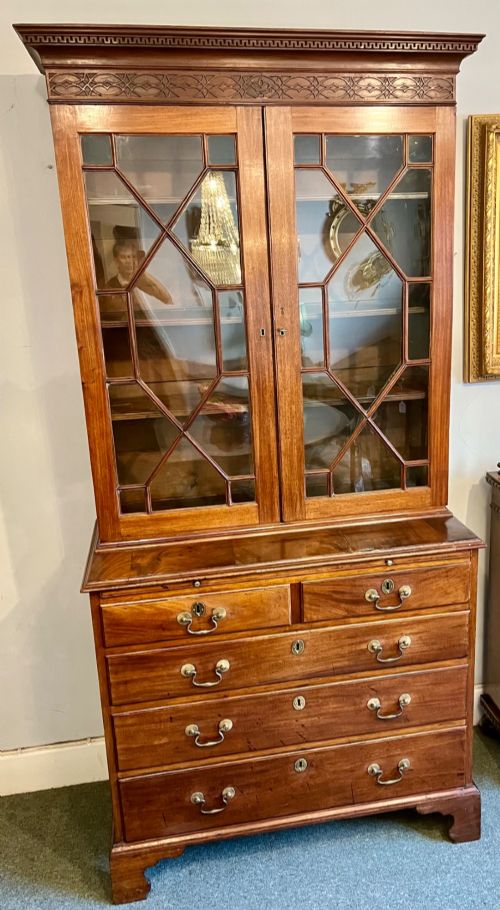
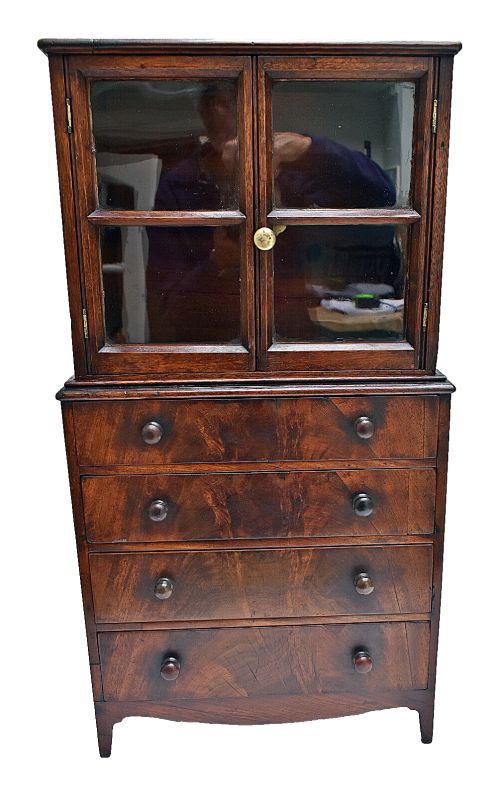


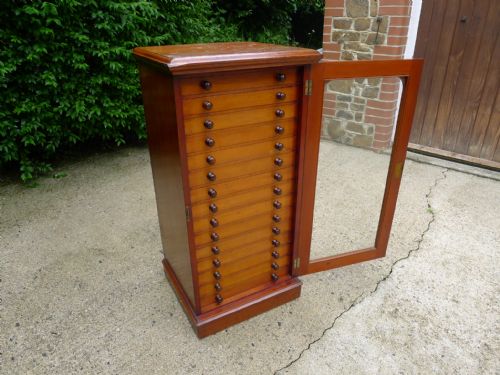

Glazed Mahogany Drawers
Glazed mahogany drawers combine fitted storage with display space, bringing structural clarity and refined timber surfaces to any room.
Glazed Mahogany Drawers
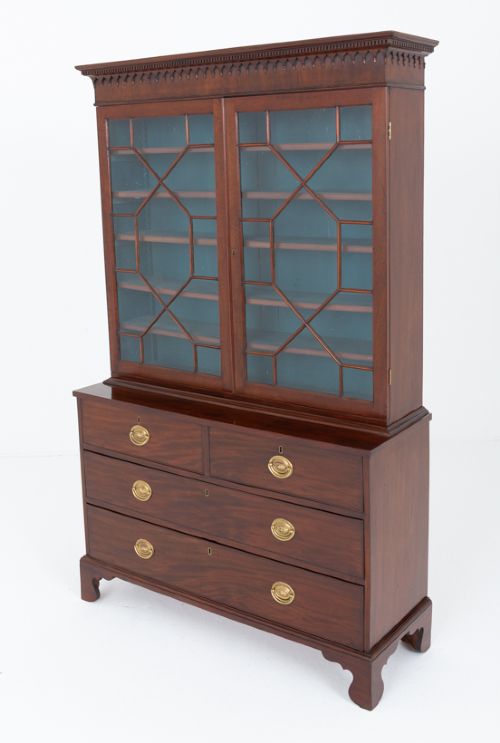
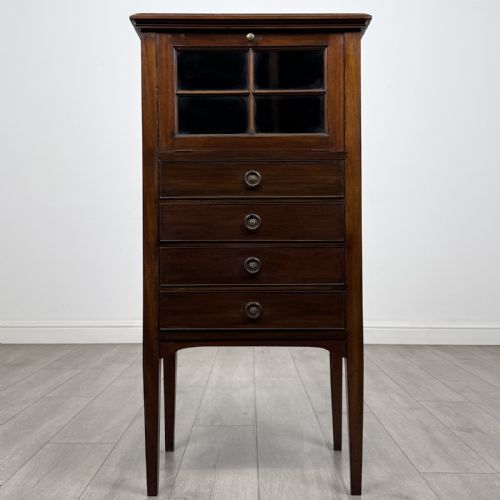
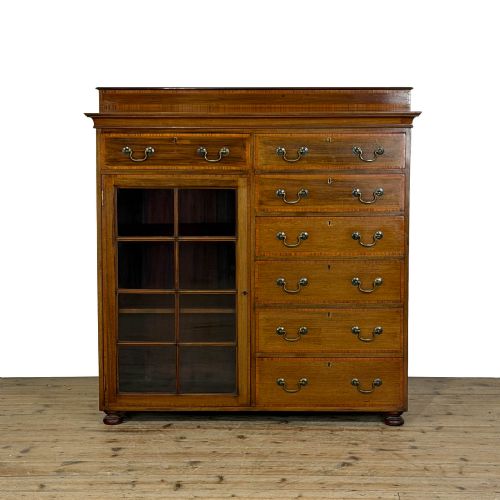
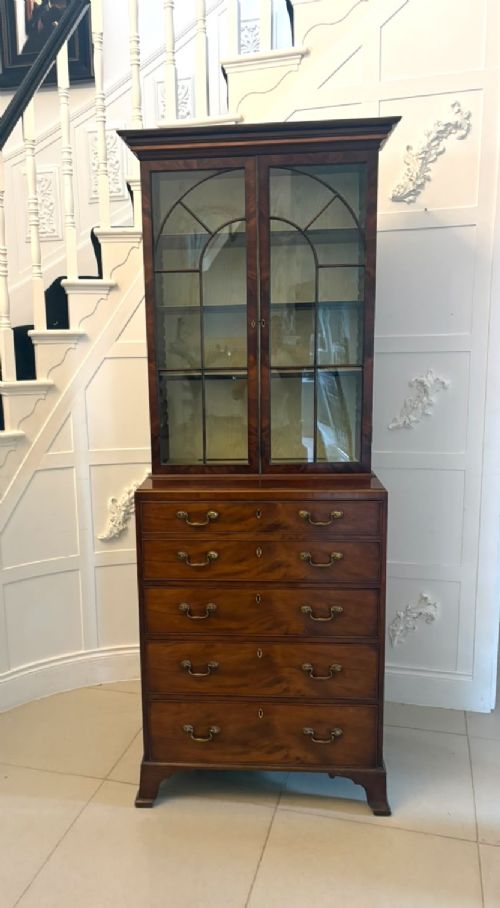
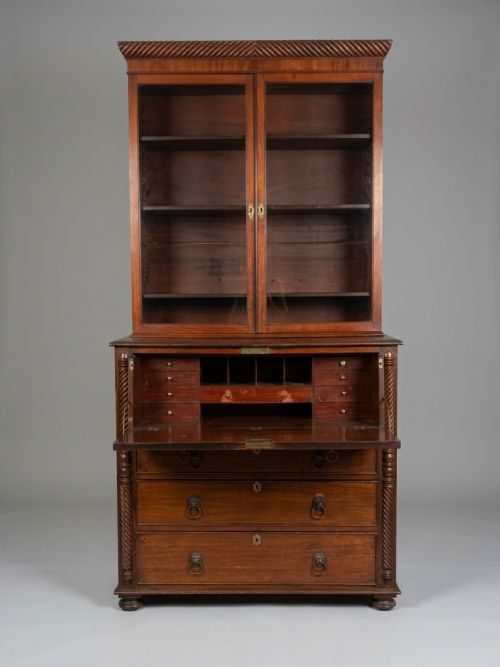
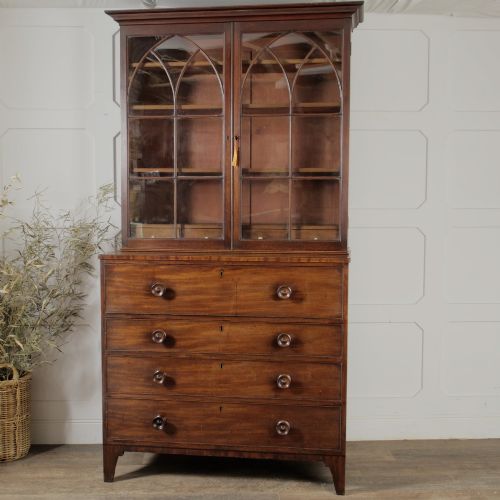
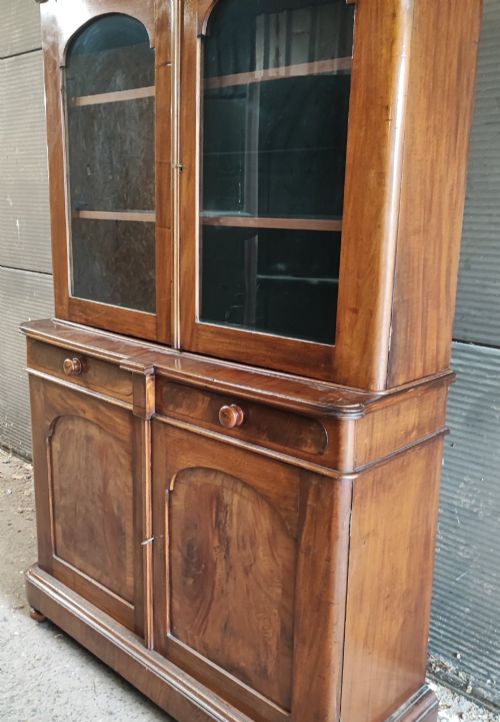
When buyers search for glazed mahogany drawers, they encounter a range of functional furniture including bookcases with drawer bases, secretaire bookcases, and specialised collectors cabinets. These pieces span Georgian, Victorian, and Edwardian periods, reflecting changing domestic requirements for storage and display.
Secretaire bookcases and display cabinets dominate the available forms, integrating glass doors for viewing contents alongside timber drawers for enclosed storage. Makers constructed these items in proportions suitable for domestic studies, libraries, and living spaces.
Origins trace across British cabinet-making traditions, incorporating styles from George III through to late Victorian and Edwardian periods. Solid mahogany and figured veneers provide the primary visual character across all structural types.
Materials and Construction
Craftsmen utilised solid mahogany and figured mahogany veneers applied to secondary woods, creating stable carcases and decorative exterior surfaces. Glass panels were glazed into wooden framework doors to protect contents while maintaining visibility.
Brass hardware, including drawer pulls, campaign handles, and locking escutcheons, functionalized the moving parts. Secondary materials such as satinwood stringing, leather writing surfaces, and paper linings appeared in specific interior compartments.
Glazed Mahogany Drawers Retail Price Guide 2026
Typical asking prices for glazed mahogany drawers among the pieces listed under this phrase on Sellingantiques today, from the lower quarter to the upper quarter. They describe what is for sale here now, not the wider market.
Listings feature mahogany combined with brass, glass, satinwood, leather, and paper across Georgian and Victorian periods.
Quality Indicators
The standard of timber selection and veneer matching defines the visual caliber of a piece, with figured grains and continuous patterns marking superior examples. Cabinet-makers who prioritized grain alignment across drawer fronts achieved greater aesthetic harmony.
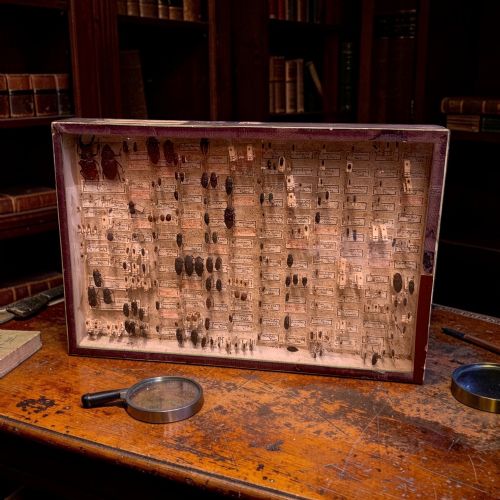
Internal joinery, such as hand-cut dovetails on drawer boxes and the precise fit of glass doors, separates standard production from high-grade workshop output. The integration of specialised internal fittings like secret compartments or dedicated specimen trays also indicates elevated craftsmanship.
James Winter & Sons·Watkins & Doncaster·Brady of Edmonton·Short & Mason
The Glazed Mahogany Drawers Glossary
- Secretaire
- A desk disguised as a drawer or cabinet section, featuring a drop-down front that reveals a writing surface and small pigeonholes. This form allows a piece of furniture to serve multiple functions without increasing its footprint.
- Glazed
- Fitted with glass panes held in place by wooden glazing bars, allowing internal contents to be viewed while protected from dust. This treatment appears frequently on upper bookcase sections and display cabinets.
- Specimen Cabinet
- A specialised piece of furniture containing numerous shallow drawers designed to hold natural history collections, insects, or coins. These cabinets prioritize precision interior fit and dust-seals.
- Inlaid
- Ornamented with contrasting woods or materials embedded into the primary surface to form geometric patterns or decorative lines. Satinwood and darker timbers often provide this contrast on mahogany furniture.
- Wellington Chest
- A tall, narrow chest of drawers secured by a hinged locking side stile that fastens with a key. This design originated in the 19th century for secure document storage.
Glazed Mahogany Drawers: Frequently Asked Questions
What periods do these pieces date from?
The available selection spans from the late 18th century through the Georgian and Regency eras into the Victorian and Edwardian periods.
Construction details, hardware styles, and timber treatments shift across these eras, moving from solid Georgian proportions to later revival styles.
How do secretaire bookcases function?
A secretaire bookcase incorporates a drawer-front that drops down on hinges to create a writing desk surface.
Behind this drop-front, internal drawers and pigeonholes provide organised storage for stationery and writing materials.
What are collectors cabinets used for?
Collectors cabinets feature multiple shallow internal drawers designed to store specimens, insects, microscope slides, or small objects.
These pieces emphasise dust-tight construction and precise internal drawer fits to protect delicate items.
How should mahogany furniture be maintained?
Mahogany requires stable room humidity and protection from direct sunlight to prevent timber movement and fading.
Regular dusting with a dry cloth and occasional application of appropriate furniture wax preserves the polished surface.